

Ever wondered why you make some choices without thinking? Our brains work on autopilot to save energy. These weird psychological quirks that affect people every day drive our common actions.
Our minds sometimes take shortcuts that seem odd to others. By looking into these patterns, we learn about the hidden machinery under our thoughts. Knowing about these tendencies helps us understand why we act as we do.
Key Takeaways
- The brain uses mental shortcuts to process information quickly.
- Many daily actions are driven by subconscious patterns rather than logic.
- Understanding these behaviors helps improve self-awareness.
- Irrational choices often stem from evolutionary survival mechanisms.
- Recognizing these quirks allows for better decision-making in the future.
The Science Behind Everyday Mental Oddities
The human mind is a complex machine that often relies on hidden mechanisms to process the world. While we like to think our decisions are always logical, our brains frequently use shortcuts to save energy. These common psychological quirks are not flaws; they are actually remnants of evolutionary adaptations designed to keep us safe.
Understanding the Brain's Shortcut Mechanisms
Our brains process millions of bits of information every single second. To manage this massive data flow, the mind uses mental shortcuts known as heuristics. These tools allow for quick decision-making without the need for deep, analytical thought.
While these shortcuts are efficient, they often lead to unusual mental behaviors in modern settings. What once helped our ancestors identify threats in the wild now causes us to make snap judgments about people or situations today. Key features of these mechanisms include:
- Speed: Prioritizing immediate action over perfect accuracy.
- Efficiency: Reducing the cognitive load required for routine tasks.
- Survival: Focusing on high-priority stimuli to avoid potential danger.
Why the Human Mind Prefers Patterns Over Chaos
The world is inherently unpredictable, yet the brain struggles to accept total randomness. It actively seeks out recognizable structures to make sense of an otherwise overwhelming environment. This drive for order is why we often see faces in clouds or find meaning in coincidental events.
By organizing information into patterns, the brain creates a sense of stability. This preference for order explains many unusual mental behaviors that we observe in our daily routines. When we encounter something that does not fit our established mental models, we often experience discomfort or confusion.
Ultimately, these common psychological quirks serve as a bridge between our primitive survival instincts and the demands of a fast-paced, modern life. Embracing how our minds function helps us navigate the world with greater awareness and patience.
Weird psychological quirks that affect people every day
Life is full of interesting ways our brains work. These weird psychological quirks that affect people every day often go unnoticed. Yet, they shape how we see the world. By looking into these everyday psychological oddities, we can understand ourselves better.

The Baader-Meinhof Phenomenon and Selective Attention
Ever notice a new word or car model everywhere after learning about it? This is the Baader-Meinhof phenomenon. It happens when your brain focuses on new information.
Your brain filters out lots of data to avoid being overwhelmed. When it finds something new, it focuses on that. This makes you think the thing is more common than it is.
The Spotlight Effect and Social Anxiety
Many feel like everyone is watching them, especially when they make a small mistake. This is the spotlight effect. It's when people think others notice them more than they do.
In truth, most people are too busy with their own lives to notice what others are doing. Knowing this can help reduce social anxiety. Understanding this bias makes social situations easier.
The Paradox of Choice in Modern Decision Making
Having lots of choices might seem good, but it can actually make decisions harder. This is the paradox of choice. Too many options confuse the brain, making it hard to choose.
The presence of too many choices can lead to anxiety and the fear of making the wrong decision.
By simplifying choices, we can avoid these everyday psychological oddities. Fewer options can lead to more satisfaction and clarity in our decisions.
| Phenomenon | Primary Driver | Common Outcome |
|---|---|---|
| Baader-Meinhof | Selective Attention | Increased awareness of patterns |
| Spotlight Effect | Self-Consciousness | Heightened social anxiety |
| Paradox of Choice | Decision Overload | Paralysis or dissatisfaction |
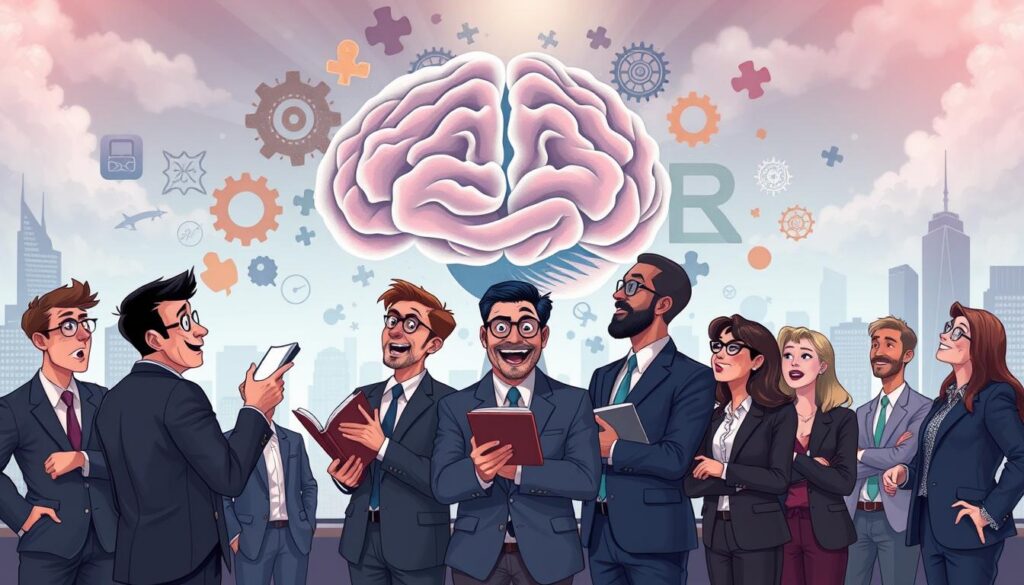
How Cognitive Biases Shape Our Social Interactions
Quirky human psychology plays a huge role in our daily relationships. We think our judgments are always right, but our brains often take shortcuts. These shortcuts can surprise us in our daily talks.
It's key to understand these biases to get better at socializing. By knowing about quirky behavior psychology, we can think twice before judging others.
The Halo Effect in First Impressions
The halo effect makes us think someone is good just because they look good. For instance, if someone is attractive or well-dressed, we might think they're smart or kind. This makes life easier but can hide the truth about someone.
This is a clear example of quirky human psychology at play. It makes us guess about strangers based on little information. To fight this, try these tips when meeting new people:
- Watch how they act, not just how they look.
- Ask questions that let them share more.
- Don't assume you know their personality right away.
Confirmation Bias and the Echo Chamber Effect
Confirmation bias makes us look for info that backs up what we already believe. This can lead to the echo chamber effect, where we only talk to people who agree with us. This limits our views and strengthens our biases.
Staying in our comfort zones by only talking to like-minded people stops us from growing. This part of quirky behavior psychology traps us in our own bubbles. It's important to talk to people with different views and experiences.
The Role of Environment in Triggering Peculiar Behaviors
Our surroundings shape our minds every day. Every place we are in sends signals to our brains. These signals can lead to bizarre cognitive habits we might not even notice.
How Digital Spaces Influence Our Cognitive Habits
The digital world has changed how we get information. Constantly being connected makes our brains jump between tasks fast. This can cause peculiar psychological tendencies like feeling like our phone is vibrating when it's not.
Being online for hours makes us value speed over deep thinking. We start to prefer quick, surface-level processing over deep analysis. This makes it hard to focus on tasks that need our full attention without a screen.
The Impact of Urban Environments on Mental Processing
City life is tough on our minds. The constant noise and lights make our brains work hard to filter out information. This can make us stressed or want to stay away from people.
Studies show city life makes our brains work faster. This helps us move quickly in crowded places. But it also keeps us on edge all the time. This can make us unable to relax, even in quiet places.
| Environmental Factor | Primary Mental Effect | Behavioral Outcome |
|---|---|---|
| Digital Connectivity | Fragmented Attention | Compulsive Checking |
| Urban Density | Sensory Overload | Heightened Alertness |
| Quiet Nature | Cognitive Restoration | Improved Focus |
Expert Perspectives on Managing Unusual Mental Patterns
Managing the mind means changing how we see our internal reactions. Many people feel stuck with common psychological quirks. Experts say the solution is to move from reacting to observing.
Strategies for Recognizing Automatic Thought Processes
The first step is to spot these hidden triggers. When you notice a thought keeps coming back, stop and name it without judging. This simple act of naming helps you separate from your brain's usual ways.
Psychologists suggest keeping a log of these moments. Tracking peculiar psychological tendencies shows patterns in when and why thoughts pop up. This turns confusing internal experiences into something you can manage.
The Importance of Mindfulness in Daily Cognitive Regulation
Mindfulness is a strong tool for managing your mind. It helps you stay in the moment, avoiding strange mental patterns. By focusing on what's around you, your brain can escape bad cycles.
Intentional breathing or sensory exercises can lessen automatic reactions. Consistency is key in creating new mental paths. With time, these small steps help you regain focus and live with more purpose.
Conclusion
Human thinking is full of shortcuts and biases. By understanding these, we can see our minds with curiosity, not criticism.
These patterns are how our brains work. They help us deal with the world's endless information. Seeing quirky behavior as natural helps us accept ourselves more.
Accepting these quirks makes us kinder to ourselves. It also helps us be more patient with others. We all have these quirks sometimes.
Knowing about these quirks is the first step to clearer thinking. It lets us control our reactions. This leads to better choices in our lives.
We should think about our own quirks. Talking about them with others can start interesting conversations. It helps us all understand our minds better.