
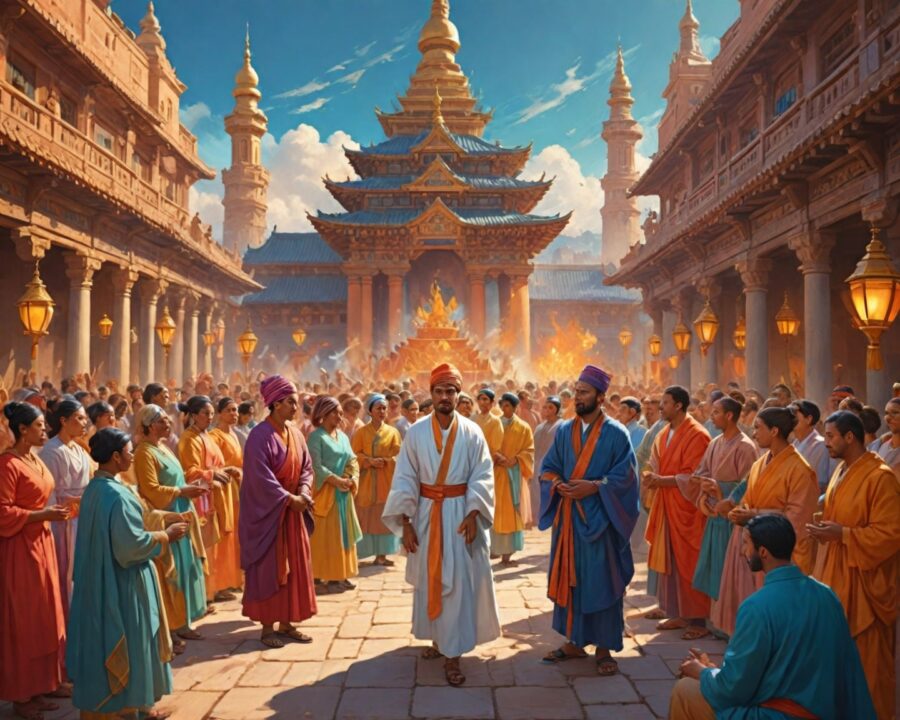
Introduction to Strange Social Rituals and Their Significance
Social rituals around the world encompass a rich tapestry of customs and traditions that can sometimes appear peculiar to outsiders. These unusual cultural practices are more than mere oddities; they are deeply woven into the fabric of the societies where they originated. They offer insights into the values, beliefs, and history of the communities that cherish them. As the globe becomes smaller through increased connectivity, understanding these practices is key to appreciating cultural diversity.
Unusual cultural practices might involve curious ceremonies, celebrations, or rites that mark significant events or lifecycle milestones. They serve important societal functions, from unifying groups and preserving history to imparting collective identity and values. Through exploring these strange social rituals, we can gain perspective on both the variety and commonality of the human experience.
Historical Context: How Social Rituals Evolved Over Time
Social rituals have evolved significantly over the centuries, influenced by migration, trade, conquest, and other cultural exchanges. Dating back to prehistorical times, rituals have been used to reinforce community bonds, secure divine favor, and mark the passage of time.
For instance, harvest festivals are among the oldest types of rituals, reflecting humanity’s dependence on agricultural cycles. As societies transitioned from nomadic to settled lifestyles, these rituals adapted to new environmental and social dynamics. Over time, rituals have absorbed elements from other cultures, resulting in a fascinating blend of tradition and innovation.
This evolution is not merely a story of change but also of resilience. While some practices have vanished, others have adapted, showing the enduring power of ritual to adapt to modern contexts. The historical evolution of rituals showcases humanity’s ability to maintain core traditions while embracing new influences.
Examples of Unusual Cultural Practices from Different Regions
Japan – Kanamara Matsuri: Known as the “Festival of the Steel Phallus,” this annual event takes place in Kawasaki and celebrates fertility and sexual health. Participants parade giant phallus statues, a practice that originated from a local legend and has become a significant tourist attraction.
India – Thaipusam: In Tamil Nadu, devotees participate in this intense ritual by carrying heavy structures called kavadis, some involving body piercing and penance. It’s a demonstration of faith and endurance as participants make a pilgrimage to Murugan temples.
Spain – El Colacho: Every June, Spanish villagers in Castrillo de Murcia participate in this baby-jumping festival, where men dressed as devils jump over infants to cleanse them of original sin. This ritual is rooted in Catholic traditions but is unique in its graphic depiction.
These examples highlight the diversity of unusual cultural practices worldwide. Each tradition, no matter how bizarre it seems, serves a purpose within its cultural context, often related to spiritual beliefs and community values.
The Psychology Behind Bizarre Traditions and Their Purpose
Understanding the psychology behind bizarre traditions involves recognizing the deep-seated need for connection and meaning. Social rituals create a sense of belonging, reinforcing group identity and shared history through communal participation.
Rituals can also serve a coping function, helping individuals and communities manage anxiety, uncertainty, and change. By participating in something larger than themselves, individuals can feel anchored, particularly when facing life’s transitions or potential crises.
Moreover, these practices can be seen as rites of passage that symbolize personal and communal transformation. They often incorporate elements of storytelling, drama, and pageantry, which can powerfully affect human emotion and perception, creating lasting bonds within the community.
How Unique Social Customs Shape Community Identity
Unusual cultural practices are more than quaint customs; they are expressions of a community’s identity. By participating in rituals, members affirm their connection to their past, to each other, and to their cultural heritage.
These rituals are often tied to specific social structures and hierarchies, enabling the reinforcement of roles and relationships within a community. For example, rites of passage such as coming-of-age ceremonies mark the transition from one societal status to another, reinforcing individual identity within the communal framework.
This shaping of identity is not static but dynamic, with traditions gradually changing even as they assert the enduring core values of a group. This helps communities maintain resilience and cohesion in the face of external pressures and internal transformations.
Common Misconceptions About Strange Social Rituals
Misconceptions about unusual cultural practices can arise from a lack of understanding or context. Often, such rituals are dismissed as superstitious or irrelevant, failing to appreciate their depth and significance.
-
Myth: They are meaningless or random: Many rituals have historical roots and serve specific purposes within their communities, such as fostering unity or marking significant lifecycle events.
-
Myth: They are primitive or outdated: While some rituals have ancient origins, they often adapt over time, integrating modern elements and remaining relevant in contemporary society.
-
Myth: They are exclusive or closed: While some rituals are community-specific, many welcome respectful participation and observation from outsiders, provided there is cultural sensitivity and understanding.
By addressing these misconceptions, we can approach such practices with open minds and respectful curiosity, paving the way for richer intercultural experiences.
The Role of Globalization in Preserving or Altering These Rituals
Globalization’s impact on cultural rituals is multifaceted. On one hand, globalization can threaten the preservation of these practices by promoting cultural homogenization and economic pressures that prioritize modernization over tradition.
Conversely, globalization offers opportunities for cultural exchange, promoting greater awareness and appreciation of diverse practices. Some rituals find audiences far beyond their place of origin, generating tourism and interest which can lead to renewed local investment in preserving traditions.
| Impact of Globalization | Description |
|---|---|
| Preservation | Increased awareness can drive efforts to document and conserve unique rituals. |
| Transformation | Rituals might evolve, incorporating elements from other cultures or adapting to new societal norms. |
Thus, globalization acts as a double-edged sword, challenging yet potentially enriching the future of these cultural practices.
Practical Tips for Respectfully Engaging with Unfamiliar Traditions
-
Do Your Research: Before attending an event, learn about its history, purpose, and local customs to ensure respectful participation.
-
Respect Boundaries: Observe guidelines and instructions from local community leaders to avoid disrespecting cultural norms.
-
Ask Questions Kindly: If appropriate, seek to understand the significance of the rituals you witness by asking polite and thoughtful questions.
By taking these steps, you can participate meaningfully and respectfully in cultural practices, enhancing your cultural competence and appreciation.
Addressing Ethical Concerns When Observing or Participating in Rituals
Ethical concerns often arise in the intersection of outsiders engaging with cultural rituals. It’s critical to consider the implications of participation on both the individual and community levels.
Some rituals have elements of exclusivity due to religious or familial traditions. Outsiders should respect these restrictions, acknowledging their role as observers rather than participants when required. Moreover, cultural appropriation must be avoided, as adopting elements of a ritual without understanding or respecting its origins can trivialize or harm the community.
Finally, participants should be aware of their own motives, ensuring they seek engagement for genuine learning and appreciation, not for mere entertainment or exploitation.
Conclusion: The Importance of Understanding and Respecting Cultural Diversity
In a rapidly changing world, understanding and respecting cultural diversity is more critical than ever. Unusual cultural practices provide windows into the history, beliefs, and values of different communities. By engaging with them respectfully, we can foster greater intercultural dialogue and appreciation.
By learning about these practices, we enrich our own worldviews, develop empathy, and build bridges across cultures. This not only honors the uniqueness of each tradition but also celebrates our shared humanity.
FAQ
What are some of the world’s strangest social rituals?
Examples include Japan’s Kanamara Matsuri, Spain’s baby-jumping festival El Colacho, and India’s Thaipusam. These unique practices reflect the diverse cultural landscape of our world.
Why do societies maintain strange rituals?
Rituals often serve vital roles in preserving cultural identity, fostering community cohesion, providing meaning, and assisting individuals to navigate life transitions.
How does globalization affect cultural rituals?
Globalization can threaten traditional practices through homogenization, but it can also increase awareness and appreciation, leading to efforts in preservation and adaptation.
How can I participate respectfully in cultural rituals?
Researching and understanding the cultural significance, respecting boundaries, and asking questions politely are key to respectful participation.
Are all cultural rituals open to outsiders?
Not all; some rituals are closed to outsiders due to religious or cultural significance. It’s crucial to respect these boundaries and observe as an invited guest when applicable.
What is the difference between cultural exchange and cultural appropriation?
Cultural exchange involves mutual sharing and respect, while cultural appropriation occurs when elements of a culture are used without understanding or respecting their cultural significance.
Recap
This article explored the fascinating world of unusual cultural practices, delving into their historical evolution, psychological purposes, and roles in shaping community identity. We discussed the influence of globalization and common misconceptions about these rituals, offering practical guidelines for respectful engagement to avoid ethical pitfalls. Understanding and honoring these practices underscores the richness of global cultural diversity.