
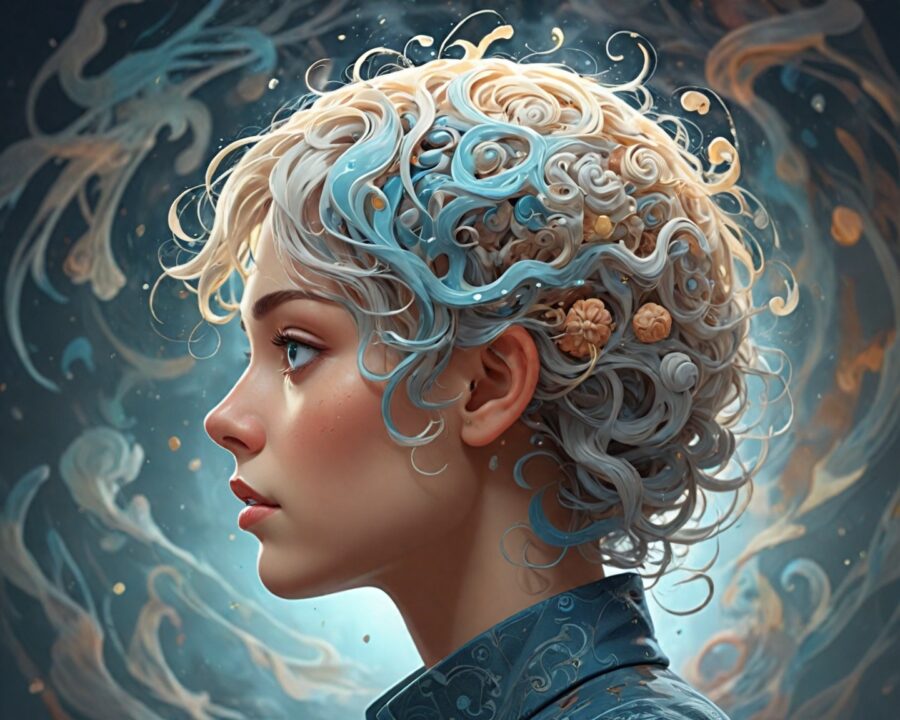
Introduction to optical illusions: what are they?
Optical illusions have long fascinated both the scientific community and the general public. These intriguing phenomena trick our brains into seeing something that isn’t quite true, challenging our understanding of vision and perception. Optical illusions can range from simple tricks of light and shadow to complex patterns that defy our normal comprehension of geometry and space. By peering into the world of optical illusions, we not only entertain our senses but also gain insights into the intricate workings of the human brain.
The study of optical illusions spans several disciplines, including psychology, neuroscience, and art. These illusions occur when our brains attempt to interpret visual stimuli, often leading to perceptual discrepancies. Despite our reliance on sight for everyday navigation, optical illusions remind us that seeing doesn’t always equate to believing. As we delve into the mechanics of these illusions, we unearth the secrets behind what makes them so captivating and, at times, confounding.
The science of visual perception and how it works
Visual perception is a complex process that begins when light enters our eyes and stimulates the retina. This process involves the conversion of light into electrical signals, which are transmitted through the optic nerve to the brain for interpretation. The brain analyzes these signals, synthesizing them into the coherent images we consciously perceive. However, this process is far from flawless, as vision is influenced by numerous factors, including light conditions, context, and prior experiences.
Scientists have dedicated extensive research to understanding how visual perception works, given its pivotal role in how we navigate and interact with the world. Perception involves various brain areas, including the occipital lobe, which processes visual information. The brain uses a combination of innate structures and learned cues to make sense of the myriad visual inputs it receives.
Several theories attempt to explain the mechanics of visual perception. Among them is the theory that our brains employ predictive coding, using past experiences to anticipate and interpret current sensory information. This prediction mechanism sometimes leads to visual discrepancies, forming the basis for many optical illusions.
Types of optical illusions: literal, physiological, and cognitive
Optical illusions can generally be categorized into three types: literal, physiological, and cognitive. Each type affects the brain’s interpretation of visual information in unique ways.
Literal illusions occur when the image presented is different from the object that creates it. These illusions often stem from how light interacts with objects, casting misleading shadows. For instance, a mirage in the desert is a literal illusion resulting from the refraction of light.
Physiological illusions are the result of excessive stimulation of the visual system, including brightness, color, or movement. The Hermann Grid illusion, where gray spots appear at the intersections of a white grid on a black background, exemplifies a physiological illusion. The intense contrast tricks the optic nerves, causing ghostly auxiliary patterns to appear.
Cognitive illusions involve the brain’s interpretation or understanding of the visual information presented. These illusions are deeply rooted in our knowledge and expectations about the world. The famous Penrose Triangle, for instance, is a cognitive illusion, appearing to be a plausible three-dimensional object while being physically impossible.
How the brain processes visual information
The brain’s ability to process visual information efficiently is crucial for survival. This efficiency is achieved through a complex network of neurons that rapidly interpret and relay information. Once the retina captures an image, it is transmitted as an electrical signal and processed by the visual cortex.
The brain utilizes numerous strategies to interpret visual data, adjusting for anomalies in perception. It often fills in gaps based on past experiences and acquired knowledge. Context plays a significant role in these interpretations, such as recognizing familiar objects even under challenging viewing conditions.
Our cognitive biases significantly impact how we perceive visual information. The brain prioritizes certain visual cues over others, giving rise to the selective investigation of stimuli. This prioritization process can lead to optical illusions, as certain features are amplified or diminished during interpretation.
Famous examples of optical illusions and their explanations
Numerous well-known optical illusions have captivated public interest and scientific study. These illusions demonstrate various aspects of human perception and the brain’s interpretative processes.
The Checker Shadow Illusion, created by Edward Adelson, is a well-known example. Two squares on a checkerboard appear to be different shades under a shadow, though they are identical in color. The illusion illustrates how context affects perception, with the brain compensating for shadow effects.
The Rotating Snakes Illusion, devised by Akiyoshi Kitaoka, involves circular patterns that appear to move despite being stationary. This illusion arises from the specific arrangement of colors and luminosity gradients, tricking the brain into perceiving motion.
The Müller-Lyer Illusion features two lines of equal length with different arrowhead ends that appear differing in length. The illusion highlights how cognitive processes based on past experiences can impact perception, with contextual cues distorting our visual interpretation.
| Illusion Name | Visual Effect | Underlying Explanation |
|---|---|---|
| Checker Shadow | Identical squares look different | The brain adjusts for lighting and shadow effects |
| Rotating Snakes | Stationary circles appear to move | Color and luminosity gradients manipulate perceived movement |
| Müller-Lyer Illusion | Lines of equal length differ visually | Contextual cues influence perceived length |
The role of light, color, and patterns in creating illusions
Light, color, and patterns play integral roles in creating optical illusions. Light, as the primary medium of visual perception, interacts in various ways to alter our depth and color perception, ultimately influencing how we perceive images.
Color contrasts and brightness differentials are fundamental in many illusions, manipulating how light reflects off surfaces to mislead the brain. Colors can influence perceived depth and motion, creating engaging visual phenomena.
Patterns utilize repetition and arrangement to exploit our visual processing. The brain’s tendency to find order and regularity often results in misinterpretations when patterns are deliberately designed to mislead, such as in the Kanizsa Triangle, where incomplete shapes induce perceptions of non-existent figures.
Common questions: why do some people see illusions differently?
Why do optical illusions work?
Optical illusions work because they exploit the brain’s interpretative strategies and cognitive biases. These illusions often manipulate visual cues like depth, color, and linear perspective, leading to perceptual challenges that trick the brain into inaccurate interpretations.
Can everyone see optical illusions?
Most people can see optical illusions, but the perception of these illusions can vary. Factors such as age, experience, and even cultural background can influence these interpretations, leading to differing perceptions among individuals.
Why do some illusions not affect everyone?
Individual differences in visual perception can cause some illusions to go unnoticed or have reduced effect on certain people. Factors that contribute to these differences include variations in visual acuity, attention to detail, and past experiences.
What are common features of optical illusions?
Common features of optical illusions include contrasting colors, unusual patterns, and ambiguous shapes. These features challenge normal interpretations by distorting typical visual cues, compelling the brain to resolve them using unconventional pathways.
Can optical illusions affect our emotions?
Yes, optical illusions can evoke emotional responses by altering how we perceive reality. The surprise and curiosity they stimulate often engage emotional centers in the brain, evoking reactions that range from amusement to bafflement.
How do artists use optical illusions?
Artists use optical illusions to engage viewers and add depth to their work. Techniques like forced perspective, reinterpretation of spatial relationships, and color manipulation allow artists to create dynamic and thought-provoking pieces.
Can I train myself to see optical illusions better?
Training and practice can enhance the ability to discern optical illusions by familiarizing your brain with common perceptual tricks. Exposure to varied illusions can refine your visual processing skills, though the physiological and cognitive aspects may limit certain adaptations.
The psychological impact of optical illusions
Optical illusions not only provide visual intrigue but also stimulate our psychological responses. They challenge our perception, prompting reflection on how we interpret reality. These illusions can evoke a wide range of emotional responses, from amusement to bewilderment, highlighting the deep connection between vision and cognition.
The exploration of optical illusions sheds light on how our brains manage complex visual data, revealing our propensity to be misled by deceptive visual cues. Reflecting on these illusions can deepen our understanding of human cognition, aiding in recognizing biases that influence everyday decision-making.
By recognizing how optical illusions influence perception, individuals can become more critically aware of the information processed by their senses, enhancing their capacity to navigate a visually complex world effectively.
Practical applications of optical illusions in design and art
Designers and artists harness the power of optical illusions to craft captivating and innovative works. In graphic design, illusions may be used to create the perception of depth on flat surfaces or to guide viewer attention strategically within a composition.
Optical illusions also hold significance in architecture and interior design. Techniques such as forced perspective are employed to manipulate space perception, creating expansive environments or intimate interiors despite physical limitations.
Artists frequently incorporate optical illusions into their work to challenge conventional perspectives and engage the audience in multi-layered interpretations. By integrating illusionary principles, artists and designers push creative boundaries, offering fresh and immersive experiences.
How to create your own optical illusions at home
Creating optical illusions at home can be a rewarding and educational experience. By understanding the basics of visual perception, you can craft your illusions using simple materials and techniques.
Start with contrast and shadow. Use light to cast shadows that alter the apparent dimensions of objects, creating illusions of depth and size differences.
Experiment with patterns and shapes, like checkerboards or spirals, which exploit the brain’s tendency to recognize order. By carefully arranging these elements, you can produce moving patterns or shapes that vanish when focused on.
Employ reflective surfaces and overlapping colors to deceive the eye into perceiving motion or changes in hue. These illusions rely on the interaction of light with surfaces and can be modified to suit your creative vision.
Recap
Optical illusions captivate us by manipulating visual perception, revealing the complex relationship between vision and cognition. By exploring the science behind these illusions, we’ve uncovered their fundamental reliance on light, color, and patterns. We’ve examined classic examples and their explanations, discussed why individuals perceive them differently, and looked into their psychological and practical applications. Whether for artistic inspiration or scientific study, optical illusions offer valuable insights into human perception, enabling us to better appreciate the brain’s interpretative prowess.