
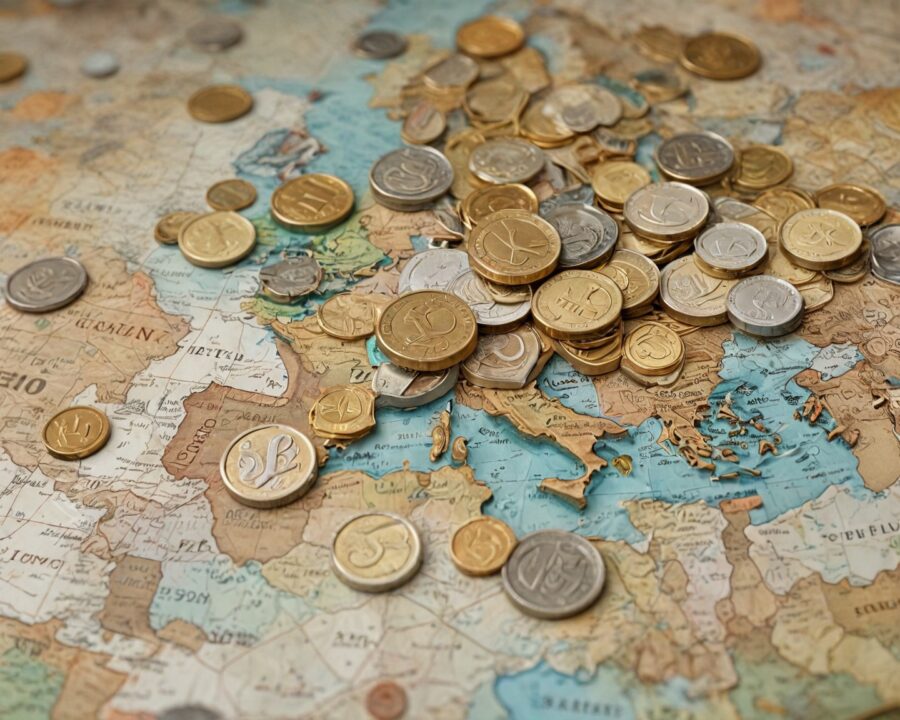
The euro currency is a defining element of European financial identity, influencing economics, politics, and even travel throughout the continent and beyond. Since its inception, it has grown to be more than just a means of exchange — it is a symbol of European unity and economic stability. Understanding the euro’s history, benefits, challenges, and global impact offers insight into why it holds such a significant place in global finance.
As the official currency of the Eurozone, the euro is utilized by millions across Europe and impacts billions worldwide. It facilitates trade and travel and plays a pivotal role in the stability of global markets. The following sections explore the various aspects of the euro, from its initial concept to its current function in global finance, while providing practical tips for travelers and examining its future prospects.
What is the Euro and Its Significance
The euro (€) is the official currency of 20 of the 27 European Union (EU) member states, referred to collectively as the Eurozone. It was introduced to streamline trade and travel across Europe, strengthen economies, and forge economic and political unity among EU countries. As of 2023, it is one of the most traded currencies globally, second only to the United States dollar.
The significance of the euro extends beyond mere economic transactions. For member countries, the euro represents a commitment to collaborative growth and stability. The single currency eliminates exchange rate fluctuations, reduces transaction costs, and simplifies economic interactions within the Eurozone.
The euro is also significant to the global economy. It acts as a benchmark for global exchange rates and influences economic policies worldwide. Investors, governments, and financial institutions across the globe keep a close watch on the euro’s value and the policies drafted by the European Central Bank (ECB).
The History of the Euro: From Concept to Reality
The journey of the euro began in the aftermath of World War II, amid efforts to prevent another conflict by fostering economic interdependence among European nations. This led to several initiatives aimed at monetary union, culminating in the Maastricht Treaty, signed in 1992, which laid the groundwork for a single currency.
The euro was launched in 1999 as an electronic currency for banking and financial purposes. In 2002, euro banknotes and coins officially entered circulation, replacing national currencies like the French franc and German deutsche mark in many European countries.
The transition to the euro was a massive undertaking, requiring the coordination of monetary policies across sovereign nations. Initially adopted by 11 countries, the Eurozone has expanded over time, reflecting the euro’s growing acceptance and success as a stabilizing financial force.
Countries That Use the Euro and Their Economic Ties
The Eurozone encompasses 20 countries as of 2023, each operating with the euro as its official currency. These countries include economic powerhouses like Germany and France, alongside smaller economies like Luxembourg and Malta.
| Country | Year Adopted Euro |
|---|---|
| Germany | 1999 |
| France | 1999 |
| Italy | 1999 |
| Luxembourg | 1999 |
| Greece | 2001 |
| Slovenia | 2007 |
These countries share a robust economic linkage, facilitated by their participation in the Eurozone. This integration allows them to coordinate economic policies, ensure stability, and promote growth. They benefit from reduced risks in foreign exchange and a collective bargaining position in global trade agreements.
Benefits of the Euro for Trade and Travel
The euro brings significant benefits for trade and travel, acting as a catalyst for economic efficiency and integration. It simplifies cross-border business, eliminating the need for currency exchange and reducing associated costs, making trade within the Eurozone more straightforward and less risky.
For travelers, the euro is incredibly convenient, allowing seamless movement across member countries without the hassle of currency conversion. This convenience enhances tourism within Europe, fostering cultural exchanges and economic benefits for the Eurozone nations.
Furthermore, the euro encourages price transparency and competition, driving down prices and benefiting consumers. Businesses and individuals can make informed purchasing decisions across national borders without dealing with fluctuating exchange rates.
Challenges and Criticisms of the Euro
Despite its advantages, the euro is not without its challenges and criticisms. Critics argue that the single currency centralized monetary policy favors stronger economies like Germany, while weaker countries may struggle without their own monetary autonomy.
The Eurozone debt crisis, beginning in 2009, highlighted the difficulties in managing a single currency across diverse economies. Countries like Greece faced severe financial distress, revealing the structural weaknesses of the Eurozone’s fiscal configuration.
Another criticism is the loss of national control over monetary policy, which limits individual countries’ ability to respond to economic downturns effectively. This has sparked debates over the need for deeper fiscal integration and political union within the Eurozone.
How the Euro Impacts Global Financial Markets
The euro plays a crucial role in global financial markets as a major reserve currency. It influences monetary policies, investment flows, and exchange rates across the world. Central banks hold it as part of their foreign reserves, making it a fundamental component of global economic stability.
In foreign exchange markets, the euro’s value affects global trade balances and investment strategies. Currency fluctuations can prompt adjustments in trading and hedging activities, impacting international companies and investors.
Additionally, the eurozone’s economic health and policy decisions are closely monitored by international markets. Any significant changes in the ECB’s monetary policy can have ripple effects beyond Europe, affecting global economic conditions.
The Role of the European Central Bank in Managing the Euro
The ECB, headquartered in Frankfurt, Germany, is responsible for managing the euro and formulating monetary policy for the Eurozone. Its primary goals are to maintain price stability, support economic growth, and ensure the smooth functioning of the financial system.
The ECB utilizes tools such as interest rates, open market operations, and quantitative easing to influence the Eurozone economy. It also plays a supervisory role over Eurozone banks to maintain financial stability and confidence in the banking sector.
The ECB’s policy decisions can have significant implications for both the Eurozone and global markets. Its independence and credibility are critical to maintaining investor confidence and the strength of the euro on the world stage.
Common Questions About the Euro and Its Usage
What is the Eurozone?
The Eurozone refers to the group of European Union countries that have adopted the euro as their official currency, sharing a unified monetary policy and financial regulations.
How does the euro affect travel in Europe?
Traveling with the euro simplifies the process within Eurozone countries, as visitors do not need to worry about currency exchange or fluctuations, allowing for more straightforward planning and budgeting.
Can countries outside the EU use the euro?
Yes, some non-EU countries and territories use the euro, either officially or unofficially. Examples include Kosovo and Montenegro, where the euro is used despite not being EU members.
Is the euro stronger than the US dollar?
The strength of the euro compared to the US dollar fluctuates based on varying economic indicators and market conditions. At times, the euro may be stronger or weaker depending on exchange rates at a given point.
Why did some EU countries not adopt the euro?
Some EU countries, like Denmark and Sweden, have opted out of adopting the euro due to preferred monetary autonomy, public referendums, or differing economic conditions.
Future Prospects for the Euro in a Changing World
The future of the euro involves navigating numerous challenges and opportunities. With ongoing debates about deeper fiscal integration, the Eurozone may develop stronger mechanisms to manage economic disparities among its member states.
Global economic shifts and geopolitical tensions also influence the euro’s role on the world stage. Amid rising challenges, the Eurozone must focus on policies that enhance resilience and adaptability in both economic and political structures.
As digital currencies and fintech advancements shape financial interactions, the euro may incorporate technology to maintain its relevance and effectiveness in the global economy. The sustainability of the euro depends on the Eurozone’s ability to evolve and meet new economic realities.
Practical Tips for Travelers Using the Euro Currency
- Currency Conversion: Be aware of current exchange rates to manage travel budgets effectively.
- Cash and Card Usage: In urban areas, card payments are widely accepted, but carrying some cash is advisable for smaller towns or markets.
- Banking Fees: Check with your local bank for any international fees before traveling and consider using a travel card to avoid added costs.
- VAT Refunds: Non-EU travelers can benefit from VAT refunds on purchases made in the Eurozone by ensuring retailers provide the necessary tax-free documents.
- Mobile Payments: Many Eurozone countries support mobile payments, providing a convenient and secure method to handle transactions without the need for physical currency.
Recap
The euro currency is a cornerstone of European unity, facilitating trade and travel across the continent while impacting global financial markets. Despite challenges and criticisms, the euro continues to drive economic integration and influence global finance. With careful management by the European Central Bank and adaptation to future challenges, the euro remains poised to navigate the evolving economic landscape effectively. Understanding its diverse aspects offers valuable insights for both residents of the Eurozone and global citizens alike.