

History is often stranger than fiction. Some past events seem like myths, yet they have verified evidence. These strange historical events that are hard to believe include the mysterious Dancing Plague of 1518 and peculiar military blunders.
To understand these strange historical events that are hard to believe, we must study their era's context. We should examine them instead of dismissing them as legends. Social pressures and environmental factors helped create these moments, while clever historical hoaxes once fooled entire nations.
These records show how reality can surprise us. Join us to explore fascinating tales that prove truth is often more captivating than any storybook.
Key Takeaways
- Many bizarre past occurrences are supported by solid archival evidence.
- The Dancing Plague of 1518 serves as a prime example of mass hysteria.
- Context is essential for understanding why people acted in unusual ways.
- Some famous stories were actually elaborate historical hoaxes designed to deceive.
- Modern research helps clarify the truth behind these confusing legends.
Why Strange Historical Events That Are Hard to Believe Still Matter
Exploring odd events in history reveals more than bizarre trivia. These stories show the complex layers of human society. Though they sound like myths, they offer essential windows into how people lived, thought, and faced crises.
How eyewitness accounts, official records, and modern research confirm bizarre events
Historians rely on primary sources to verify events that seem impossible. They compare diaries, legal documents, and medical reports to find a kernel of truth in wild stories.
Separating documented facts from legends and later exaggerations
Take the dancing plague of 1518, for example. Later stories added supernatural elements, but contemporary Strasbourg records confirm many people suffered a compulsive need to dance for days on end. Modern research suggests this was likely mass psychogenic illness, triggered by extreme stress and famine.
What makes an unusual historical event newsworthy today
Unusual events matter because they reveal the fragility of social order and strong human emotion. These moments show past people faced panic, political theater, and shared confusion, just as we do today.
Connecting past public reactions with present-day historical interest
The Cadaver Synod offers a clear example of this connection. His successor exhumed a deceased pope and placed him on trial to settle political scores. This shocking display of power shows how institutions can serve personal vendettas, a theme still heard in modern political debate.
By examining strange episodes, we gain a deeper appreciation for the complexity of history. We learn truth can be stranger than fiction, and the past is never as simple as textbooks suggest.
Mass Behavior and Public Spectacle in the Medieval World
The medieval era often featured public spectacles that seem hard to explain today. Entire communities sometimes became trapped in strange cycles of behavior. We view conflicts like the War of the Bucket or the Great Emu War as odd events, but medieval society had its own confusion.
The Dancing Plague of 1518 in Strasbourg
What happened in Strasbourg and when the dancing began
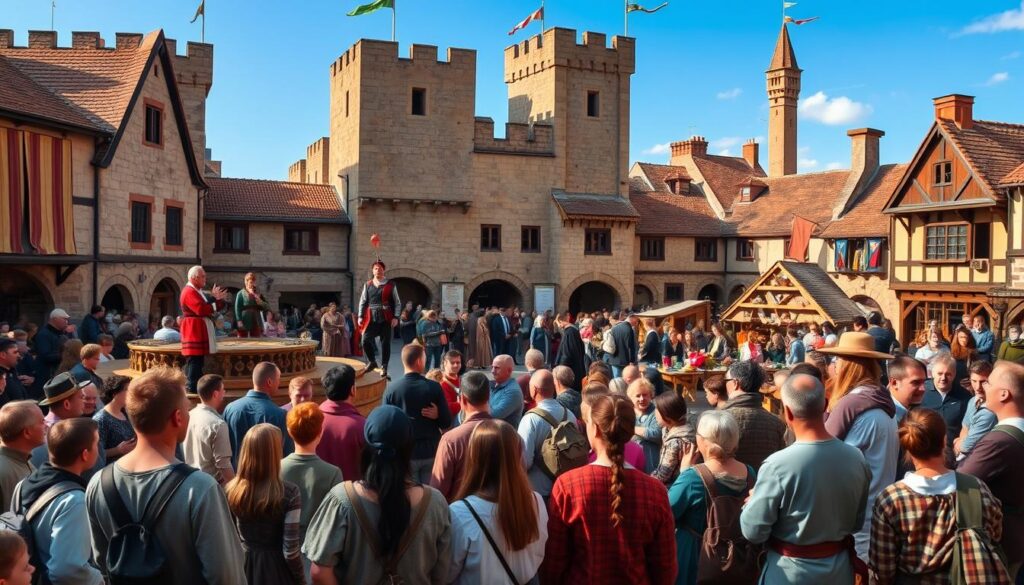
In summer 1518, a woman named Frau Troffea stepped into a Strasbourg street and began dancing. She danced for hours, and others joined her the next day. Within a week, dozens danced uncontrollably in the heat and could not stop.
The officials, physicians, and residents who struggled to respond
Local authorities were baffled by this unprecedented phenomenon. Physicians ruled out supernatural causes and suggested the dancers had "hot blood." To cure them, officials encouraged more dancing, built a stage, and hired musicians to keep the rhythm.
Medical theories, social pressures, and the plague's eventual end
Modern historians link this mass psychogenic illness to extreme stress, famine, and disease. The dancers eventually collapsed from exhaustion, and the event faded as mysteriously as it began. It remains a haunting example of social pressure appearing through physical actions.
The Cadaver Synod and the trial of Pope Formosus
Why Pope Stephen VI ordered a dead pope to stand trial in 897
Political instability in Rome caused one of the church's most macabre events. Driven by intense factional hatred, Pope Stephen VI ordered his predecessor, Pope Formosus, exhumed. He planned to put the dead pope on trial and settle a bitter power struggle.
The accusations, courtroom ritual, and shocking verdict
Officials dressed the corpse in papal vestments and placed it on a throne before his accusers. A deacon spoke for the silent, decaying body. The court found Formosus guilty of several ecclesiastical crimes, then mutilated his remains.
Political consequences and the reversal of the trial
This spectacle backfired and caused public outrage, leading to Pope Stephen VI's imprisonment and death. Later popes annulled the verdict and tried to restore dignity to the office. The event shows how political desperation can lead to bizarre public displays.
| Event | Primary Location | Key Characteristic |
|---|---|---|
| Dancing Plague | Strasbourg | Mass psychogenic illness |
| Cadaver Synod | Rome | Post-mortem legal trial |
| War of the Bucket | Italy | Conflict over stolen property |
| Great Emu War | Australia | Military failure against birds |
Wars, Floods, and Military Failures That Sound Fictional
History can seem stranger than fiction, especially when military mistakes and industrial disasters defy logic. Some strange moments involve conflicts and disasters that sound made up. Stolen buckets and rampaging birds make these events seem like storybook tales.
The War of the Bucket between Bologna and Modena
The political rivalry behind the 1325 conflict
The conflict between Bologna and Modena grew from the long struggle between the Guelphs and Ghibellines. Both factions fought for control of Italy, creating deep resentment. By 1325, tensions broke into open warfare.
How a stolen bucket became a symbol of military humiliation
During a raid, Modenese soldiers stole a wooden bucket from a public well in Bologna. They meant to mock their rivals, but it became a lasting symbol of defeat. Modena kept the bucket as a trophy and reminder of Bologna's military failure.
The battle's real consequences beyond the famous legend
The bucket is famous, but the Battle of Zappolino was a serious fight. Thousands of soldiers battled, and Modena's victory changed the region's power balance. The bucket remains on display in Modena, showing that small objects can carry heavy historical weight.
The Great Emu War in Australia
Why farmers requested military help against emus in 1932
After World War I, Australian veterans became farmers and faced an unexpected enemy. Thousands of emus moved inland, destroying crops and fences. Desperate farmers asked the government to use the military against the birds.
The soldiers, machine guns, and failed attempts to control the birds
The government sent soldiers with Lewis machine guns to control the emu population. The birds were fast and surprisingly tough. Soldiers struggled to hit them, making the operation largely ineffective.
Public reaction and why the campaign became a historical joke
The media quickly made the campaign a national joke. The military's failure against a flightless bird made the situation seem absurd. It remains a classic example of how miscalculated strategies can fail publicly.
The Boston Molasses Flood
What happened when a storage tank burst in 1919
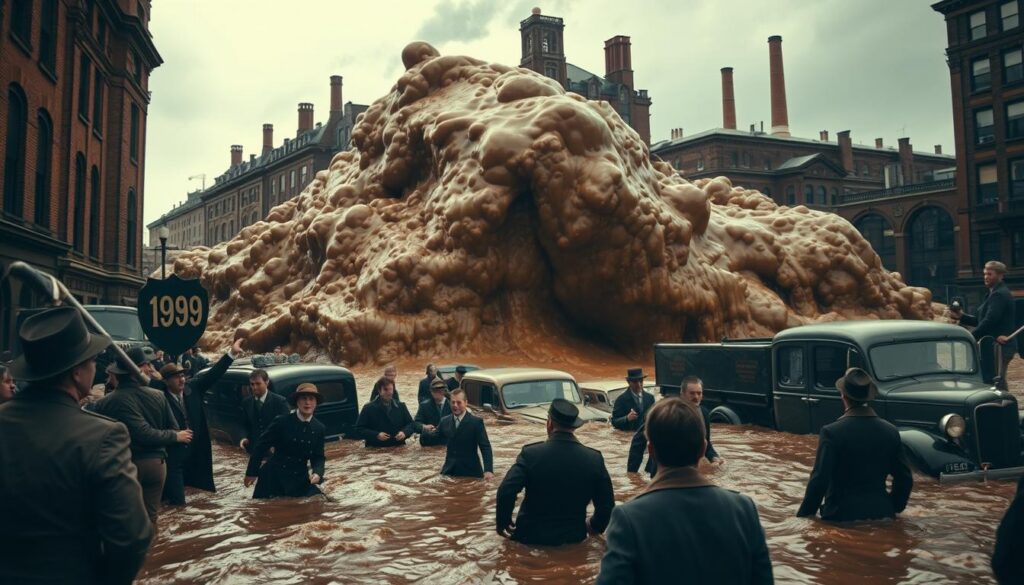
The Boston Molasses Flood was a tragic industrial disaster in Boston's North End. A tank holding over two million gallons of molasses burst, sending a deadly wave through the streets. The sticky substance moved quickly and trapped everything in its path.
The victims, destruction, and emergency response in Boston's North End
The wave destroyed buildings and damaged Boston's elevated railway. Twenty-one people died, and many others suffered injuries. Rescuers faced a chaotic scene as the syrup grew thick and cold.
Engineering failures, legal consequences, and changes in industrial safety
Investigators found that the tank was poorly built and lacked proper testing. The disaster led to one of Massachusetts's first class-action lawsuits. It also forced the state to adopt stricter engineering and industrial safety rules.
History also records mysterious events, such as the Tunguska explosion. The blast flattened millions of trees in Siberia but left no crater, leading to decades of scientific debate. Human error and natural forces both show that reality can be unpredictable.
| Event | Year | Primary Cause | Outcome |
|---|---|---|---|
| War of the Bucket | 1325 | Political Rivalry | Modena Victory |
| Great Emu War | 1932 | Crop Destruction | Military Failure |
| Boston Molasses Flood | 1919 | Structural Failure | Safety Reform |
| Tunguska Explosion | 1908 | Meteoroid Airburst | Massive Devastation |
Explosions, Bizarre Royal Deaths, and Historical Hoaxes
Reality often outruns the wildest fiction. The Boston Molasses Flood and the Great Emu War remind us that history can defy logic. These events show that strange stories can rest on solid, documented evidence.
Studying history demands close attention to detail. Scholars compare official records with popular myths to separate fact from fiction. This work matters when they examine bizarre royal deaths or complex political hoaxes that shaped public memory.
The Cadaver Synod shows how power and public performance once shaped the day's story. Looking deeper helps readers value the messy, uncertain nature of human experience. Careful research turns these strange moments into lessons about our world.
History remains alive and invites curiosity. Readers should question the stories they hear and seek primary sources. Exploring bizarre royal deaths and other oddities helps everyone understand human history's true complexity.