
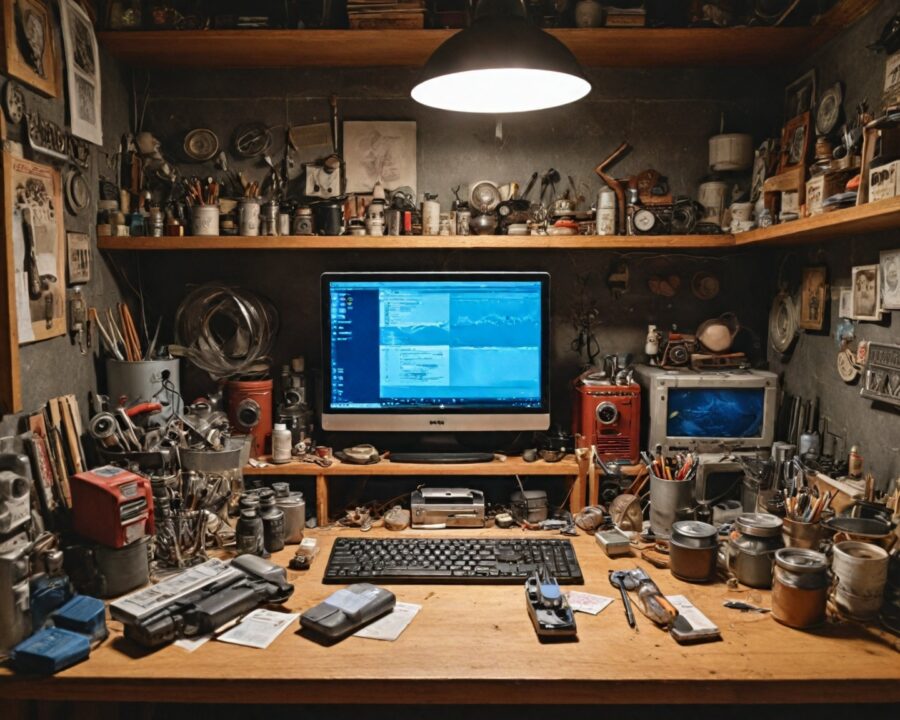
Introduction to Odd Inventions and Their Appeal
In the vast landscape of human creativity, inventions have always played a pivotal role in shaping the world. From the wheel to the internet, our capacity for innovation knows no bounds. However, among the seamless ergonomics and practical utility of many inventions, there exist a subset of creations that are undeniably strange and bizarre. These odd inventions captivate our imagination not just because of their novelty, but due to their ability to challenge our perception of what’s possible. They stretch the boundaries of normalcy and open the door for new ways of thinking.
The appeal of bizarre gadgets lies in their unexpectedness. They challenge norms and offer a delightful deviation from conventional day-to-day life. These curious creations often spring from eccentric ideas or are born out of sheer necessity, filling niches that many may not even realize exist. In exploring these odd inventions, we delve into the history of human ingenuity, laugh at the audacity of some concepts, and perhaps even find inspiration for the next big thing.
Historical Examples of Bizarre Gadgets
The annals of history are filled with inventions that, in hindsight, might seem more amusing than practical. One such example is the “Venetian Hadley,” a wide-brimmed hat with a built-in cup and straw system designed for men to discreetly drink from in public in the 18th century. Its practicality was limited, but it exemplified the creativity of the era. Another example is the “Anti-Garrotte” cravat from the Victorian era, engineered with steel bands to protect against the rampant crime of being garrotted or strangled from behind.
In the 20th century, the realm of odd inventions exploded with the advancement of technology. The “Radio Hat,” a wearable top hat radio receiver introduced in the 1940s, promised portable entertainment decades before it became mainstream. Although bulky and quickly obsolete, it was a precursor to modern wearable tech. Similarly, the “Baby Cage,” a wire contraption introduced in the 1930s for urban apartments, allowed fresh air to reach infants while keeping them safely suspended outside of windows in high-rise buildings.
These inventions might appear quaint or humorous today, but they offer insight into the zeitgeist of their times. They were born from specific societal challenges or the desire for advancement, highlighting the human spirit’s resilience and inventiveness. While some, like the Radio Hat, pointed towards future technological developments, others remain unique footnotes in history’s inventive narrative.
Modern-Day Unusual Innovations and Their Creators
In today’s fast-paced, tech-driven world, the tradition of crafting bizarre gadgets continues with even greater vigor. Modern inventors are pushing the envelope with gadgets that solve unconventional problems or simply exist to entertain and amaze. Among these is the “Hug Shirt,” designed by CuteCircuit, which uses embedded sensors and actuators to simulate the feeling of being hugged. While quirky, it aims to bridge the gap created by physical distance in an increasingly digital world.
Another contemporary oddity is the “Alarm Clock Rug,” which forces the user to stand on it to deactivate the alarm, thereby ensuring they are truly awake. It combines function with a gentle nudge towards better morning routines. Then there is the “Umbrella Drone,” developed to provide hands-free convenience by hovering above the user during rain showers. This invention, while simple in concept, utilizes advanced drone technology to enhance a mundane aspect of daily life.
Creators of such inventions often operate on the fringes of the mainstream, merging art with technology. These inventors blend futurism with the eccentric, envisioning a world where such gadgets make daily life more whimsical or efficient. While some of these devices might never achieve commercial success, they represent an important segment of the ideation process that can inspire more practical innovations down the line.
The Role of Culture in Inspiring Strange Devices
Culture plays a significant role in shaping the inventions and gadgets that arise at any given point in time. The cultural context not only informs the development of solutions to perceived problems but also fuels the imagination behind the bizarre. For example, Japanese culture, known for its love of innovation and quirkiness, has birthed numerous odd inventions, such as the “Pillow Tie” which combines a necktie and an inflatable pillow, catering to businessmen needing a quick nap.
Different cultures prioritize various traits, such as convenience, humor, and futurism, which influence the kind of gadgets that are invented. In the United States, a culture that esteems efficiency and convenience has led to the development of highly functional yet strange devices like the “Selfie Spoon,” a selfie stick attachment for spoons that allows users to photograph themselves while eating. While seemingly frivolous, it reflects societal trends and an obsession with social media.
Moreover, international events and societal shifts often directly inspire inventors to create gadgets that address unique cultural needs. During the height of the COVID-19 pandemic, numerous odd inventions emerged, such as hands-free door openers and personal UV sanitizers, illustrating how cultural circumstances spur innovation in unexpected ways. Ultimately, the intersection of culture and invention highlights humanity’s adaptability and the diversity of thought across different societies.
How Quirky Inventions Solve Unexpected Problems
Quirky inventions often address issues that the mainstream might overlook, offering solutions that are as unexpected as the problems they solve. Consider the “NoPhone,” which was created to address the compulsion of smartphone addiction. It imitates the shape and feel of a smartphone but is merely a plastic brick devoid of technology, serving as a physical deterrent to excessive phone use. Although its practicality may be limited for some, it effectively started conversations around digital detox.
Another example is the “Twirling Spaghetti Fork,” designed to help those who find eating spaghetti a cumbersome task. By mechanizing a common utensil, it eliminates the challenge of winding pasta around a fork, albeit in a humorous way. Similarly, “Pet Translator” apps have emerged, aiming to interpret animal noises into human languages, appealing to pet owners seeking a deeper connection with their pets. Though not scientifically proven, these apps encourage the exploration of human-animal communication.
These bizarre gadgets exemplify how unconventional approaches can sometimes provide novel answers to niche problems. They remind us that serious issues don’t always require serious solutions; sometimes, the oddest invention can offer the most elegant or refreshing approach, transforming inconvenience into amusement or opportunity.
Famous Inventors Behind the Weirdest Creations
At the heart of every invention lies an inventor, and those behind the weirdest creations often lead fascinating lives driven by unusual visions. R. Buckminster Fuller, an architect and inventor, produced numerous strange gadgets, such as the Dymaxion Car—a vehicle designed to be highly aerodynamic with three wheels and a teardrop shape. Though it never reached production, Fuller’s work inspired a legacy in futuristic design thinking.
Another prolific figure in the realm of bizarre inventions is Arthur Paul Pedrick, a British patent clerk who filed numerous patent applications for unconventional devices. His inventions include a system for delivering snow from the polar regions to areas with water shortages and a cat-flap door connected to a computer to understand a pet’s precise intentions. Though none of these reached commercial success, Pedrick’s imaginative designs continue to inspire.
Contemporary inventors like Dominic Wilcox continue this tradition. Known for projects such as GPS shoes that navigate wearers home and a stained glass driverless sleeper car made for London Design Festival, Wilcox’s creations blend art with functionality, capturing the essence of odd inventions by pushing creative boundaries beyond conventional norms.
Common Questions About Odd Inventions and Their Purpose
What makes an invention “odd” or “bizarre”?
An invention is generally considered “odd” or “bizarre” when it is unconventional, uncommon, or strikes one as humorous due to its peculiar function or design. Such inventions may focus on niche problems or reflect a unique blend of creativity and utility, often provoking surprise or amusement.
Why do inventors create bizarre gadgets?
Inventors create bizarre gadgets for various reasons, including the desire to solve unusual problems, explore creative boundaries, or simply to entertain. These inventions might not fit conventional standards but often provoke thought and challenge existing paradigms of functionality.
Are bizarre gadgets practical?
While many bizarre gadgets may not seem practical at first glance, some do serve specific purposes or address particular niche needs. Their practicality often depends on context, with some providing unique solutions to everyday challenges while others serve more entertainment or artistic roles.
What are some examples of successful odd inventions?
Successful odd inventions include items like Crocs, which gained popularity for their comfort despite their distinct appearance, or the Snuggie—a blanket with sleeves that became a cultural phenomenon due to its blend of convenience and humor.
Who are typical users of bizarre gadgets?
Typical users of bizarre gadgets range from collectors, enthusiasts, and early adopters of technology to individuals in niche markets with specific needs. These gadgets also attract those who enjoy novelty and humor in functional items.
How do odd inventions impact mainstream technology?
Odd inventions often challenge mainstream technology by experimenting with unconventional methods or features. They encourage innovation, inspire new ideas, and occasionally lead to breakthroughs that influence broader technological development.
Do all odd gadgets become commercially available?
Not all odd gadgets become commercially available; many remain prototypes or limited-run items. The factors determining their market availability often include practicality, consumer interest, production cost, and technological feasibility.
Can anyone become an inventor of bizarre gadgets?
Yes, anyone can become an inventor of bizarre gadgets. All it takes is creativity, a willingness to explore unconventional ideas, and the perseverance to develop and refine those concepts into tangible products or prototypes.
The Impact of Strange Devices on Society and Technology
Strange devices, whether appearing for a brief moment or becoming a fixture in society, have a significant impact on both cultural and technological fronts. They often serve as catalysts for change by challenging perceived limitations and illustrating inventive possibilities. Through their unconventional nature, they provoke discussions and reshape consumer expectations, influencing future innovation directions.
For instance, devices that address niche issues often point out overlooked aspects of daily life, prompting further investigation and innovation. Bizarre gadgets can inspire mainstream companies to invest in user-friendly or unique product designs. Consider touch-free technology and wearables that started as quirky innovations but have since become integral to how we interact with digital information.
Moreover, these devices enhance society’s acceptance of diversity in thought and approach. Embracing the weird and unexpected paves the way for inclusivity in innovation, inviting diverse perspectives and encouraging broader participation in technological advancement. By celebrating these creations, society acknowledges that there’s room for bold creativity and that mainstream progress is often born from initially fringe ideas.
Practical Applications of Quirky Inventions in Daily Life
Quirky inventions often integrate into daily life in fascinating ways, offering functionality wrapped in whimsy. One prominent example is the “Scalp Massager,” which looks like an alien artifact but provides soothing relaxation, demonstrating how pairing odd designs with relatable functions satisfies consumer demands. Similarly, wearable blankets like the “Original Comfy” merge practicality with novelty, catering to comfort-oriented lifestyles.
In the kitchen, bizarre gadgets like the “Avocado Slicer” simplify meal preparation. This tool efficiently removes pits and slices avocados, highlighting how whimsical designs can bring ease to culinary experiences. Another notable invention is the “Self-Stirring Mug,” ideal for hot beverage enthusiasts, eliminating the need for spoons while sparking joy.
These creations may begin as peculiar novelties, yet their incorporation into everyday routines showcases the potential of odd inventions to simultaneously address practical issues and enliven consumer environments. By exploring these unusual yet useful innovations, we challenge ourselves to stay open to unconventional solutions that enhance our living experiences.
How to Find and Explore More Odd Inventions
Discovering odd inventions can be a fulfilling endeavor for those with curious minds. Start by delving into websites and platforms dedicated to unusual gadgets such as Kickstarter or Indiegogo, where inventors frequently share and fund projects. These platforms provide opportunities to get involved by supporting a novel idea or even participating as a beta tester.
Trade shows and innovation expos offer firsthand experiences and direct interaction with inventors, allowing potential buyers or curious enthusiasts to explore gadgets before they hit the market. Additionally, various online communities, such as Reddit’s “r/WeirdGifts,” provide insiders’ looks into fascinating product niches, catering to those hungry for the unique and unconventional.
Collector’s blogs and publications, often sharing thematic content about bizarre gadgets, make excellent resources for enthusiasts, while museums of innovation or technology offer historical context and appreciation of these inventions’ cultural significance. By exploring these avenues, anyone can immerse themselves in the world of odd inventions and experience firsthand the creativity within human innovation.
Recap
Throughout history, bizarre gadgets have pushed the boundaries of invention, from curious historical contraptions to today’s ingenious oddities. These devices emerge from cultural trends and social needs, often solving surprising problems with innovative designs. Famous inventors known for their eccentricity have left lasting impacts, shaping the tapestry of technological progress. Meanwhile, the practical applications of such inventions integrate seamlessly into daily life, challenging traditional norms and sparking exploration into further up-and-coming innovations.
The journey of discovering these unusual inventions draws from a blend of curiosity, culture, and creative vision, highlighting the value of diversity in thought and approach. As gadget enthusiasts continue to unearth and celebrate the weirdest creations, they contribute to an ongoing dialogue about the nature of innovation itself, illustrating how even the most bizarre inventions can leave a profound mark on society.
Conclusion
The world of bizarre gadgets is a testament to the human spirit’s endless curiosity and imaginative capacity. While many inventions start as whimsical creations born out of curiosity or necessity, they can evolve to unlock new vistas of possibility in both practical and conceptual realms. Whether it’s a historical oddity or a modern marvel, these curious devices provoke thought, inspire laughter, and sometimes even lead to transformative shifts in technology and culture.
By examining these creations, we acknowledge the integral role that odd inventions play in fostering an environment rich with ideas. Their very existence challenges the status quo, celebrating the notion that the path to true innovation is often paved with experimentation and an openness to the unusual. This dynamic ensures that our lens on the world is ever-expanding, encouraging societies to embrace not only the practical but also the imaginative facets of progress.
As we look to the future, the continuous exploration and appreciation of bizarre gadgets will undoubtedly inspire new generations of inventors to seek out extraordinary solutions to ordinary problems, thereby perpetuating a legacy of creativity and innovation that knows no limits. By celebrating these peculiar creations, we keep the flame of human ingenuity alive, always ready to explore the next frontier of possibility.
References
- Jones, T. (2022). The Spirit of Invention: A Cultural History of Bizarre Gadgets. New York: HarperCollins.
- Smith, L. (2021). “The Unexpected Inventor: How Odd Gadgets Have Changed Our World”. Innovation Quarterly, 35(4), 12-19.
- Williams, A. (2023). Quirky Creations: The People and Ideas Behind Unusual Inventions. London: TechNarrative Press.