
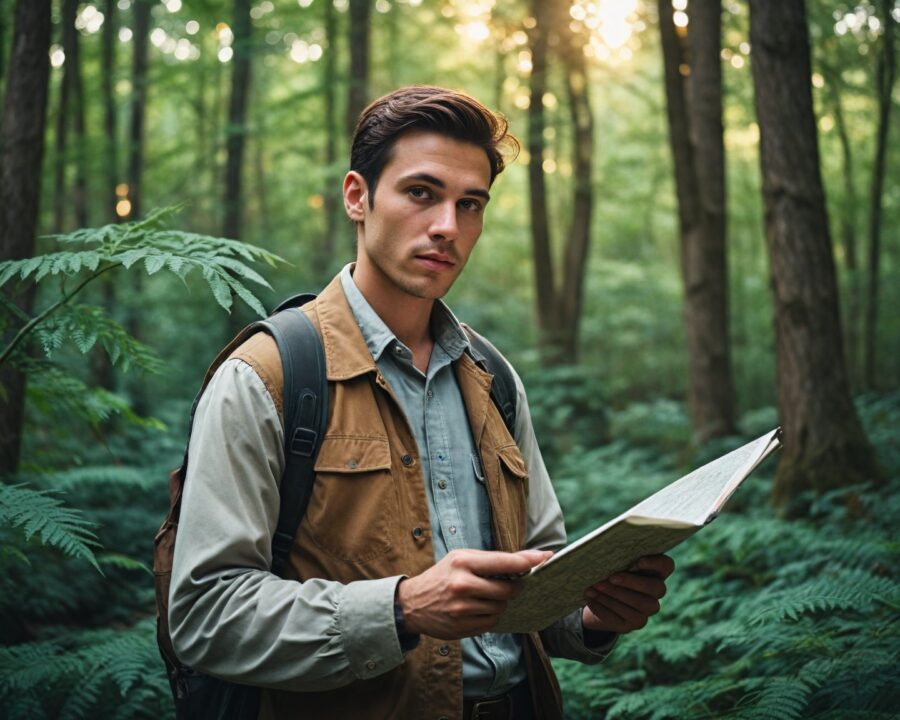
Introduction to Lost Navigation Techniques
In the age of ubiquitous GPS and digital maps, it is easy to overlook the sophisticated navigational skills that ancient civilizations developed over centuries. Before the advent of modern technology, humans relied heavily on their surroundings and improvisational techniques to traverse vast landscapes and open seas. These ancient navigation methods, passed down through generations, were not merely practical skills but also a testament to human ingenuity and an intimate relationship with nature.
Rediscovering these lost navigation techniques provides not just historical insight but practical value in today’s world. As we continue to face growing technological and environmental challenges, understanding how our ancestors navigated the globe can offer valuable lessons in resilience and adaptability. These ancient practices serve as a bridge connecting us to the past while enriching our approach to sustainable living in the future.
The Importance of Traditional Wayfinding in Modern Times
Traditional wayfinding refers to the methods used by ancient cultures to navigate before the invention of modern tools. These skills remain significant today for several reasons. Firstly, they foster a profound understanding of the natural world, encouraging practitioners to pay close attention to environmental cues such as weather patterns, celestial movements, and geographical features. Mastering these techniques requires patience and awareness, which can develop mindfulness and appreciation for nature.
Secondly, traditional navigation skills are vital in situations where technology fails. Whether through unexpected power outages, technological malfunctions, or being in remote areas where GPS does not reach, knowing how to navigate without electronic assistance can be a lifesaver. This reinforces self-reliance and preparedness in various scenarios, making ancient navigation methods a valuable asset to modern travelers and adventurers.
Moreover, these skills contribute to cultural preservation and pride. Many indigenous cultures maintain rich traditions of oral history and navigation, which form the core of their cultural identity. By studying and practicing these traditional methods, there is potential to preserve these important cultural narratives and further intercultural understanding and respect.
Overview of Ancient Navigation Methods Used by Different Cultures
Ancient navigation techniques vary across cultures, reflecting the diverse environments and challenges faced by early navigators. For instance, Polynesian navigators, known for their remarkable voyages across the Pacific Ocean, relied on a sophisticated understanding of stars, waves, and ecological signs. This skill, called wayfinding, involved observing the interplay between celestial bodies, ocean swell patterns, and animal behaviors.
In contrast, the Vikings of Northern Europe were famed for their seafaring prowess, using a sun compass and detailed knowledge of the sun’s position to find their way across the North Atlantic. They also employed simple yet effective tools like the sunstone, a mineral believed to help locate the sun on overcast days.
In the desert regions, such as those inhabited by the Bedouins, navigation was reliant on landmarks and wind patterns. These nomadic peoples developed an intimate understanding of the constellations, which served as a sky map, guiding them on their extensive travels through the barren landscapes.
| Culture | Primary Navigation Methods | Key Tools Used |
|---|---|---|
| Polynesians | Celestial navigation, wave reading | Star compass, vaka (canoe) |
| Vikings | Sun compass, sunstone | Sun compass, sunstone |
| Bedouins | Landmark navigation, wind patterns | Constellation charts |
How Celestial Navigation Guided Early Explorers
Celestial navigation is one of the most developed and commonly used ancient navigation methods, serving as a fundamental skill for early explorers. It uses the positions of celestial bodies—such as the sun, moon, stars, and planets—to determine one’s position and course. This method was particularly crucial on open seas, where conventional landmarks are absent.
The Polynesians perfected this technique with their deep understanding of the constellations and the sky’s movements. They were able to use the changes in the position of stars and the sun’s path across the sky to maintain their course. This form of navigation was so effective that it enabled long-distance voyages across extensive distances of open ocean without any modern tools.
Mediterranean sailors, including the Greeks and Romans, also relied on celestial bodies to guide their journeys. Observing the Pole Star was a critical practice, as it provided a constant reference point in the sky. The ability to read the sky enabled these ancient mariners to expand their horizons, paving the way for cultural and commercial exchanges that shaped history.
The Role of Natural Landmarks in Traditional Navigation
Natural landmarks played a pivotal role in traditional navigation, especially on land. For navigators without access to celestial cues, landmarks served as tangible reference points, enabling travelers to orient themselves and maintain a consistent direction. This method was widely used by desert nomads, forest dwellers, and those navigating complex terrains.
For example, the Bedouins traversing the vast Arabian Desert relied heavily on their knowledge of prominent landmarks such as dunes, rock formations, and vegetative areas that stood out against the endless sands. This method allowed them to plot routes and discover watering holes in the seemingly featureless terrain.
Similarly, Native American tribes in North America used the myriad features of the natural landscape, such as mountain ranges, river systems, and boulders, to navigate their territories. Their deep understanding of local ecology and geography was essential for effective movement across vast lands.
Natural landmarks continue to be relevant today, not only for traditional practitioners but also for wilderness enthusiasts and hikers. Understanding how to identify and use landmarks as navigational aids can enhance outdoor experiences and foster a deeper connection with the environment.
Understanding the Use of Wind and Ocean Currents for Wayfinding
The use of wind and ocean currents as navigational tools was invaluable for ancient mariners, allowing them to optimize their routes and save time and resources. Understanding these natural forces enabled sailors to navigate efficiently even when other tools were not available.
Polynesian navigators were adept at reading the ocean’s currents and swells. By observing the direction and strength of waves and scrolling patterns on the water surface, they could determine their position and adjust their heading accordingly. This understanding of ocean behavior facilitated their epic voyages across the vast Pacific, contributing to the spread of their culture across the islands.
Similarly, Greek and Roman sailors in the Mediterranean Sea used prevailing winds, like the Mistral and the Sirocco, to aid their navigation. These predictable wind patterns formed part of the natural navigation toolkit, allowing sailors to anticipate changes in the weather and adapt their sails accordingly.
Learning to interpret wind patterns and currents remains relevant today, especially for sailors and environmental scientists. Understanding natural dynamics enhances nautical safety and contributes to the sustainable management of marine environments.
Common Questions About Lost Navigation Techniques
What are the benefits of learning traditional navigation skills?
Traditional navigation skills enhance environmental awareness, increase self-reliance, and provide backup options when technology fails. They also connect practitioners to cultural histories and foster a deeper appreciation for natural environments.
Can ancient navigation techniques be used today?
Yes, many ancient navigation techniques can still be applied today. They are especially useful for understanding geography, sailing, trekking, and other outdoor activities where technology might be unavailable or unreliable.
How did ancient sailors navigate without modern tools?
Ancient sailors relied on celestial navigation, understanding of ocean currents, and wind patterns. They used the stars, sun, and natural landmarks to determine their positions and plot courses across seas and continents.
Were ancient navigation methods accurate?
While not as precise as modern GPS, many ancient navigation methods were highly effective and reliable, allowing successful long-distance voyages and exploration. Techniques like celestial navigation offered dependable guides for proactive explorers.
What role do stars play in celestial navigation?
Stars are crucial in celestial navigation as they provide fixed points that help navigators determine their latitude and direction. Patterns like constellations offer reference frameworks for wayfinding.
Is it difficult to learn traditional navigation methods?
It depends on the specific method and individual learning capacity. While some techniques can be complex, many are straightforward and can be practiced with dedication, offering both rewarding learning experiences and practical skills.
Why is it important to preserve lost navigation techniques?
Preserving lost navigation techniques helps maintain cultural heritage, provides educational insights into human history, and offers alternative solutions to modern challenges related to navigation and sustainability.
Practical Steps to Learn and Practice Traditional Navigation
To begin learning traditional navigation, start by immersing yourself in relevant resources. Books, documentaries, and online courses dedicated to navigation skills can provide foundational knowledge. Focus on critical areas such as celestial navigation, understanding weather patterns, and reading natural landmarks.
Practice is essential for mastering these skills. Spend time outdoors observing the sky, learning constellations, and noting the sun’s movement. Nighttime practice is particularly beneficial for honing your celestial navigation competencies. Engage with environmental features during hikes or wilderness trips, where you can apply newly-acquired skills in real-world scenarios.
Consider joining groups or workshops focused on traditional navigation techniques. These offer invaluable learning from experienced practitioners. Participating in community events or workshops also supports a collaborative learning environment, rich with diverse insights.
Modern Applications of Ancient Navigation Skills
Despite technological advancements, ancient navigation skills retain relevance and application in contemporary settings. Hikers, sailors, and outdoor enthusiasts benefit from understanding the principles of traditional navigation, especially when venturing into areas with limited access to reliable technology. These skills expand one’s toolset, ensuring adventures remain safe and enjoyable.
Beyond recreational use, these techniques contribute to environmental monitoring and research. For instance, understanding weather and ocean patterns aids environmental scientists in studying climate change impacts and developing sustainable management practices for natural resources.
Furthermore, ancient navigation methods inspire innovation in technological development. Advances in sustainable transport systems and geolocation technologies often draw from historical insights, fostering the integration of traditional knowledge with cutting-edge solutions.
Conclusion: Preserving and Reviving Lost Navigation Techniques
The rediscovery and revival of lost navigation techniques hold significant promise—not just as a nostalgic look back at a bygone era, but as an essential part of our present and future. These skills underscore a broader shift towards a more harmonious relationship with nature, challenging us to step away from our dependency on technology and reconnect with the planet’s inherent wisdom.
Incorporating ancient navigation methods into our educational systems, outdoor activities, and everyday lives ensures that this knowledge lives on. It inspires a new generation to appreciate the resilience and adaptability of our ancestors while fostering a sustainable connection with our environment. Embracing these timeless practices equips us with a blend of historical foresight and practical competence, positioning us better for future challenges.
Recap of Main Points
- Ancient navigation techniques provide invaluable lessons in environmental understanding, cultural heritage, and self-reliance.
- Celestial navigation, natural landmarks, and understanding wind and ocean currents were key methods used by various cultures.
- The methods are applicable today in areas such as outdoor activities and environmental research.
- Learning traditional navigation offers practical skills and cultural enrichment, helping preserve our collective human history and knowledge.
References
- Turner, D. (2021). Navigation: A Historical Perspective. Maritime Studies Press.
- Finney, B. (1994). Voyage of Rediscovery: A Cultural Odyssey through Polynesian Ways. University of California Press.
- Southall, J. (2010). Ancient Navigation Techniques. Historical Navigation Society.