

A human mind is incredibly complex. It changes itself every day based on new experiences.
Experts call this process plasticity. It helps us learn and grow by changing how our brain connects.
But, being flexible can also lead to bad loops. During brain development, negative actions can create harmful cycles.
Understanding these factors gives us big insights into treating disorders. This research helps many patients in Brazil find better health solutions.
Scientists in Brazil study mental shifts to improve psychiatric care. They look at every change in these structures to stop harmful behaviors.
This work stops bad actions and improves lives. Experts look at specific biological signals to find why certain routines become stuck.
Research shows biology drives our daily choices. By studying neural pathways, doctors find better cures for behavioral struggles.
Biology influences every choice we make. Understanding mental growth leads to better care, making this field very important today.
Key Takeaways
- Neuroplasticity allows for constant mental growth.
- Repeated actions solidify neural pathways.
- Environmental factors influence neural growth.
- Adaptability can cause negative loops.
- Early intervention aids psychiatric recovery.
- Understanding biology helps break cycles.
The Science of Neural Pathways and Habit Formation
Neural pathways are how our brains connect and change. They help us learn and adapt every day. These pathways are shaped by our experiences and learning.
Neuroplasticity means our brains can change and form new connections. This idea shows that our brains can change, not just when we're young. It helps us understand how habits are formed and can be changed.
Understanding Neuroplasticity in Daily Life
Neuroplasticity lets our brains adapt and learn new things. It helps us recover from injuries too. Our brains update and refine pathways for habits and routines every day.
When we start learning something new, it's hard and requires focus. But with practice, it becomes easier and more automatic. This is because the pathways in our brain get better with repetition.
Repetition is key to making new habits and strengthening pathways. The more we do something, the more it becomes a part of us. This is why consistent practice is important for learning and forming good habits.
The Role of the Basal Ganglia in Routine Behavior
The basal ganglia are important for habits and routine actions. They help us move, learn, and even control our emotions. They make it easier for us to do things without thinking about them.
Problems with the basal ganglia can lead to neurological and psychiatric issues. Understanding its role helps us see how the brain shapes our habits and behaviors.
How the Brain Develops Abnormal Patterns and Habits
The brain's ability to adapt is key in forming habits. This is especially true when it comes to habit formation.
The Shift from Goal-Directed Actions to Automatic Responses
At first, our actions are goal-directed. We do them with purpose and effort. But, with repetition, the brain automates these actions, turning them into habits.
The basal ganglia, a brain part, helps in this process. It's involved in motor movements, learning, and emotions. This automation is good for freeing up our minds for other tasks.
But, if these habits are bad, it's hard to break them. For example, negative behaviors can become hard to change.

When Reward Systems Overpower Cognitive Control
The brain's reward system also plays a big role in habit formation. Rewards make us repeat certain behaviors. Over time, this can lead to compulsive actions.
The table below shows the main differences between goal-directed actions and automatic responses:
| Characteristics | Goal-Directed Actions | Automatic Responses |
|---|---|---|
| Level of Consciousness | High | Low |
| Cognitive Effort | Significant | Minimal |
| Role of Reward System | Less prominent | Dominant |
Understanding how habits form helps us tackle bad habits. It also guides us towards better behaviors.
Recent Findings in Neurological Research
Neurological research has made big strides in understanding brain development and plasticity. This knowledge helps us grasp how our brains change and adapt over time.
Studies now focus on the neural circuits behind our actions and thinking. By studying these circuits, researchers can spot patterns that might lead to bad habits or thoughts.
Breakthroughs in Mapping Maladaptive Neural Circuits
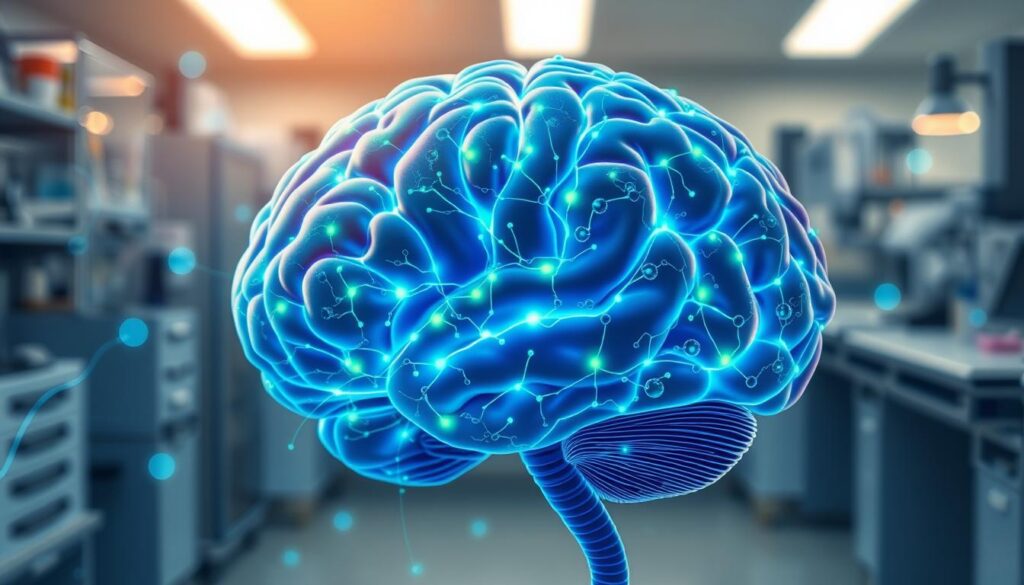
Scientists have made a major leap in mapping maladaptive neural circuits. These circuits are linked to harmful behaviors. Knowing how they work lets scientists create specific treatments.
Advanced imaging has helped us see these circuits clearly. This breakthrough is key for treating compulsive behaviors.
The Impact of Environmental Triggers on Brain Development
Our environment greatly influences our brain's growth and function. Environmental triggers can shape our brain's pathways, leading to abnormal habits.
Research shows that certain stressors can change our brain's structure and function. This affects our thinking and behavior.
| Environmental Trigger | Impact on Brain Development | Potential Outcome |
|---|---|---|
| Stress | Affects the prefrontal cortex, altering decision-making processes | Increased risk of anxiety disorders |
| Social Isolation | Impacts the development of neural circuits related to social behavior | Potential for increased aggression or withdrawal |
| Toxin Exposure | Can damage neural tissue, disrupting normal brain function | Various cognitive and behavioral deficits |
It's vital to know how environmental factors affect our brain. By creating a healthy environment, we support normal brain growth. This reduces the chance of developing bad habits.
The Connection Between Stress and Abnormal Cognitive Patterns
Stress and brain development are closely linked. Chronic stress can deeply affect the brain, especially areas that handle emotions and thinking.
Chronic stress changes the brain's structure and how it works. This can lead to abnormal brain conditions. These conditions can cause various cognitive and behavioral problems.
How Chronic Stress Rewires the Prefrontal Cortex
The prefrontal cortex is key for making decisions, planning, and controlling impulses. Chronic stress can change this area, affecting its function and connections. This can make it harder to think clearly and control emotions.
Research shows chronic stress can alter the prefrontal cortex's size and activity. This can lead to abnormal neurological development. It contributes to many cognitive and behavioral issues.
The Vicious Cycle of Anxiety and Repetitive Behaviors
Anxiety and repetitive behaviors are closely tied, forming a vicious cycle. Anxiety can cause these behaviors as a way to cope. This can make anxiety worse, creating a hard cycle to break.
It's important to understand how anxiety and repetitive behaviors interact. By tackling the root causes of anxiety and stopping the cycle of repetitive behaviors, we might reduce the risk of abnormal neurological development.
Clinical Perspectives on Abnormal Brain Development
Looking into abnormal brain development shows how early help is key. These issues can cause health problems. So, it's vital to grasp these conditions well.
Experts say knowing about abnormal brain development is crucial. They point out the need for a full approach to diagnose and treat related health issues.
Expert Analysis on Behavioral Health Trends
Experts have found a strong link between abnormal brain development and behavioral disorders. For example, brain development issues can cause ADHD and autism spectrum disorder.
- Early diagnosis is critical for effective intervention.
- Behavioral therapies can significantly improve outcomes for individuals with abnormal brain development.
- A multidisciplinary approach is often necessary for comprehensive care.
The Intersection of Genetics and Learned Habits
The mix of genetics and learned habits is complex in abnormal brain development. Studies show genetics can make some people more likely to have certain brain issues.
Also, habits and the environment shape brain development. Knowing this is key for making effective treatments.
- Genetic screening can help identify individuals at risk.
- Environmental modifications can mitigate some genetic risks.
- Personalized treatment plans can be developed based on an individual's genetic and environmental profile.
By looking at clinical views on abnormal brain development, we can understand the complex factors better. This helps us find better ways to prevent and treat these issues.
Societal Implications and Public Health Responses
Compulsive behaviors are becoming more common in our society. This has big effects on public health and needs a wide-ranging solution. Looking into habits formation in the brain and neural patterns shows we need many approaches to tackle this.
These compulsive patterns, from substance abuse to repeating actions, affect more than just the person. They also impact their family, community, and the healthcare system.
Addressing the Rise of Compulsive Patterns in Modern Society
The world today is full of stress, digital connections, and lifestyle changes. These factors lead to more compulsive behaviors. Things like:
- Social media influence
- Economic pressures
- Less physical activity
- More stress
Shape our neural patterns and lead to compulsive behaviors.
To fight this, we need to focus on prevention, early help, and treatment. This means:
- Telling people about the dangers of compulsive behaviors
- Encouraging healthy lifestyles
- Making mental health services easy to get
Strategies for Promoting Healthy Neural Development
It's key to support healthy neural patterns and habits formation in the brain. Ways to do this include:
- Mindfulness and meditation to improve control
- Exercise to boost mental health
- Good nutrition for brain health
By using a wide approach, we can build resistance to compulsive behaviors. It's also vital to keep studying these behaviors to help shape public health policies.
In summary, we must tackle compulsive behaviors in our society with a strong public health effort. By understanding what causes these behaviors and using strategies for healthy neural development, we can lessen their effects.
Conclusion
The brain's development of abnormal patterns and habits is complex. It's influenced by many factors, like neuroplasticity and environmental triggers. Knowing how these patterns form is key to tackling related brain and mental health issues.
Cognitive patterns shape our behavior. Finding out what causes them is vital. By focusing on healthy brain growth and stopping bad habits, we can help people and society.
More research on brain development and function is needed. It will help us understand and treat abnormal cognitive patterns better. By studying genetics and environment, we can find better ways to keep our brains healthy.