
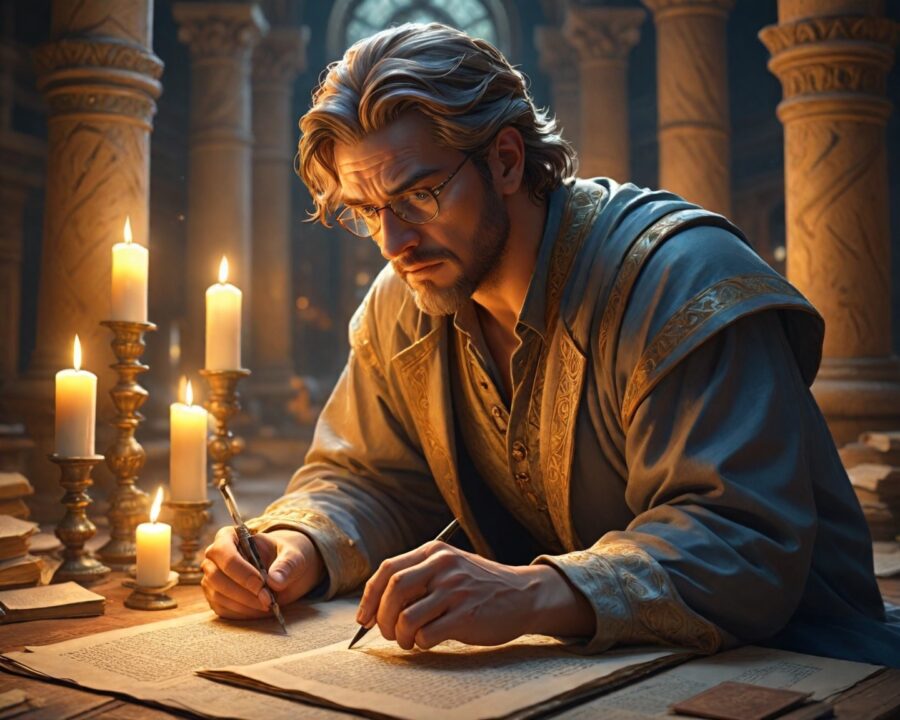
Introduction to Forgotten Manuscripts and Their Significance
In the vast expanse of historical scholarship, forgotten manuscripts stand as both tantalizing enigmas and crucial keys to our understanding of the past. These ancient texts, often buried by layers of time and neglect, offer a unique glimpse into previous eras, revealing insights about cultures, philosophies, and scientific knowledge long considered lost. Many of these texts were penned by luminaries in environments far removed from today’s hustle and bustle, yet their influence still resonates with modern scholarly pursuits, underscoring the invaluable nature of their contents.
The significance of forgotten manuscripts transcends mere academic curiosity. They are instrumental in reshaping modern knowledge by providing firsthand accounts and context that modern reconstructions may lack. These documents have the potential to upend established historical narratives or confirm traditional knowledge. As such, the study and preservation of these manuscripts are critical in ensuring that the wisdom of the ancients continues to inform contemporary thought and culture.
The Process of Discovering and Preserving Lost Manuscripts
Discovering lost manuscripts is often a journey that blends serendipity with meticulous scholarship. These hidden treasures can surface in various forms, from hidden monastery chambers to private collections unearthed in family estates. The process often starts with a hint—a footnote in an ancient catalog, a reference in a correspondence—that prompts scholars to embark on a quest to rediscover these lost works.
Once a manuscript is found, the preservation process begins. This involves stabilizing fragile materials and employing techniques such as digitization to ensure long-term access. Preservationists must painstakingly work to prevent further deterioration, using everything from climate-controlled environments to digital imaging technologies.
The preservation process is crucial not only for maintaining the physical condition of these manuscripts but also for ensuring that their content remains accessible to future generations. By creating digital archives, scholars can study these texts without causing further damage to the originals, hence striking a balance between conservation and accessibility.
Famous Examples of Rediscovered Manuscripts and Their Impact
History is replete with examples of rediscovered manuscripts that have altered our understanding of various fields. The Dead Sea Scrolls, discovered in the mid-20th century, are perhaps one of the most renowned examples. These texts offered profound insights into the religious practices and beliefs of the Second Temple Judaism community and had significant implications for biblical scholarship.
Another notable example is the Archimedes Palimpsest, which unveiled uncharted mathematical theories by the ancient Greek mathematician Archimedes. Through advanced imaging technologies, scholars uncovered layers of writing that had been scraped off and overwritten in later centuries, thus reclaiming Archimedes’ lost contributions.
| Manuscript Name | Discovery Date | Impact |
|---|---|---|
| Dead Sea Scrolls | 1947 | Biblical and historical studies |
| Archimedes Palimpsest | 1906 (rediscovered) | History of mathematics |
| Codex Sinaiticus | 19th century | Biblical textual criticism |
Each of these rediscovered manuscripts provided fresh perspectives and catalyzed further research, underscoring their impact on modern knowledge.
The Role of Technology in Uncovering Hidden Texts
The advent of technology has revolutionized the way scholars uncover and study ancient texts. With the help of multispectral imaging and X-ray fluorescence, researchers can reveal hidden writing beneath the surface of seemingly blank pages. These imaging techniques allow scholars to see layers of text that would otherwise remain invisible to the naked eye.
Furthermore, digital databases and machine learning algorithms have made it possible to sift through large collections of manuscripts quickly. These tools can identify patterns and contextual meanings that can be missed through manual analysis, thereby enhancing the efficiency and accuracy of manuscript studies.
Technology has also democratized access to these texts by making them available to a global audience through online libraries. Such accessibility ensures that scholars from around the world can collaborate and contribute to the interpretation of these significant documents.
Challenges in Interpreting and Authenticating Ancient Documents
Despite the advances in technology, interpreting ancient manuscripts remains fraught with challenges. Manuscripts often exhibit language variations, dialects, and idiosyncratic scribal practices that can obscure their true meanings. Contextual knowledge is essential to decipher and accurately interpret these nuanced elements.
Authentication poses another significant challenge. The age and authenticity of a manuscript often hinge on factors such as material composition and handwriting analysis. Forgeries are not uncommon, and distinguishing between genuine ancient texts and modern reproductions requires rigorous scientific analysis and expert scrutiny.
Scholars must also navigate the uncertainties inherent in incomplete or fragmented texts. Missing sections can lead to gaps in understanding, necessitating careful reconstruction and cautious interpretation to avoid speculative conclusions.
How Forgotten Manuscripts Influence Modern Science and Culture
The rediscovery of forgotten manuscripts has considerable influence across various disciplines. In science, ancient texts have rekindled interest in historical methodologies and practices that modern scholars find inspiring or informative. For instance, ancient medical texts can reveal bygone remedies and procedures that inform contemporary practices.
Culturally, rediscovered manuscripts offer a deeper understanding of historical narratives, social norms, and philosophical thoughts. They enrich our appreciation of the arts and humanities, fostering a sense of continuity and connection with the past.
The dialogues initiated by these manuscripts often transcend their era, sparking new discussions and intellectual pursuits that resonate with contemporary cultural and scientific agendas.
Common Questions About Manuscript Preservation and Restoration
What techniques are used to preserve ancient manuscripts?
Preservation involves stabilizing the manuscript through climate control, using protective enclosures, and employing techniques such as digitization to ensure long-term access without causing further physical deterioration.
How can digitization help in manuscript preservation?
Digitization helps by creating a high-fidelity replica of the manuscript. This allows for widespread access while preserving the integrity of the physical original, reducing the need for potentially damaging physical handling.
Why are some manuscripts more prone to degradation than others?
The materials used, such as the type of ink or paper, heavily influence a manuscript’s susceptibility to degradation. Environmental factors such as humidity, temperature, and exposure to light also play significant roles.
Are there ethical considerations in the restoration of ancient documents?
Yes, restoration efforts must balance between making a manuscript readable and maintaining its historical authenticity. Overzealous restoration can lead to loss of original features or historical value.
What is the role of private collectors in manuscript preservation?
Private collectors can play a critical role in preserving manuscripts, but they must adhere to ethical guidelines that prioritize proper conservation practices and respect for cultural heritage.
The Ethical Considerations in Handling Historical Documents
Handling historical documents ethically is crucial to preserving their integrity. Researchers must adhere to established guidelines that respect the cultural and historical significance of these works. This includes obtaining proper permissions, crediting sources, and ensuring that any intervention does not irreversibly alter the document.
Furthermore, scholars must be mindful of the cultural contexts and sensitivities associated with these texts. Manuscripts that are sacred or hold cultural value require careful consideration to avoid unintended offense or exploitation.
Ethical considerations also extend to the equitable access to these texts. Ensuring that research findings and digital copies are shared with the public and sourced communities helps demystify these works and fosters global scholarly collaboration.
Practical Steps for Amateur Historians to Explore Manuscript Studies
For amateur historians interested in manuscript studies, taking the first step can be as simple as engaging with digital resources. Many libraries and institutions offer extensive online collections that are freely accessible. Engaging with these resources can help build a foundation of knowledge about manuscript contexts and contents.
Joining manuscript conservation workshops or academic seminars can deepen understanding and refinement skills necessary for authentication and interpretation. These programs often offer insights from seasoned experts and expose budding historians to ongoing scholarly debates.
Finally, collaborating with professional historians or attending lectures can provide guidance and mentorship. This real-world engagement is invaluable, as it grounds theoretical knowledge with practical examination and scholarly discourse.
Conclusion: The Enduring Legacy of Forgotten Manuscripts
From hidden corners of ancient libraries to the global reach of the internet, forgotten manuscripts have carved an enduring legacy in modern knowledge. They continue to inform, inspire, and sometimes challenge the preconceptions of what we know about the past. As technology advances and scholarly communities broaden, the possibilities for uncovering new insights from these ancient texts are boundless. Manuscripts serve as timeless messengers, bridging the past with the present, ensuring that wisdom transcends generations.
Recap
Forgotten manuscripts offer deep insights into our history and have a profound impact on modern scholarship across disciplines. Technology revolutionizes text discovery and study, while ethical considerations remain vital in handling historical works. By ensuring preservation, understanding, and accessibility, these ancient texts continue to enlighten and inspire future generations.