
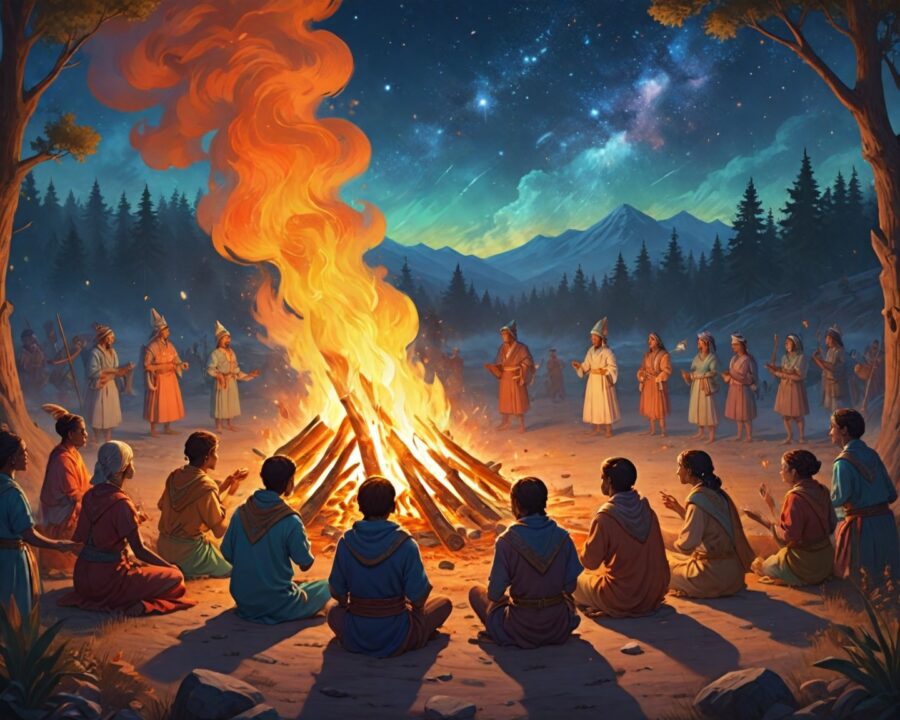
Introduction to Ancestral Myth Rituals and Their Significance
Throughout history, human societies have placed great value on the traditions and stories passed down through generations. Ancestral myth rituals are at the heart of these traditions, providing a framework through which communities can express their shared beliefs, values, and history. These rituals, steeped in mythology, offer a tangible connection to the past, allowing individuals and groups to maintain a sense of identity amidst an ever-changing world.
The significance of ancestral myth rituals lies in their ability to encapsulate the essence of a culture’s worldview. Through symbolic actions and storytelling, these rituals preserve the collective memory of a community, linking the present with the past. They are not only a means of recalling ancient stories but also a way to reinforce cultural norms, teach moral lessons, and celebrate life’s milestones.
The Role of Mythology in Shaping Cultural Practices
Mythology serves as the foundation for many cultural practices, influencing everything from daily life to grand ceremonies. The narratives within mythologies often embody the values and principles that a culture holds dear, shaping behaviors and societal roles. By providing metaphors and motifs, mythology offers ways to interpret and navigate the complexities of life, offering guidance in both personal and communal contexts.
For example, Greek mythology is rich with stories that explore themes like heroism, sacrifice, and justice, and these themes are reflected in various aspects of Greek cultural practices. Similarly, in many indigenous cultures, mythology is intertwined with nature and the environment, promoting a deep respect for the earth that is evident in their daily practices and rituals.
The role of mythology is not merely historical; it actively shapes contemporary cultures by inspiring art, literature, and philosophy. As these stories are retold and adapted, they continue to influence society, ensuring that the wisdom of the past remains relevant.
Examples of Ancestral Rituals Across Different Cultures
Ancestral rituals are as diverse as the cultures they emerge from, each with unique practices and meanings. Here are a few examples from around the world:
-
The Day of the Dead (Día de los Muertos) – Celebrated in Mexico and other Latin American countries, this ritual honors deceased loved ones through altars, offerings, and stories, emphasizing remembrance and celebration of life.
-
Samhain – An ancient Celtic festival marking the end of the harvest season, Samhain involves rituals to honor the dead and celebrate the cycle of life and death.
-
Korean Jesa – This ancestral rite involves offerings of food and drink to one’s ancestors, traditionally performed during key dates such as New Year’s or anniversaries of a loved one’s death.
These rituals serve to strengthen the bonds within families and communities, reinforcing shared heritage and values.
| Culture | Ritual |
|---|---|
| Mexico | Día de los Muertos |
| Celtic | Samhain |
| Korean | Jesa |
Symbolism and Meaning Behind Common Myth Rituals
Symbolism is a key element of myth rituals, where every component carries a deeper meaning. For instance, the use of fire or light often symbolizes knowledge and purity, a motif found in numerous cultures from the Hindu festival of Diwali to the Jewish Hanukkah.
Common symbols found in myth rituals include:
- Water: Represents purification and life.
- Masks: Symbolize transformation or connection with the spiritual realm.
- Animals: Often personify qualities or deities, such as wisdom (owl) or strength (lion).
By understanding these symbols, participants gain insight into the values and beliefs of their ancestors, furthering their connection to their cultural identity.
How Ancestral Rituals Connect Communities to Their Heritage
Ancestral rituals play a crucial role in connecting individuals to their heritage. They provide a shared language through which cultural identity can be expressed and sustained, creating a sense of unity and belonging. These rituals allow communities to honor their predecessors while actively engaging with their own identity in the present.
By participating in these rituals, community members reaffirm their ties to their history and each other, strengthening social cohesion. Whether through storytelling, dance, or communal feasts, such practices promote a collective memory that is essential for cultural continuity.
The Influence of Myth Rituals on Modern Cultural Traditions
Modern cultural traditions often find their roots in ancient myth rituals, adapted to fit contemporary contexts. For example, the modern wedding ceremony, with its vows, rings, and symbolic acts, can trace its origins back to ritual practices that sought to bind individuals not just legally, but spiritually and morally.
Furthermore, art and literature continue to draw inspiration from mythological themes, allowing people today to explore and reinterpret these age-old stories. Through festivals, theater, and art, communities around the world continue to breathe new life into their ancient mythologies.
Understanding this dynamic allows us to appreciate the evolving nature of cultural traditions and their ability to remain relevant in a modern world.
Common Misconceptions About Ancestral Myth Rituals
Despite their significance, ancestral myth rituals are often misunderstood. Some common misconceptions include:
- They are outdated: Many perceive these rituals as relics of the past with no place in the modern world. However, they continue to offer valuable lessons and insights.
- They are superstitious: While elements of magic or the supernatural are present, these rituals often have deep philosophical underpinnings and reflect cultural wisdom.
- They are exclusive: In reality, many rituals are inclusive, serving to unite diverse groups by focusing on shared values and stories.
These misconceptions can obscure the value that such practices bring to cultural and personal identity.
Practical Ways to Incorporate Ancestral Rituals Into Daily Life
Incorporating ancestral rituals into daily life can be a meaningful way to honor one’s heritage. Here are some practical ways to do so:
- Storytelling: Share and discuss myths with family and friends to keep the stories alive.
- Cooking traditional foods: Engage in ancestral culinary practices, especially during festivals and family gatherings.
- Mindful reflection: Dedicate time to reflecting on the symbolism of rituals, perhaps through meditation or journaling.
These activities allow individuals to make ancestral rituals a part of their everyday lives, keeping cultural heritage vibrant and relevant.
The Importance of Preserving Ancestral Rituals in a Globalized World
In today’s globalized society, preserving ancestral rituals is more important than ever. As cultures increasingly interconnect, there is a risk of losing unique cultural identities and traditions. Ancestral rituals serve as a bulwark against such erosion, providing a distinct sense of identity and continuity.
Efforts to preserve these rituals can involve education, promoting cultural festivals, and encouraging intergenerational dialogue. By valuing and maintaining these practices, communities can ensure that their cultural legacies endure, even as they adapt to a changing world.
Conclusion: Embracing the Wisdom of Ancestral Myth Rituals Today
Ancestral myth rituals offer a profound connection to our past, guiding us in the present and inspiring the future. By embracing these traditions, individuals and communities can maintain a vibrant cultural identity that respects the wisdom of those who came before us. As we continue to navigate our globalized world, these rituals provide the foundation upon which we can build a more inclusive and culturally rich society.
FAQ
What are ancestral myth rituals?
Ancestral myth rituals are traditional practices that incorporate mythological narratives and are passed down through generations. They often involve symbolic actions, storytelling, and ceremonies that connect individuals to their heritage.
How do myth rituals influence modern culture?
Myth rituals influence modern culture by providing foundational narratives that inform contemporary traditions, art, and social norms. They continue to inspire creativity and reflect underlying cultural values and themes.
Why do some people view myth rituals as superstitious?
Some people view myth rituals as superstitious due to their often mystical or symbolic elements. However, these rituals typically carry deep philosophical and cultural meanings beyond their surface-level interpretations.
Are myth rituals relevant today?
Yes, myth rituals remain relevant as they offer insights into cultural values, identity, and traditions. They provide stability and continuity, connecting people to their heritage while adapting to modern contexts.
How can I learn more about my ancestral rituals?
To learn more about your ancestral rituals, engage in research through books, cultural organizations, or community elders. Participate in cultural festivals and events that showcase these traditions, and engage in conversations with family members to gain deeper insights.
Recap
This article explored the significance of ancestral myth rituals, their role in shaping cultural practices, and provided examples from various cultures. It delved into the symbolism behind these rituals, their contribution to community identity, and their influence on modern traditions. By addressing common misconceptions and offering practical ways to incorporate these rituals into daily life, the article emphasized the importance of preserving them in a globalized world. Ultimately, embracing the wisdom of ancestral myth rituals enables us to maintain a rich and meaningful cultural heritage.