
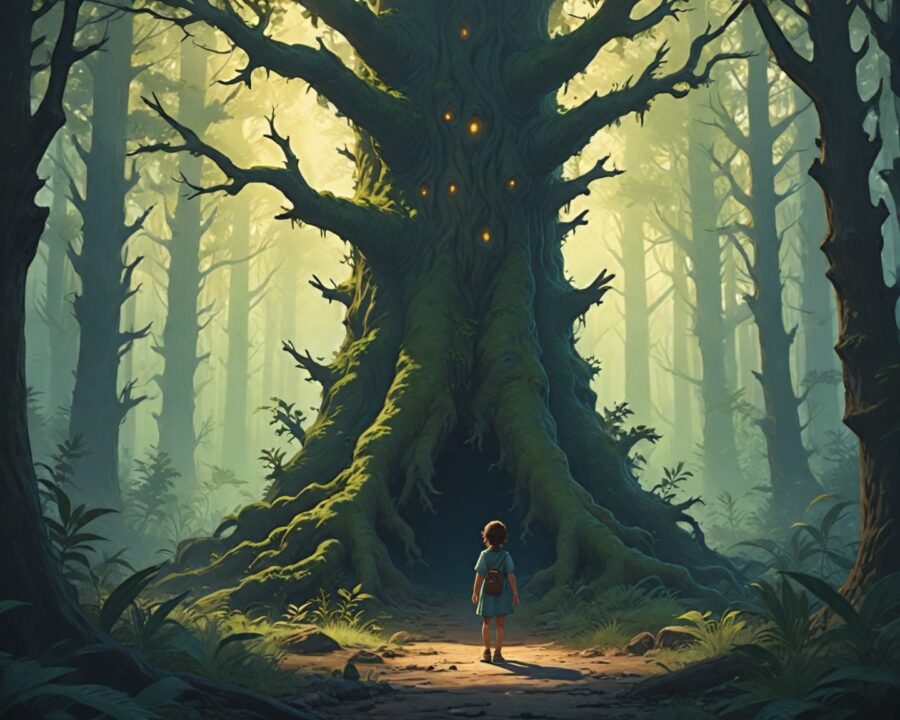
Introduction to Feral Children and Their Significance
Feral children, often depicted in literature and cinema, are individuals who have lived isolated from human contact from a very young age and exhibit behaviors and speech patterns reminiscent of wild animals. This phenomenon has been a subject of intrigue and study for centuries, as it challenges our understanding of human nature and development. The stories of feral children offer a unique glimpse into the importance of socialization in forming human traits and characteristics.
The study of feral children is significant not only because it provides insights into the effects of social deprivation but also because it helps illuminate the intrinsic aspects of human nature. By examining these cases, we get a better understanding of what elements are fundamental to human growth and what depends on cultural or environmental influences. Throughout history, these cases have highlighted the resilience and adaptability of the human spirit, despite severe deprivation.
Historical Cases of Feral Children from Different Cultures
Throughout history, various cultures have documented cases of children who were allegedly raised by animals or lived alone in the wilderness. These historical accounts provide a basis for understanding the recurrent themes and situations that lead to such occurrences.
Some of the most intriguing accounts come from ancient Rome, where legends tell of the founders Romulus and Remus—twins who were said to have been nursed by a she-wolf. Similarly, in medieval settings, stories frequently emerged depicting children found in forests, exhibiting animal-like behavior due to neglect or abandonment.
Different cultures have varied explanations and interpretations of these cases. In some societies, feral children were mythologized as having gained wisdom and insights from their animal companions, while in others, they were seen as unfortunate souls deprived of humanity. Although many of these stories are more mythical than factual, they underscore cultural perceptions of childhood and social connection.
Famous Documented Cases of Feral Children
Numerous documented cases of feral children exist, with some becoming well-known due to the uniqueness of their circumstances or the public’s fascination. One famous example is Victor of Aveyron, a boy found in France in the late 18th century, who became a subject of study for early psychologists like Jean Marc Gaspard Itard. Despite rigorous education, Victor never fully adapted to societal norms, retaining many feral characteristics.
Another widely noted case is that of Kamala and Amala, two girls reportedly found in India in the 1920s, who were said to have been raised by wolves. Although some aspects of their story have been disputed, the tale highlights people’s continuous interest in the boundaries between humanity and the natural world.
Psychological and Social Impacts on Feral Children
The psychological and social repercussions for feral children are profound and often long-lasting. The lack of early human interaction results in deficits in language, cognitive development, and social skills. Many feral children exhibit difficulties in expressing emotions or understanding social cues, which significantly impacts their ability to integrate into society.
Moreover, these children often exhibit behaviors such as walking on all fours, using guttural sounds instead of speech, and heightened senses, all of which indicate the adaptiveness developed during their time in the wild. The trauma and isolation of their early years can lead to psychological disorders such as anxiety, PTSD, or attachment disorders, which require extensive therapy and care.
Their struggles underscore the critical role that early socialization plays in human development, reinforcing the notion that while biology sets the potential for human traits, the environment and social context shape their manifestation.
How Feral Children Adapt to Society Over Time
Integration into society for feral children is an arduous process, requiring patience, understanding, and tailored educational programs. Adaptation varies significantly depending on the age at which a child is integrated and the conditions they experienced while in isolation.
-
Initial Stages: Initial encounters often focus on basic physical needs and establishing trust within a safe environment. Communication skills are a primary focus, gradually moving from simple vocalizations to more complex language structures.
-
Secondary Phases: As trust is built, children start learning basic societal norms through observation and structured learning. This may include learning to eat with utensils, dressing appropriately, and basic hygiene practices.
-
Long-term Integration: Sustained integration involves ongoing emotional and psychological support, often requiring intervention from various professionals, including therapists, educators, and social workers, to achieve a semblance of normalcy in societal interactions.
Despite the challenges, some feral children achieve remarkable levels of recovery, although they may never fully develop the range of emotional and cognitive abilities typical of their peers.
The Role of Environment in Shaping Feral Children
Environmental factors play a pivotal role in shaping the experiences and development of feral children. The absence of nurturing human contact has profound implications for brain development, affecting regions responsible for emotion regulation, language acquisition, and social interaction.
In contrast, the environmental richness of solitude in nature may enhance certain physical capacities like hearing or smell. However, this often comes at the cost of cognitive and emotional growth. The adaptability seen in many feral children demonstrates the human capacity for resilience, but also highlights the critical importance of a supportive and stimulating environment in early childhood.
Common Myths and Misconceptions About Feral Children
Feral children have long been subject to myths and misconceptions, partly fueled by sensational stories and media portrayals. Here are some common myths:
-
Animals Raising Children: While many stories depict children being raised by animals, these accounts are largely mythical or exaggerated. Most feral children simply lived in isolation, not in the care of animals.
-
Full Adaptation: Myths often suggest that feral children can entirely assimilate into society. In reality, many face significant challenges and may never fully integrate.
-
Inherent Wildness: Feral children are not inherently ‘wild’; they adopt behaviors and traits necessary for survival in isolation, influenced heavily by their environment and lack of social interaction.
By dispelling these myths, we can better appreciate the complexity and uniqueness of each feral child’s experience and development.
Scientific Studies and Research on Feral Children
Scientific interest in feral children peaked during the 18th and 19th centuries, a period marked by intellectual curiosity about nature versus nurture. Early studies focused on observing and documenting behaviors, aiming to understand the impact of deprivation on human development.
Modern research builds on these foundations, often using case studies as a basis for understanding broader psychological and developmental principles. Advances in neuroscience have enhanced our comprehension of how extreme environments affect brain development, emphasizing the critical importance of the first few years of life for language and social development.
The study of feral children remains an important domain, offering insights into human adaptability, the effects of isolation, and the brain’s capacity for recovery with appropriate interventions.
Lessons Learned from Historical Accounts of Feral Children
The historical accounts of feral children offer several key lessons. First, they underscore the critical importance of early childhood environments in shaping development. Second, they reveal the remarkable resilience of individuals in adapting to severe circumstances, though often at significant personal cost.
These stories also teach us the value of compassion and the need for societal structures that support vulnerable children. Understanding the conditions that lead to such isolation and deprivation can help prevent future occurrences.
Ultimately, feral children remind us of the profound impact of human connection on growth, emphasizing that while biology creates possibilities, nurture determines their realization.
Practical Implications for Modern Child Welfare Systems
The understanding of feral children has practical implications for modern child welfare systems. It highlights the importance of:
-
Early Intervention: Recognizing signs of neglect early can prevent long-term developmental issues.
-
Tailored Support: Individualized care and therapy are essential for children with severe neglect to aid their integration and recovery.
-
Public Awareness: Increasing awareness around child neglect and its impacts can lead to preventative measures and policy changes.
By learning from the past, modern systems can better address and support the needs of at-risk children, ensuring they receive the care and nurturing essential for healthy development.
FAQ
What defines a feral child?
A feral child is defined as a human child who has lived isolated from human contact from a very young age, often surviving without direct contact with other humans, which profoundly affects their language, social, and cognitive development.
Are there any documented cases of feral children being raised by animals?
While many stories suggest animals raise feral children, such accounts are either mythical or greatly exaggerated. Most feral children have been found to have lived in extreme isolation without animal caregivers.
How do feral children communicate?
Feral children often use guttural, animal-like sounds due to the lack of language exposure during critical developmental years, making it difficult for them to learn human languages later in life.
Can feral children fully adapt to societal norms?
While some feral children can achieve a degree of adaptation with significant therapeutic intervention, they often struggle to fully integrate due to developmental deficits incurred during isolation.
What role does environment play in the development of feral children?
The environment profoundly affects feral children, shaping their behaviors and abilities. Isolation can hinder social and cognitive development, while a lack of nurturing influences can lead to adaptive, animal-like traits.
Is there ongoing research on feral children?
Yes, ongoing research continually investigates the developmental impacts of extreme isolation, often using case studies of feral children to understand broader principles of human growth and resilience.
Why are feral children significant in psychology?
Feral children highlight the critical role of socialization and environment in human development, challenging assumptions about innate human behaviors and underscoring the impact of early experiences on later life.
Recap
This article explored the multifaceted phenomenon of feral children, highlighting their historical significance and the insights they offer into human development. Through an examination of famous cases and psychological impacts, we see the profound effects of social deprivation. The discussion on adaptation, environmental roles, and dispelling myths underscores the resilience yet vulnerability of human development in isolation. Scientific exploration and lessons learned shape modern child welfare practices, emphasizing the need for attentive and adaptive care systems.