
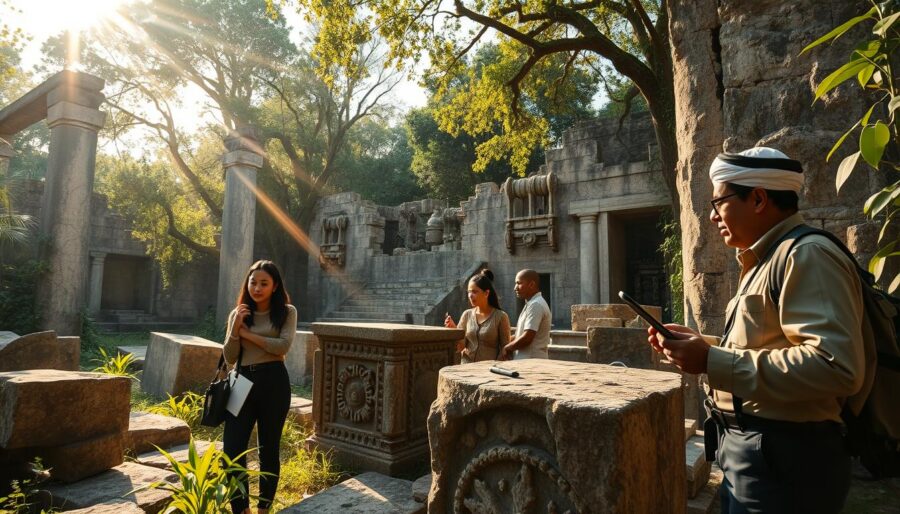
Modern science often looks ahead, but some of the most durable solutions come from the distant past. Experts now study building methods used before digital tools and industrial machines.
These forgotten ancient engineering methods rediscovered by researchers reveal useful lessons for today's world. Teams study Roman concrete, Inca polygonal masonry, and complex qanat water systems. Their work shows how past civilizations mastered local environments.
This work goes beyond admiration for historical achievements. Researchers test these designs to learn how they achieve seismic resilience and long-term stability. As we face water scarcity and seek sustainable construction, these old practices may guide a more stable future.
Key Takeaways
- Historical building techniques offer viable solutions for modern sustainability challenges.
- Roman concrete demonstrates exceptional durability compared to many contemporary materials.
- Inca masonry provides a masterclass in seismic resilience and structural integrity.
- Qanat systems reveal efficient, low-energy methods for managing water scarcity.
- Scientific testing of old structures helps bridge the gap between history and modern innovation.
What researchers are rediscovering and why the findings matter now
Modern scientists are studying the past to solve today's infrastructure problems. This work focuses on reconstructing and testing practices people once only partly understood. Modern testing shows that ancient solutions often support today's sustainability goals.
Recent archaeological engineering studies connecting past methods with modern problems
Researchers now study how ancient societies managed resources under severe environmental pressure. These studies offer a valuable blueprint for engineers facing similar water management and structural durability challenges. Teams can use these systems to find low-energy alternatives to modern industrial processes.
How field teams combine excavation, laboratory testing, and historical records
The process starts with careful excavation to uncover ancient infrastructure remains. Teams compare these findings with historical descriptions and local oral traditions to learn their original purpose. Finally, laboratory testing lets scientists simulate material properties and show how these structures worked in real conditions.
The researchers, institutions, and ancient regions involved
Institutions worldwide are working together to map how civilizations mastered their environments. These partnerships unite archaeologists, materials scientists, and civil engineers to build a fuller view of ancient technical skill. Their work covers diverse regions, each offering insights into human adaptation.
Why discoveries in the Mediterranean, Andes, and Middle East offer different lessons
Each region offers lessons shaped by its geology and social organization. In the Mediterranean, researchers study marine concrete and hydraulic stability, while the Andes reveal incredible feats of seismic-resistant masonry. The Middle East shows how complex, arid-climate systems managed groundwater and sustained communities for millennia.
What makes these techniques "forgotten" rather than completely unknown
Many of these methods were never truly lost to history. Instead, the rapid rise of modern industrial machinery and standardized building codes overshadowed them. Some techniques survived in local traditions, passed through generations of builders who maintained them while the wider world adopted methods.
Forgotten ancient engineering methods rediscovered by researchers
Imagine a building material that repairs its own damage from time and weather. For centuries, the lasting strength of Mediterranean structures puzzled observers. Scientists now say Roman concrete self-healing was a planned construction feature, not an accident.
Roman concrete and the evidence for self-healing structures
Hot mixing, lime clasts, and mineral growth inside cracked concrete
Ancient builders created this strength by changing how they mixed materials. Instead of using cold-mixed lime, they used a process called hot mixing. This method added reactive lime clasts to the concrete matrix.
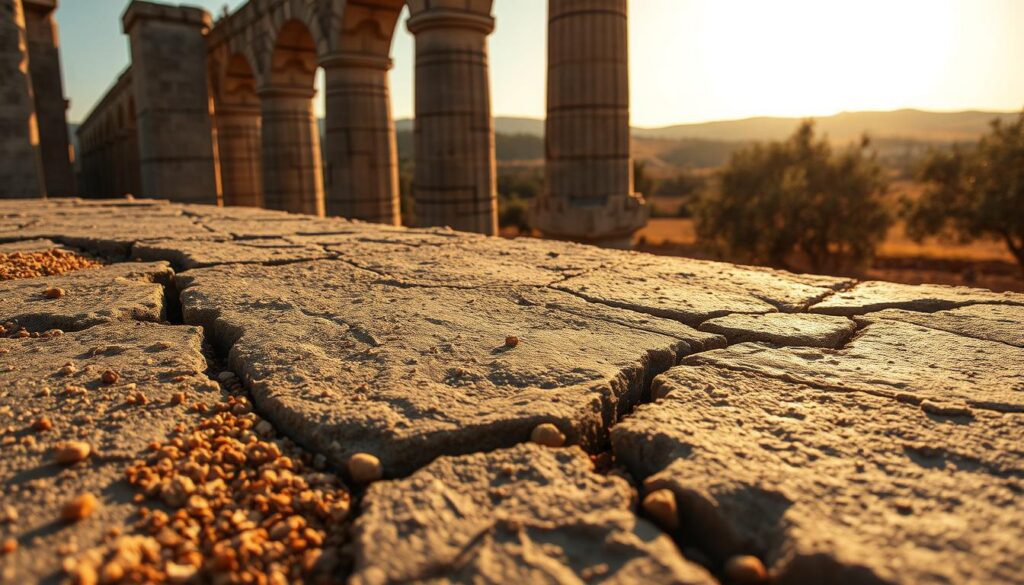
When cracks appear, water enters the gaps and reacts with the lime clasts. This reaction grows calcium carbonate crystals that seal the fissures. This natural Roman concrete self-healing process slows further decay over time.
How researchers tested Roman concrete self-healing in the laboratory
Experimental reconstruction of ancient recipes and controlled crack testing
To test these findings, modern teams went beyond simple observation. They rebuilt ancient recipes in controlled laboratory settings. Samples with the original chemical makeup let researchers watch the material under stress.
The team makes controlled cracks in samples and studies their response to moisture. They monitor chemical changes inside the concrete over time. These tests show that Roman concrete self-healing repeats under specific environmental conditions.
Where the Roman method could influence modern construction
Potential benefits for marine infrastructure, bridges, and lower-maintenance buildings
Using these ancient ideas in modern engineering could change how we build. Similar chemical principles could create structures needing far less repair. This change would help projects exposed to harsh, wet environments most.
The potential uses for this technology are broad and promising. Key areas where it could change the industry include:
- Marine infrastructure: Piers and sea walls that repair themselves when exposed to saltwater.
- Bridges: Long-lasting support structures that resist cracking from heavy traffic and weather.
- Sustainable buildings: Lower-maintenance concrete that reduces the need for frequent, carbon-intensive repairs.
Modern construction follows different standards, but Roman concrete self-healing points toward stronger infrastructure. Combining ancient knowledge with modern science can help engineers build for the future. It also honors the past.
Inca polygonal masonry reveals precision without modern machinery
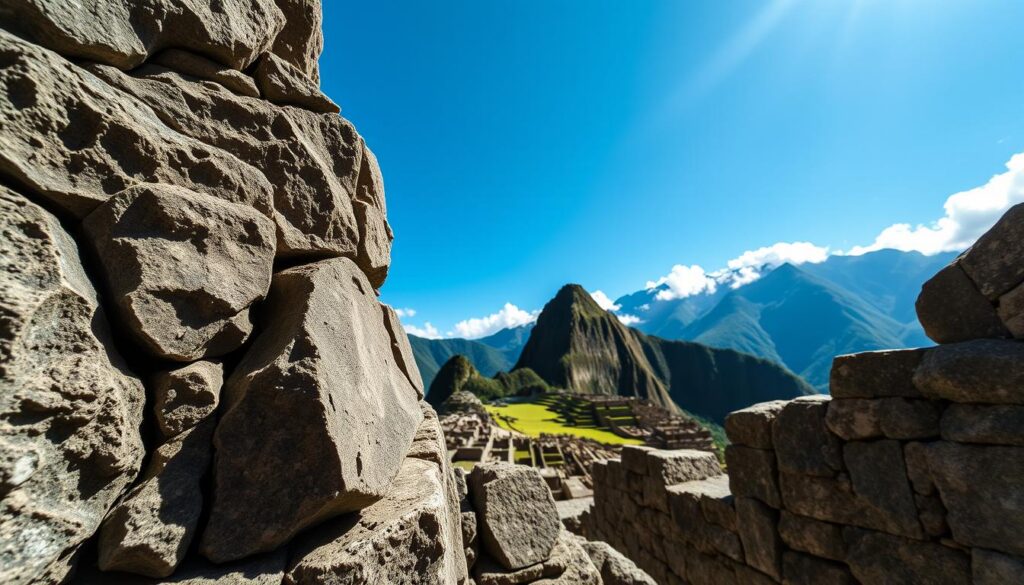
High in the Peruvian Andes, massive stone walls show human ingenuity. Built with Inca polygonal masonry, these structures still impress people today. Builders achieved this work without iron tools, wheels, or complex machinery.
How irregular stone blocks created stable walls in Peru and the wider Andes
These enduring walls depend on the way builders shaped each stone. Instead of using uniform rectangles, builders formed irregular blocks that locked together like a giant three-dimensional puzzle.
Interlocking surfaces, inclined joints, and resistance to seismic movement
Broad interlocking surfaces and inclined joints spread weight across the structure. This design lets walls shift during earthquakes without collapsing. The stones dance in place and return to their original positions after the shaking stops.
Ancient surveying techniques behind remarkably accurate stone fitting
Such tight joints required geometry, patience, and careful work. Ancient surveying techniques helped builders map one stone's shape onto the next. This method made each block fit closely against its neighbor without mortar.
Possible roles for templates, repeated measurement, abrasion, and skilled observation
Researchers think builders used wooden templates to transfer shapes between stones. They likely repeated measurements and carefully abraded edges until the fit was perfect. This meticulous approach depended on master stonemasons' sharp eyes and steady hands.
What archaeological experimental reconstruction has shown about the building process
Modern experiments have copied these methods with stone hammers and bronze tools. The tests show that construction relied on coordinated labor and deep technical knowledge, not mystery. Human skill can achieve extreme precision with enough time and resources.
Replicating stone shaping, transport, and placement with historically plausible tools
Experimental archaeology shows that shaping and moving massive stones required careful planning. Teams likely used ramps, levers, and rollers to position the blocks. The following table compares these ancient methods with modern construction practices.
| Feature | Inca Method | Modern Method |
|---|---|---|
| Joint Type | Dry-fit/Interlocking | Mortar/Cement |
| Tooling | Stone/Bronze/Abrasion | Steel/Power Saws |
| Seismic Strategy | Flexible movement | Rigid reinforcement |
| Labor Focus | Manual precision | Mechanical speed |
Qanat water management transformed dry landscapes
Ancient civilizations often survived in regions where surface water was scarce. They developed qanat water management, a system of underground tunnels that carried groundwater over long distances. Without mechanical pumps, this method helped communities flourish in arid environments.
How underground channels moved groundwater across arid regions
Vertical access shafts, gentle gradients, and gravity-fed distribution
The system worked through gravity. Engineers dug a mother well into an upland aquifer, then built a tunnel with a precise, gentle downward slope. This gradient sent water steadily toward lower fields or settlements.
Workers dug vertical shafts at regular intervals along the route. The shafts removed soil, aired the tunnels, and gave workers access for maintenance. The builders minimized evaporation losses by keeping channels underground, a key benefit in hot, dry climates.
Evidence of qanat systems from Iran to North Africa and beyond
How researchers identify construction phases, maintenance routes, and changing water use
Archaeologists found extensive qanat water management networks from the Iranian plateau across the Middle East into North Africa. Researchers study sediment deposits and tunnel alignments to rebuild each site's history. They also find repairs and changes showing how water use shifted over centuries.
"The qanat is not merely a relic of the past; it is a testament to a sustainable relationship between human ingenuity and the natural limitations of the desert."
Researchers use these physical clues to map construction phases. Different lining materials or changes in tunnel diameter can show how maintenance crews adapted the system. They responded to growing populations and changing environmental conditions.
Why qanats remain relevant to water-stressed communities
Energy-free transport, groundwater protection, and limits imposed by modern demand
In an era of high energy costs, qanat water management offers energy-free transport. Natural pressure and gravity let these systems work without electricity or fuel. Underground tunnels also protect water from contamination and surface pollution.
Modern challenges, however, threaten these ancient structures. Rapid urban growth and over-extraction through deep-bore wells can lower the water table and leave traditional tunnels dry. Maintaining these systems also requires specialized knowledge that is becoming increasingly rare.
| Feature | Ancient Qanat System | Modern Pump System |
|---|---|---|
| Energy Source | Gravity (Zero) | Electricity/Fuel |
| Maintenance | Manual/Labor Intensive | Mechanical/Technical |
| Evaporation | Negligible | High (if open) |
| Sustainability | High (Self-regulating) | Low (Aquifer depletion) |
Archaeoengineering fieldwork is testing ancient ideas rather than merely displaying them
Archaeoengineering fieldwork connects static ruins with the living history of construction. Researchers now test ancient sites instead of only observing them. These tests show how structures worked under historical conditions.
From preserved ruins to working reconstructions
To understand ancient ingenuity, experts often build full-scale models. They test whether each design withstands the stresses faced by the original structure.
How teams recreate materials, tools, labor systems, and environmental conditions
Teams carefully replicate the original building materials and tools for accuracy. They also consider labor systems and local weather patterns that shaped the first construction. These tests reveal the logistical challenges ancient builders faced.
What researchers can learn from failure during reconstruction
Not every experiment creates a perfect replica. Failure is often the most valuable teacher in this field.
Separating practical engineering knowledge from later assumptions and attractive myths
When a structure collapses or a method fails, it exposes flaws in modern theories. This helps researchers separate proven engineering techniques from romanticized myths. Through archaeological experimental reconstruction, they can reject unrealistic assumptions about moving heavy stones or mixing mortar.
The role of digital surveying and materials science
Modern technology offers a powerful way to study ancient craftsmanship. These tools provide details that researchers could not obtain before.
Using laser scanning, microscopy, chemical analysis, and structural modeling responsibly
Laser scanning and microscopy reveal hidden stone-joint shapes and material composition. Chemical analysis identifies ingredients in ancient binders. These tools offer incredible precision, but researchers must avoid reading too much into the data.
Why experimental results still require archaeological context
Digital models and physical tests are only parts of a larger puzzle. They cannot explain the social or cultural reasons behind every building project.
Successful archaeological experimental reconstruction must stay grounded in physical evidence found at the site. Researchers must weigh their findings against regional history, chronology, and the limitations of surviving data. This broad approach keeps our understanding of the past accurate and respectful of the original builders.
Ancient engineering knowledge traveled through people, practice, and adaptation
Long before modern universities existed, master builders passed building secrets through generations. This human-centered learning helped complex techniques survive for centuries.
How engineering knowledge transmission worked before formal technical schools
Apprenticeship, specialist communities, oral instruction, and repeated construction
The main method of engineering knowledge transmission was apprenticeship. Young builders watched masters, repeated tasks, and learned oral lessons about the "why" behind each stone placement or water channel alignment.
These specialist communities worked like guilds and guarded knowledge as a valuable asset. By handling materials, builders gained an intuitive sense of structural strength that written manuals could not match.
What similarities and differences reveal about independent innovation
Comparing Roman concrete, Inca masonry, and qanat water management without forcing a single explanation
Roman concrete, Inca masonry, and qanat systems show distinct answers to universal problems. Each culture used local resources and adapted to its environment for stability and efficiency.
"The genius of ancient engineering lies not in a single universal method, but in the brilliant adaptation of local materials to solve the challenges of the landscape."
These examples show that independent innovation can produce similar functional results. Yet social organization and environmental hazards shaped each path, so no single "correct" building method exists.
Consequences for sustainable design and heritage conservation
Adapting historical construction materials without copying them uncritically
Modern architects study historical construction materials when designing lower-impact buildings. These ancient methods are impressive, but modern projects cannot copy them blindly.
Before using Safety and environmental evaluation, designers must test ancient techniques under modern conditions. The materials must meet current building codes and sustainability standards.
Reactions from engineers, archaeologists, and local communities
Balancing scientific interest with cultural ownership and responsible preservation
Studying ancient sites can create tension between scientific curiosity and local populations' rights. Researchers must involve local communities so their heritage receives respect.
Responsible preservation requires careful balance. We must document sites fully without damaging the structures we want to understand.
Conclusion
Ancient builders saw their environment as a partner, not an obstacle. Roman concrete, Inca stone masonry, and qanat water systems show that durability grows from studying local materials. These structures preserve a legacy of careful experiments that valued lasting stability over quick results.
Modern researchers use digital tools to understand these complex systems. These technologies offer clarity, but they cannot replace wisdom from traditional practice. True progress needs balance between high-tech analysis and the lived experience of local communities who maintain these sites today.
Historical engineering offers a library of useful principles for today's challenges. It urges architects and planners to ask better questions about sustainability and resource management. Studying these methods gives society a fresh view of building structures that endure for centuries.
Readers are encouraged to explore local heritage sites with fresh eyes for design. Sharing discoveries about regional building techniques helps preserve this vital knowledge for future generations. Engaging with these ancient solutions builds a bridge between past ingenuity and modern needs.