
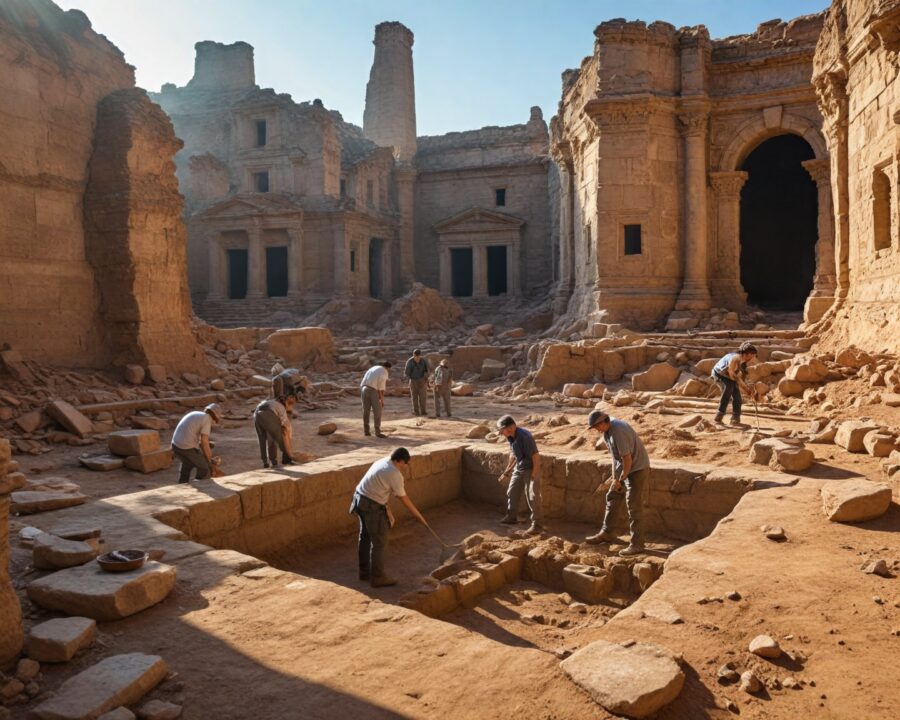
Archaeology Wonders: Uncovering Ancient Marvels
Archaeology, a captivating field dedicated to unveiling the mysteries of our past through the study of ancient artifacts, continues to fascinate both scholars and laypeople alike. It serves as a bridge connecting us with ancient civilizations, allowing us to glean insights into the lives, cultures, and advancements of people who walked the Earth long before our time. The significance of archaeology lies not only in uncovering physical remnants of the past but also in piecing together the stories that contributed to human progress and cultural identity.
As archaeologists explore ruins and delve into bygone eras, they uncover treasures concealed by the sands of time. The revelation of these ancient wonders helps chart the transformation of societies, enriches our historical knowledge, and often resolves long-standing historical debates. This perennial quest for knowledge continues to advance, aided by technology and methodology, enhancing our understanding of our ancestors’ ways of life.
Famous Archaeological Wonders Around the World
The globe is dotted with awe-inspiring archaeological wonders that tell tales of grandeur, innovation, and mystique. Some of these sites have achieved iconic status due to their historical importance and enigmatic allure. One such site is Machu Picchu, the ancient Incan city located high in the Andes Mountains of Peru. Often shrouded in mist, this architectural marvel showcases sophisticated engineering techniques and serves as a testament to the Incan Empire’s ingenuity.
Another remarkable site is the city of Petra in Jordan, carved directly into vibrant red sandstone cliffs. This ancient Nabataean city’s blend of Eastern traditions and Hellenistic architecture has rendered it a UNESCO World Heritage Site. The grandeur of the Treasury and the intricate facade carved into solid rock continue to draw researchers and tourists alike.
In Egypt, the Pyramids of Giza and the Sphinx are among the most well-known and explored archaeological wonders. The pyramids, constructed as monumental tombs for pharaohs, are masterpieces of engineering and planning. They remain emblematic of Egypt’s rich history and the ancient civilization’s architectural prowess.
The Role of Technology in Modern Archaeology
In recent years, technology has revolutionized archaeology, enabling researchers to explore sites with unprecedented precision and safety. Remote-sensing technologies, such as LiDAR (Light Detection and Ranging), have been instrumental in uncovering sites hidden beneath dense vegetation or trapped in inaccessible terrains. By providing high-resolution topographical data, LiDAR allows archaeologists to detect subtle changes in landscape that indicate human activity.
Another significant technological advancement is the use of ground-penetrating radar (GPR), which provides detailed images of what lies beneath the surface without disturbing the ground. This non-invasive method is invaluable in mapping out archaeological sites, helping to pinpoint areas of interest such as burial grounds or ancient structures.
3D modeling and digital reconstruction have also transformed how ancient sites are studied and shared with the public. Researchers can now create accurate digital replicas of sites and artifacts, preserving them digitally for future generations. This is especially crucial for areas prone to natural disasters or in regions where preservation through traditional methods is challenging.
Uncovering Ancient Artifacts: Methods and Tools
The process of uncovering ancient artifacts is both meticulous and methodical. Archaeologists employ a range of methods and tools that are carefully chosen based on the site and the particular characteristics of the artifacts being uncovered. Excavation, the most common method, involves systematically digging through layers of soil and rock to reach an artifact’s precise location.
Once artifacts are located, excavation tools like trowels, brushes, and sieves are used for careful extraction. Each layer of earth removed is painstakingly documented to maintain an accurate record of the site’s stratigraphy, which helps in dating the artifacts and understanding the context of their original use.
In addition to these traditional methods, advances in technology, such as remote sensing and satellite imagery, are frequently used in the preliminary stages of an excavation. These methods help to identify possible sites, guide excavation efforts, and minimize the risk of damaging valuable artifacts during retrieval.
Historical Discoveries That Changed Our Understanding of the Past
Throughout history, various archaeological discoveries have challenged prevailing narratives and reshaped our understanding of human history. One such pivotal moment came with the discovery of the Rosetta Stone in 1799. This artifact was crucial in deciphering Egyptian hieroglyphs, dramatically enhancing our understanding of ancient Egyptian language and culture.
Another groundbreaking find was the Terracotta Army in Xi’an, China, unearthed in 1974. This vast collection of clay soldiers, buried with China’s first emperor, Qin Shi Huang, provided insight into Chinese burial practices and the emperor’s grandeur. The detailed craftsmanship of the soldiers also highlighted the advanced techniques used in ancient Chinese art.
Similarly, the discovery of the tomb of Tutankhamun in 1922 by Howard Carter was an astounding archaeological milestone. This relatively intact tomb provided a wealth of information regarding Egyptian funerary practices, beliefs, and artistry, offering a glimpse into a pharaoh’s life and death.
Common Questions About Archaeology Answered
What is the primary goal of archaeology?
The primary goal of archaeology is to understand human history and prehistory through the study of material remains. By analyzing artifacts, structures, and other evidence, archaeologists aim to reconstruct past behaviors, social structures, and cultural practices.
How do archaeologists determine the age of artifacts?
Archaeologists determine the age of artifacts using various dating techniques. Radiocarbon dating is one of the most common methods, ideal for organic materials. Other techniques include dendrochronology for dating wooden objects and thermoluminescence for dating ceramics and minerals.
What are some common challenges faced in archaeological research?
Archaeologists often encounter challenges such as site preservation, environmental conditions, and limited funding. Additionally, political and legal issues, such as ownership disputes and access restrictions, can pose significant hurdles in archaeological research.
How do archaeologists ensure the preservation of artifacts?
Preservation of artifacts involves careful excavation, documentation, and sometimes restoration. Conservators work to stabilize fragile artifacts, using techniques like chemical treatments or climate-controlled environments to prevent further deterioration.
Can anyone participate in archaeological digs?
While professional archaeologists lead most excavations, many digs welcome volunteers. Opportunities exist for both amateurs and students to gain hands-on experience under expert supervision, often through academic programs or heritage preservation organizations.
What is the ethical importance of respecting cultural heritage sites?
Respecting cultural heritage sites is essential because these sites hold historical, cultural, and sometimes spiritual significance for local communities. Ethical archaeological practices ensure these sites are studied with sensitivity and preserved for future generations.
The Importance of Preserving Archaeological Sites
Preserving archaeological sites is vital for safeguarding our shared heritage and ensuring that future generations can study and learn from these ancient wonders. Every artifact and structure holds a potential wealth of information that can reshape our understanding of historical narratives and cultural developments.
To protect these sites, many organizations and governments have enacted policies and regulations. These measures prevent unauthorized excavation and destruction, ensuring that archaeological work adheres to established guidelines and ethical practices. Preservation efforts often involve collaboration between archaeologists, local communities, and governments to balance heritage conservation with the needs of modern development.
Public awareness and education also play critical roles in preservation. By engaging communities and fostering an appreciation for historical sites, archaeologists can create advocates for heritage conservation and encourage responsible stewardship of these irreplaceable resources.
How to Get Involved in Archaeology as a Hobby or Career
There are numerous ways for individuals to engage with archaeology, whether as a hobby or a career. For those interested in pursuing archaeology professionally, pursuing an academic degree in archaeology, anthropology, or a related field is typically the first step. Many universities offer specialized programs that include fieldwork, providing invaluable practical experience.
For those seeking to indulge in archaeology as a hobby, there are volunteering opportunities with ongoing excavations. Museums, heritage organizations, and university programs often seek volunteers to assist with digging, archiving, or research projects.
Joining amateur archaeology societies and clubs is another way to stay informed and participate in archaeology-related activities. These organizations often organize lectures, field trips, and workshops, offering a platform for enthusiasts to connect and share their interests in ancient artifacts and historical discoveries.
Ethical Considerations in Archaeological Research
Ethical considerations in archaeological research are crucial to maintaining respect for the cultural and historical significance of sites and artifacts. Archaeologists must navigate the complexities of cultural ownership and ensure that their work does not contribute to the illicit trade of antiquities.
Responsibility toward indigenous communities and their heritage is also paramount. Engaging with these communities respectfully and collaboratively ensures that their narratives and concerns are acknowledged and incorporated into the research process. This leads to a more inclusive understanding of history that respects diverse perspectives.
Moreover, transparency and accurate dissemination of research findings are ethical imperatives. By sharing discoveries responsibly, archaeologists contribute to the public’s understanding of the past while deterring misinterpretation and misuse of historical knowledge.
Future Trends and Innovations in Archaeology
The future of archaeology promises exciting developments, driven by innovations that continue to push the boundaries of what is possible. One burgeoning trend is the use of artificial intelligence and machine learning in analyzing archaeological data. These technologies can sift through vast amounts of information, identifying patterns and connections that may be overlooked by human analysis.
Another trend is the increasing use of virtual reality and augmented reality technologies, which transform how archaeological findings are presented and experienced. These immersive technologies enable people worldwide to explore historical sites virtually, expanding access to cultural heritage like never before.
Sustainability in archaeological practice is also a growing focus. As the impacts of climate change threaten coastal sites and others vulnerable to environmental shifts, archaeologists are developing methodologies to document and preserve these sites before they are irrevocably altered.
Recap
This article explored the wonders of archaeology and the pivotal role it plays in enhancing our understanding of ancient artifacts and human history. We delved into famous archaeological sites across the world and examined how technology aids modern archaeology. The piece highlighted methodologies used to uncover ancient artifacts and historical discoveries that reshaped our knowledge of the past. Insights on ethical considerations, methods of involvement, and future trends further enriched the discussion.
Conclusion
Archaeology stands as a testament to our enduring curiosity and the human spirit’s quest for knowledge. Through the artifacts and ruins of the past, we glimpse the ingenuity, struggles, and triumphs of those who came before us. Every dig, every carefully cataloged artifact, adds another brushstroke to the rich canvas of human history.
As we advance in our methods and technological capabilities, so too do our responsibilities magnify in preserving and respecting the cultural legacies we uncover. Ethical practice and widespread public engagement are key to ensuring these treasures remain appreciated and protected for future generations.
Looking ahead, the integration of technology and archaeology promises an enriched understanding of the past, transforming how we resonate with history. Archaeology is not merely the pursuit of ancient artifacts; it is the pursuit of understanding the very essence of our shared human experience.
References
- Fagan, B. M. (1996). Archaeology: A Brief Introduction (5th ed.). HarperCollins College Publishers.
- Renfrew, C., & Bahn, P. (2012). Archaeology: Theories, Methods, and Practice (6th ed.). Thames & Hudson.
- Scarre, C. (Ed.). (2013). The Human Past: World Prehistory and the Development of Human Societies (3rd ed.). Thames & Hudson.