
Introduction to Archaeology and Its Significance
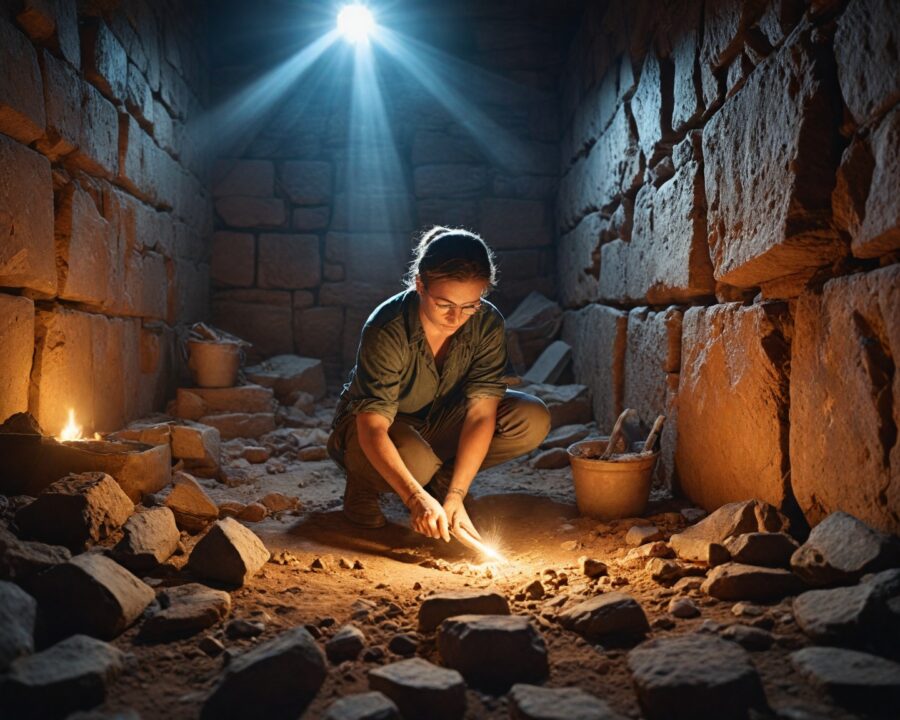
Archaeology is the scientific study of the material remains of past human life and activities. These remnants, known as artifacts, include anything from simple tools and pottery to entire cities and monumental statues. As the primary conduit for understanding our human past, archaeology provides a vital link to our collective history, offering insights into the cultures and civilizations that shaped the world as we know it today. By unveiling the secrets locked beneath layers of earth and time, archaeology enriches our understanding of human innovation, adaptation, and cultural diversity.
Beyond its academic significance, archaeology also holds immense cultural and educational value. It allows us to connect with our roots, fostering a sense of identity and continuity. Archaeology plays a crucial role in heritage preservation, ensuring that future generations can learn from the tangible touchstones of history. It also encourages collaboration across disciplines, drawing in historians, anthropologists, scientists, and conservationists in a shared quest to uncover and protect the remnants of our past.
Famous Archaeological Discoveries That Changed History
Throughout the annals of history, numerous archaeological discoveries have redefined our understanding of the ancient world, shedding light on previously misunderstood or entirely unknown civilizations. One of the most significant finds is the Rosetta Stone, discovered in 1799. This granodiorite stele, inscribed with a decree in three scripts—Greek, Demotic, and hieroglyphic—proved to be the key to deciphering ancient Egyptian hieroglyphs. The ability to read these inscriptions transformed the study of Egyptology, unveiling over 3000 years of Pharaonic culture.
Another transformative discovery was the Terracotta Army in Xi’an, China, unearthed by farmers in 1974. These thousands of life-sized clay soldiers, horses, and chariots were buried alongside the first Emperor of China, Qin Shi Huang, in the third century BC. The meticulous construction and sheer number of figures provide an in-depth insight into the military might, artistic skills, and cultural beliefs of Imperial China.
The tomb of Tutankhamun, discovered by Howard Carter in 1922, is noteworthy not only for its wealth of treasures and artifacts preserved in situ but also for casting a spotlight on the opulence of the New Kingdom period in ancient Egypt. The excavation revealed detailed aspects of burial practices, lifestyle, and art in this intriguing historical epoch, drawing intense public and scholarly interest for decades.
The Role of Technology in Modern Archaeology
The advent of cutting-edge technology has revolutionized archaeological methods, offering new tools and techniques to excavate, analyze, and interpret ancient artifacts with unprecedented precision and efficiency. Remote sensing techniques, such as LiDAR (Light Detection and Ranging) and satellite imagery, have empowered archaeologists to detect and map sites hidden under vegetation or earth without intrusive digging. This non-invasive approach minimizes damage to fragile sites and allows for the study of large geographic areas swiftly.
Digital modeling and 3D visualization technologies have opened new windows into past environments. By creating accurate virtual reconstructions of ruins and sites, researchers and the public alike can explore ancient spaces digitally, bridging the temporal distance between contemporary viewers and historical contexts. These technological advancements aid in preservation efforts by documenting sites in detail before they deteriorate further or are altered by modern development.
Furthermore, advancements in materials analysis, such as archaeometry, enable the detailed study of composition, provenance, and age of artifacts. Techniques like radiocarbon dating, DNA analysis, and isotopic studies have refined our understanding of the chronological timelines and social dynamics of ancient civilizations. These scientific methods complement traditional archaeological approaches, deepening insights into the people behind the artifacts and fostering interdisciplinary collaborations.
Uncovering Ancient Civilizations Through Artifacts
Artifacts are the bedrock of archaeological inquiry, serving as tangible links to the behavior, beliefs, and structures of past societies. Through the careful excavation and analysis of these objects, archaeologists glean not only the technological prowess but also the cultural richness of ancient civilizations. Pottery, tools, and domestic implements can reveal much about daily life, trade practices, and social hierarchies within these societies.
Significant discoveries frequently paint a picture of cultural exchanges and interactions across different peoples. For example, the excavation of Mesopotamian artifacts in locations far from their origin provides evidence of the extensive trade networks and cultural exchanges in the ancient Near East. Similarly, the presence of Roman artifacts in Britain attests to the vast expanse and influence of the Roman Empire.
Ritual objects and religious iconography glean insights into the spiritual lives and cosmologies of ancient peoples, offering clues about their gods, beliefs, and ceremonial practices. Completely interpreting these items within their archaeological contexts aids in reconstructing the symbolic world views of long-lost civilizations, adding depth to our historical narratives.
Common Challenges Faced During Archaeological Excavations
Despite the advancements and successes in archaeology, scholars face numerous challenges during excavations. Environmental factors, such as weather, erosion, and vegetation, often obscure or destroy valuable archaeological data. Harsh climates can accelerate the deterioration of materials, complicating preservation efforts, and making excavations more logistically challenging.
Legal and political issues also pose obstacles. Securing permits for excavation can be a lengthy and complex process, influenced by regulations aimed at preserving cultural heritage and respecting indigenous rights. In politically unstable regions, warfare and looting endanger archaeological sites, often leading to irreparable loss of cultural heritage.
Moreover, archaeological endeavors must grapple with ethical considerations around the treatment of human remains and artifacts. The balance between scientific curiosity and the cultural sensitivities of descendant communities is delicate. Engaging with local communities and stakeholders respectfully and inclusively is essential for ethically managing and interpreting these vital remnants of the past.
How to Interpret Findings From Archaeological Sites
Interpreting discoveries from archaeological sites requires a multi-faceted approach that draws on various disciplines and analytical techniques. Initial findings are contextualized within the broader cultural, environmental, and historical framework of the area. This involves assessing the spatial distribution of artifacts and features within the site to reconstruct past human activities and site functionality.
An important part of interpretation involves comparative analysis. Archaeologists compare new findings with previous discoveries, utilizing typological studies to categorize artifacts according to their forms and uses. This comparative work helps establish chronologies and trace cultural changes over time, providing insights into technological evolution, trade interactions, and social development.
Interdisciplinary collaboration enhances interpretation. Input from specialists in fields such as geology, biology, and chemistry enriches our understanding of the environmental conditions and material properties that shaped human experience at a given site. These integrated analyses result in more nuanced reconstructions of past lifeways, deepening our comprehension of historical dynamics.
The Impact of Archaeological Discoveries on Modern Society
Archaeological discoveries profoundly impact modern society by informing our understanding of cultural evolution and human ingenuity. They provide invaluable reference points for current cultural practices and societal structures, reminding us of our interconnected past and the legacy of past human achievements. This insight fosters cultural appreciation and dialogue about heritage preservation and identity formation.
Moreover, archaeological findings frequently reshape historical narratives, challenging preconceived notions and prompting reevaluations of established theories. The documentation of technological innovations, social structures, and trade networks in the past can also inspire contemporary innovation and problem-solving, drawing lessons from ancient adaptability and creativity.
Further still, public interest in archaeology drives tourism, often contributing to local economies and community development. Cultural heritage sites and archaeological parks attract visitors worldwide, promoting cross-cultural exchange and understanding. This shared global heritage underscores the value of protecting archaeological sites for educational, cultural, and economic benefits.
Frequently Asked Questions About Archaeology
What do archaeologists do?
Archaeologists study past human societies through their material remains, including tools, buildings, and other artifacts. They conduct excavations, analyze findings, and interpret their significance to understand cultural development and history.
How are archaeological sites chosen for excavation?
Sites are often selected based on historical records, environmental anomalies detected through remote sensing technology, or accidental discoveries. The potential to provide significant cultural or historical insights also guides site selection.
What is an artifact?
An artifact is any object made or modified by humans. Artifacts range from tools and pottery to jewelry and inscriptions, offering clues about the culture, behavior, and technology of past peoples.
How do archaeologists date artifacts and sites?
Archaeologists employ various dating methods, including radiocarbon dating, dendrochronology, and thermoluminescence, to determine the age of artifacts and sites. These techniques help establish chronological frameworks for interpretation.
Why is archaeology important?
Archaeology is crucial for understanding human history and cultural heritage. It provides insights into the development of civilizations, technological advancements, and human adaptation, shaping our understanding of past and present societies.
Can anyone participate in an archaeological dig?
Many archaeological projects welcome volunteers, offering opportunities for public involvement in excavations. However, professional training is often required for conducting specialized tasks and analyses in academic or research-focused digs.
Practical Steps to Explore Archaeology as a Hobby or Career
Exploring archaeology as a hobby or potential career path can be a rewarding endeavor, offering insights into the past and opportunities for hands-on engagement. Whether you’re interested in casual learning or professional development, consider these practical steps:
-
Educate Yourself: Begin by reading archaeological literature, visiting museums, and attending lectures or workshops. Understanding fundamental concepts and history will enrich your appreciation of the field.
-
Participation in Digs: Join local archaeological societies or outreach programs. Many organizations offer volunteer opportunities on digs, providing practical experience and a feel for fieldwork dynamics.
-
Formal Education: For those considering archaeology as a profession, pursuing a degree in anthropology, history, or specific archaeological programs is advisable. Higher education provides theoretical knowledge and methodological training fundamental to professional practice.
-
Skill Development: Develop skills in areas like GIS, digital modeling, or material analysis, which are increasingly vital in archaeology. Workshops, online courses, and certifications can supplement your expertise.
-
Networking: Connect with professionals through conferences and academic societies. Building relationships with experienced archaeologists can lead to valuable advice, mentorship, and career opportunities.
Future Trends and Innovations in Archaeological Research
As archaeology continues to evolve, several emerging trends and innovations hold the potential to redefine the discipline. Technological advancements including machine learning and artificial intelligence are being integrated to analyze vast amounts of archaeological data, predicting cultural patterns and site distribution more effectively than ever before.
Additionally, the growing use of virtual reality and augmented reality in archaeological visualization allows immersive educational experiences. These tools bridge time and space, enabling researchers and the public to engage with reconstructed historical environments interactively.
Sustainability in archaeological practice is another burgeoning trend. Efforts to minimize the ecological impact of excavations and preserve sites within changing climate contexts are crucial. Archaeologists increasingly advocate for collaborative management with local communities to ensure inclusive heritage preservation strategies that respect cultural sites and traditional knowledge.
Recap
- Introduction to Archaeology: Explores the definition and importance of understanding past cultures through material remains.
- Famous Discoveries: Highlights discoveries like the Rosetta Stone, Terracotta Army, and Tutankhamun’s tomb.
- Technology in Archaeology: Discusses remote sensing, 3D modeling, and advanced scientific analysis techniques.
- Understanding Artifacts: Explores how artifacts reveal cultural, economic, and religious aspects of ancient civilizations.
- Challenges in Excavation: Considers environmental, legal, and ethical challenges in archaeology.
- Interpreting Findings: Covers comparative analysis and interdisciplinary collaboration.
- Impact on Society: Emphasizes how discoveries shape historical narratives and modern cultural practices.
- Exploring Archaeology: Provides steps for engaging with archaeology as a hobby or profession.
- Future Trends: Looks at integrating technology and sustainability in archaeological research.
Conclusion
Archaeology’s enduring allure lies in its ability to illuminate the human story, revealing the complexity, diversity, and resilience of past societies. It is a discipline that bridges the temporal divide, connecting us to our ancestors and presenting lessons from history that are often as relevant today as they were centuries or millennia ago. By carefully uncovering and interpreting ancient artifacts, archaeology fosters a deeper appreciation for the cultural tapestry of our shared humanity.
Modern archaeological research continues to push the boundaries of what we know about the past, fueled by technological advancements and interdisciplinary collaboration. This progress allows us to reconstruct ancient worlds with increased accuracy and engage a global audience with the vibrant legacies of historical civilizations. As we continue to refine our methods and broaden our perspectives, archaeology not only enriches our historical understanding but also informs how we navigate contemporary and future cultural challenges.
The value of archaeology extends beyond academic inquiries, offering essential insights that endorse cultural preservation and sustainable heritage management. By acknowledging the achievements and follies of our ancestors, we establish a platform for dialogue, reflection, and innovation, ultimately enhancing our collective journey forward. Archaeology is more than a professional pursuit; it is a public enterprise essential to constructing cultural identity and shaping a deeper, united vision for the human community.
References
-
Renfrew, C., & Bahn, P. (2016). Archaeology: Theories, Methods, and Practice (7th ed.). Thames & Hudson.
-
Fagan, B. M., & Durrani, N. (2019). In the Beginning: An Introduction to Archaeology (14th ed.). Routledge.
-
Scarre, C. (Ed.). (2020). The Human Past: World Prehistory & the Development of Human Societies (4th ed.). Thames & Hudson.