
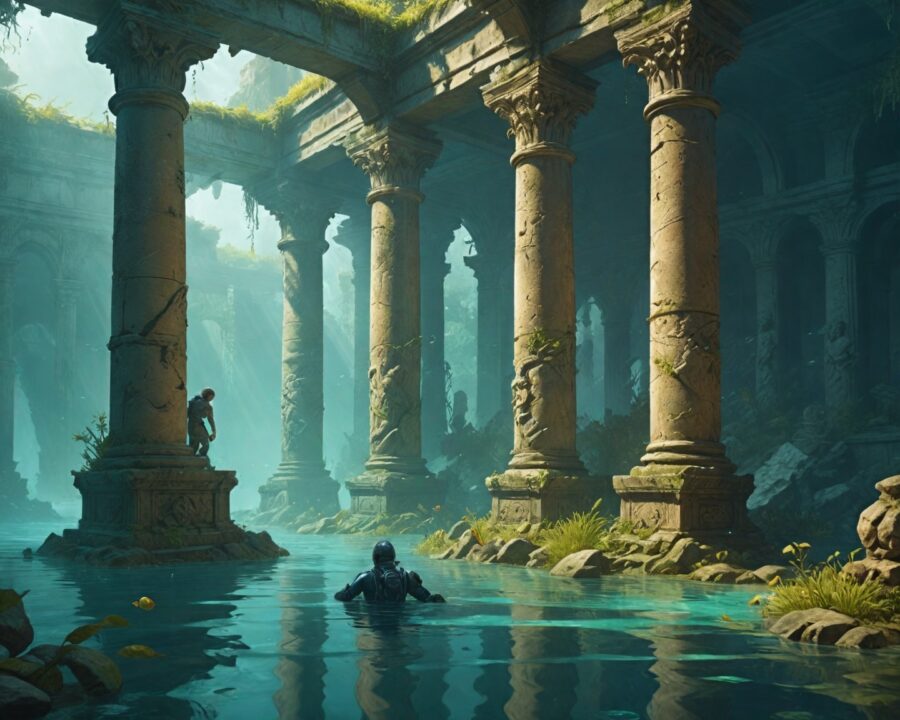
Introduction to Ancient Underwater Ruins
The mesmerizing allure of ancient civilizations comes partly from the mysteries they leave behind, and none are as intriguing as submerged cities. These underwater ruins speak of once-thriving settlements now veiled beneath the sea, presenting puzzles that combine historical intrigue, archaeology, and marine exploration. As our technological capabilities expand, so do our opportunities to uncover these hidden histories, shedding light on how ancient societies might have lived, thrived, and ultimately disappeared beneath the waves.
Diving into the stories of submerged cities is like peering through a window into the past. Each site offers unique insights into historical periods long gone, often challenging our understanding of ancient geographic realities. These underwater ruins are not just monuments of stone and coral; they are relics of human ambition, adaptation, and resilience. They invite us to explore not just the scientific and historical, but also the cultural and environmental narratives that shaped human history.
How Underwater Ruins are Discovered and Studied
Underwater ruins can be discovered in numerous ways, ranging from lucky accidents to methodical research expeditions. Fishermen often stumble upon artifacts while casting their nets; other times, storm-driven waves and shifting sands reveal hidden contours of walls and buildings. Systematic searches rely on historical texts, legends, and aerial surveys, sometimes employing satellites to identify anomalies in sea patterns that may indicate submerged structures.
Once discovered, these sites are studied meticulously. Archaeologists employ scuba diving equipment and remotely operated vehicles (ROVs) to examine and document the sites. Care is taken to map the surroundings accurately, recording each artifact’s exact position. This documentation helps in reconstructing the original layout of the site and understanding its cultural context.
Researchers often collaborate across disciplines, combining expertise from archaeology, marine biology, and geology to understand the sites comprehensively. This multidisciplinary approach allows for detailed analyses of artifacts and structures, providing a broader picture of the civilization associated with the ruins.
Famous Ancient Underwater Cities Around the World
Among the most renowned submerged cities is Dwarka in India, believed to be the ancient city of Krishna. It’s located along the Gulf of Cambay, where archeologists have uncovered extensive structures under the sea. Another famous site is the Lion City in China’s Qiandao Lake, submerged to create a reservoir in the 20th century, which preserves ancient Chinese architecture in pristine condition.
| City Name | Location |
|---|---|
| Dwarka | Gulf of Cambay, India |
| Lion City | Qiandao Lake, China |
| Pavlopetri | Off the coast of Laconia, Greece |
The lost city of Pavlopetri, off the coast of Greece, is perhaps the oldest known submerged city, dating back some 5,000 years. These sites represent only a fraction of the ancient cities lying beneath our oceans, each promising their own stories and treasures.
Technologies Used in Underwater Archaeology
The advancement of technology has revolutionized underwater archaeology. Today, sonar mapping and 3D scanning technologies allow researchers to create detailed models of underwater sites. Sonar systems, like side-scan and multibeam, can capture high-definition images of the sea floor, revealing intricate features of ruins hidden below.
Remotely Operated Vehicles (ROVs) and Autonomous Underwater Vehicles (AUVs) have transformed our ability to explore deep-sea ruins inaccessible by human divers. These vehicles can navigate complex underwater environments, deploying instruments to photograph, map, and excavate sites.
Artificial Intelligence (AI) and machine learning are also being integrated into underwater archaeology, assisting in the identification and cataloging of artifacts. These technologies analyze massive datasets to recognize patterns that might be overlooked by the human eye.
Theories Behind the Submergence of Ancient Cities
Theories explaining why cities became submerged are as varied as the sites themselves. Some argue natural disasters like tsunamis or earthquakes led to their sudden demise, while others suggest gradual sea-level rise submerged these cities over centuries. Some ancient cities, like Heracleion near Alexandria in Egypt, slipped into the sea due to their location on earth weakened by natural sediments and the gradual sinking of the land.
There is also speculation that certain submerged cities were purposefully flooded, serving as ancient defense mechanisms or as places of seclusion and worship. These theories often intersect, offering a complex tapestry of environmental shifts and human responses.
Every theory contributes to our understanding of how climate change and geological processes impacted ancient civilizations, providing valuable lessons for today’s world.
Cultural and Historical Significance of Underwater Ruins
Underwater ruins are invaluable for the cultural and historical insights they offer. These submerged cities are time capsules, preserving aspects of everyday life from millennia ago. From religious icons and pottery to structures and art, the artifacts discovered reframe historical narratives and cultural exchanges of ancient societies.
Their study often yields new historical understanding that revises previously accepted theories about trade routes, political alliances, and cultural interactions. For instance, finding Egyptian artifacts in Greek waters offers evidence of long-distance trade in ancient times.
These sites also hold spiritual significance for many cultures, echoing stories and myths passed down through generations, reinforcing their importance in understanding human history and identity.
Challenges Faced in Exploring Underwater Ruins
Exploring underwater ruins presents numerous challenges. Firstly, access to these sites is often limited by depth, currents, and visibility conditions. Divers and equipment must be able to withstand pressures hundreds of feet below the surface—a costly and technically demanding requirement.
Preserving the integrity of artifacts during excavation is another major concern. Waterlogging changes material properties, necessitating special preservation techniques post-discovery. Additionally, illicit salvaging and looting of underwater sites can lead to the loss of valuable historical information.
Coordinating international efforts to protect these sites is also complex, as maritime boundaries and jurisdictional rights can hinder collaborative research efforts.
Environmental Impact of Underwater Archaeological Studies
While the exploration of submerged cities is essential, the environmental impact of underwater archaeological studies cannot be ignored. Excavation activities can disturb marine ecosystems, affecting biodiversity and water quality. The introduction of foreign materials or pollutants can further exacerbate these disruptions.
Researchers must balance the quest for knowledge with environmental stewardship, employing eco-friendly techniques and rehabilitating areas post-study wherever possible. Creating marine protected areas around known sites helps preserve both cultural heritage and marine life.
Common Myths and Legends About Submerged Cities
Submerged cities have long been the subject of myths and legends. Perhaps the most famous is Atlantis, a city described by Plato as an advanced civilization that vanished into the sea. While the existence of Atlantis remains unproven, it continues to inspire searches and speculation.
Another common myth involves Lyonesse, a legendary land said to have sunk off the coast of Cornwall. Such stories often mix historical events with folklore, reflecting the human penchant for dramatizing natural phenomena into cultural lore.
These myths, while not always factual, underscore humanity’s ancient and ongoing fascination with the sea’s potential to hide lost worlds beneath its waves.
How to Get Involved in Underwater Archaeology as a Hobby or Career
For those intrigued by submerged cities, underwater archaeology offers thrilling opportunities both as a career and a hobby. Academic paths in archaeology or marine sciences provide foundational knowledge, which can be augmented with diving certifications for practical experience.
Organizations often run training programs or volunteer expeditions offering hands-on experience. For those interested in a more casual involvement, participating in local archaeological societies or attending public lectures can fuel your passion and broaden your understanding.
Whether it’s a professional endeavor or a recreational pursuit, the field of underwater archaeology invites enthusiastic learners to explore the depths of our planet’s history.
FAQs
What are submerged cities?
Submerged cities are ancient urban centers that are now located underwater due to various geological and environmental factors.
How do scientists find submerged cities?
Scientists use a mix of historical research, sonar technology, and satellite imagery to locate potential sites, followed by underwater exploration to confirm findings.
Can you visit submerged cities?
Many submerged cities are accessible through diving expeditions run by specialized tour companies, but visiting often requires diving certification and permissions.
Why are some cities submerged?
Cities become submerged due to factors like rising sea levels, earthquakes, and tsunamis, while others sank slowly as a result of geological processes such as land subsidence.
Is underwater archaeology harmful to the environment?
When conducted responsibly, underwater archaeology strives to minimize environmental impact, but it is essential to employ eco-friendly methods and rehabilitate study areas.
Recap
The exploration of ancient underwater ruins opens doors to civilizations long lost to the sea, offering insights into historical events, cultural exchange, and human migration. Discovering and studying these sites require a balance of cutting-edge technology and multidisciplinary collaboration, mindful of the cultural significance and environmental impact. Whether guided by curiosity or career aspirations, uncovering the stories of submerged cities continues to captivate and educate, bridging the past with present-day knowledge.