
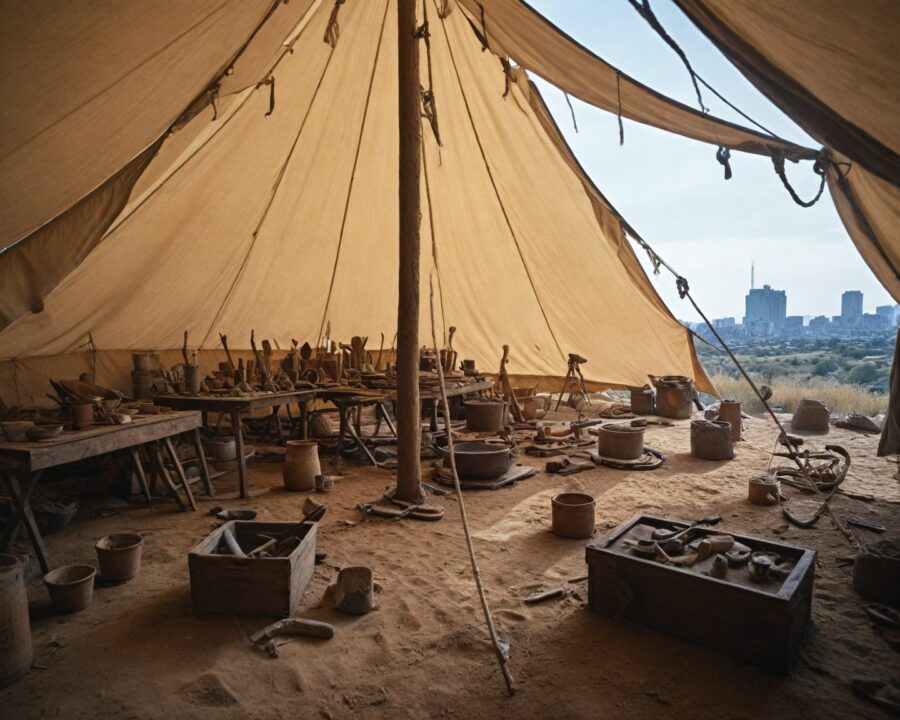
Introduction to Ancient Innovations and Their Significance
The annals of history are replete with tales of ancient civilizations whose innovative prowess laid the foundation for the world as we know it today. These early pioneers harnessed the resources and knowledge available to them, leaving a legacy of technological and cultural advancements that continue to influence modern society. From the construction of the Egyptian pyramids to the invention of the wheel, ancient innovations have demonstrated the incredible ingenuity of human beings in overcoming obstacles and improving their quality of life.
Understanding the impact of ancient technology is crucial for gaining insights into how civilizations developed and persisted. It shows how these innovations were not just isolated events but sustained inventions that facilitated cultural exchanges, economic development, and social structures. By examining these ancient achievements, we can appreciate the depth of human creativity and resilience throughout history, providing us with both inspiration and valuable lessons for addressing the challenges of our contemporary world.
The Role of Ancient Technology in Shaping Civilizations
Ancient technology played a pivotal role in shaping the course of civilizations, allowing them to flourish and survive against numerous adversities. Whether it was through the development of tools for agriculture, methods of construction, or advances in communication, technological innovations became the backbone on which societies were built. For instance, the creation of irrigation systems in Mesopotamia enabled the production of surplus food, which in turn fostered population growth and urban development.
Moreover, these technological advancements facilitated the emergence of specialized professions and social hierarchies. As certain individuals became proficient in metallurgy or construction, they contributed to a burgeoning economy that offered diverse job roles beyond simple subsistence farming. This diversification was instrumental in the formation of complex societies with intricate social dynamics, trade networks, and cultural exchange.
Transportation innovations, such as the wheel and the sail, were also monumental in expanding the horizons of ancient mankind. These technologies not only improved the efficiency of land and sea travel but also laid the groundwork for the exploration and expansion of empires. As a result, civilizations could extend their reach, conquer new territories, and interact with distant cultures, ultimately leading to a more interconnected ancient world.
Key Ancient Inventions That Revolutionized Daily Life
The invention of the wheel is arguably one of the most significant achievements in human history, radically transforming transportation and mechanization in daily life. First appearing in Mesopotamia around 3500 B.C., the wheel facilitated the movement of goods, people, and armies. It also became integral in machinery such as potter’s wheels and spindles, emphasizing its foundational role in both commerce and crafts.
Additionally, the development of writing systems revolutionized communication and record-keeping. With the emergence of cuneiform in Sumer and hieroglyphics in Egypt, civilizations could document complex information, enabling historical records, governance, and cultural preservation. This innovation also improved administration and trade, as contracts and transactions could be accurately recorded and verified.
Lastly, the advent of metallurgy marked a significant technological leap in human history. The ability to forge tools and weapons from copper, bronze, and later iron, led to profound changes in agriculture, combat, and craftsmanship. These metal tools enhanced productivity and efficiency in many aspects of daily life, underscoring the transformative impact of ancient technological ingenuity.
The Impact of Ancient Engineering on Modern Infrastructure
Ancient engineering marvels, such as aqueducts and roads, have had a lasting influence on modern infrastructure, providing blueprints for contemporary construction and urban planning. Roman aqueducts, for example, showcased sophisticated understanding of gravity and hydraulics to transport water over long distances. This technology not only ensured the supply of clean water to urban populations but also influenced the development of public health systems and modern plumbing.
The design and construction of roads also underscore the ingenuity of ancient engineers. Roman roads, renowned for their durability and strategic layout, facilitated military movements, trade, and communication across the vast empire. Their principles of road design—such as layered foundations and paved surfaces—continue to inform modern civil engineering practices.
Further illustrating this enduring legacy, the architectural feats of ancient civilizations have inspired contemporary aesthetics and construction techniques. The Parthenon’s use of columns and the precision of its proportions are echoed in neoclassical architectural designs around the world, demonstrating how ancient engineering solutions continue to shape our built environment.
| Innovation | Ancient Civilization | Modern Influence |
|---|---|---|
| Aqueducts | Rome | Urban water supply systems |
| Roads | Rome | Transportation infrastructure |
| Architecture | Greece, Egypt | Aesthetic and structural design |
Famous Ancient Innovations in Medicine and Health
The contributions of ancient civilizations to medicine and health are marked by numerous pioneering practices and knowledge systems that form the basis of modern medical advancements. Ancient Egyptian medicine, noted for its structured approach to diagnosis and treatment, included surgical practices and the use of herbs, some of which influence modern pharmacology.
Moreover, the Greeks are celebrated for the development of rational medical practices. Hippocrates, often referred to as the “Father of Medicine,” established principles of clinical observation and ethical practice, which are still relevant today. The works of Galen expanded on these ideas, integrating philosophy and medicine, thereby shaping medical education for centuries.
In the East, Traditional Chinese Medicine (TCM), with its holistic approach to health, incorporating practices like acupuncture and herbal medicine, continues to complement modern healthcare practices. These ancient medical systems highlight the enduring importance of a comprehensive approach to treatment and the value of blending tradition with modernity in the pursuit of well-being.
How Ancient Agricultural Tools Transformed Food Production
The evolution of agricultural tools in ancient times significantly transformed the ability of civilizations to produce food, laying the groundwork for stable and sustainable societies. The transition from hunter-gatherer communities to agricultural societies marks one of the most profound shifts in human history, driven by technological innovation.
One fundamental development was the plow, which drastically improved the efficiency of farming. Initially fashioned from wood and later refined with metal components, the plow enabled the cultivation of larger areas of land with less labor. This increase in efficiency not only supported larger populations but also led to the growth of cities and complex societies.
Additionally, innovations in irrigation systems allowed for the expansion of agriculture into arid regions, such as those seen in ancient Mesopotamia and Egypt. By channeling water from rivers to fields, these civilizations could ensure reliable crop yields, reducing the dependency on natural rainfall and mitigating the risks of droughts.
Finally, the domestication of plants and animals represents a key technological advancement that supported sustained agricultural productivity. The selective breeding of wheat, barley, cattle, and sheep contributed to the diversity and resilience of food sources, illustrating the sophisticated understanding of genetics and husbandry in ancient societies.
The Influence of Ancient Maritime Technology on Trade
Maritime technology was a crucial driver of economic and cultural exchange in the ancient world, facilitating trade across vast distances. The development of ships, navigation techniques, and understanding of oceanic and wind currents enabled civilizations to establish and maintain trade networks that spanned continents.
The invention of the Greek trireme, a powerful warship, exemplifies the military and economic prowess achieved through advancements in shipbuilding. These vessels not only dominated naval battles but also secured trade routes across the Mediterranean, linking cultures and economies.
Phoenician maritime innovations, including the creation of sturdy, large cargo ships, and advances in navigational skills, allowed them to dominate ancient Mediterranean trade. Their establishment of trade outposts and exchange of goods such as purple dye, glass, and cedar wood had lasting impacts on the economies and cultures of the regions they connected.
Furthermore, the development of the compass and celestial navigation techniques by Chinese and Arab sailors facilitated the opening of sea routes to the Indian Ocean, further expanding the scope of ancient globalization. These advancements in maritime technology enabled the exchange of goods, peoples, and ideas, building a foundation for the interconnected world we recognize today.
Common Questions About Ancient Innovations Answered
What are some of the most significant ancient inventions?
Some of the most significant ancient inventions include the wheel, writing systems like cuneiform and hieroglyphics, and the plow. These innovations laid the groundwork for transportation, communication, and agriculture, fundamentally shaping human civilization.
How did ancient technology influence modern engineering?
Ancient technology such as Roman aqueducts and road systems directly influenced modern engineering. Their principles of design and construction continue to inform contemporary infrastructure development, highlighting the enduring impact of ancient ingenuity.
Why was ancient medicine important?
Ancient medicine was crucial because it laid the foundations for modern medical practices. Techniques and principles from ancient Egyptian, Greek, and Chinese medical systems, such as clinical observation and herbal remedies, are integral to current healthcare methodologies.
How did ancient maritime technology affect trade?
Ancient maritime technology expanded trade by enabling long-distance travel across the seas. Advanced shipbuilding, navigation, and understanding of maritime routes allowed civilizations to exchange goods, culture, and ideas, contributing to a more interconnected world.
What role did agricultural tools play in ancient societies?
Agricultural tools, such as the plow and irrigation systems, transformed food production by increasing efficiency and output. This allowed for population growth, urbanization, and the development of complex societies, underscoring their vital role in shaping history.
How can we explore ancient technologies today?
We can explore ancient technologies through archaeological excavations, study of historical texts, and interdisciplinary research that combines history, engineering, and science. Engaging with museums, heritage sites, and academic courses also offers practical insights into ancient innovations.
Lessons Modern Society Can Learn from Ancient Innovations
Reflecting on ancient innovations offers important lessons for modern society, particularly in the realms of sustainability, resilience, and adaptation. Ancient cultures demonstrated how to effectively utilize available resources and adapt to their environments, emphasizing the importance of sustainable practices in today’s world.
Moreover, the collaborative nature of technological development in ancient times highlights the value of cross-cultural exchanges and cooperation. By learning from diverse perspectives, societies can overcome challenges more efficiently and foster innovation. This lesson remains pertinent in our globalized society, where collaboration can drive progress and innovation.
Ancient innovations also teach us the importance of holistic thinking in problem-solving. Many ancient technologies, especially in the areas of health and agriculture, were developed with an understanding of human-environment interaction. Modern society can benefit from this integrative approach, promoting solutions that consider ecological, economic, and social factors for balanced development.
Practical Ways to Explore and Study Ancient Technologies Today
Exploring ancient technologies offers insights into human ingenuity and historical development. Engaging with archaeological projects is one of the most hands-on approaches to examining ancient innovations. By participating in digs and research, individuals can uncover artifacts that shed light on technological practices of the past.
Another practical method is the study of historical texts and archaeological reports. Libraries, online databases, and academic journals contain vast resources that detail the innovations of ancient times, helping enthusiasts understand the context and impact of these technologies. Engaging with academic courses on history, anthropology, or archaeology can deepen this understanding further.
Museums and heritage sites also provide unique access to ancient technologies. Many institutions host exhibits that display ancient artifacts and offer insights through guided tours and educational programs. These experiences can vividly illustrate the application and evolution of ancient technologies in different cultural and historical contexts.
Recap
- Ancient innovations form the foundation of many modern technologies and societal structures.
- Key inventions such as the wheel, plow, and aqueducts revolutionized various aspects of daily life and infrastructure.
- Innovations in medicine and agriculture significantly shaped ancient civilizations and continue to influence contemporary practices.
- Maritime technologies expanded trade networks, fostering cultural exchange and economic growth in the ancient world.
- Modern society can learn from ancient techniques in areas like sustainability, cooperation, and holistic problem-solving.
- Practical exploration of these innovations can be pursued through archaeology, historical research, and visits to museums and heritage sites.
Conclusion
Ancient innovations represent more than just artifacts of history; they are testimonies to the ingenuity and adaptability of human civilizations. By examining these early advancements, we gain a deeper appreciation for the foundations of our modern world and the timeless human spirit that drives progress.
The legacy of ancient technology highlights the enduring relevance of resourcefulness and innovation in addressing societal challenges. Ancient inventors and engineers navigated the complexities of their time with creativity and resilience, principles that continue to be invaluable in our rapidly changing world. Their achievements remind us of the potential for human ingenuity to create positive change and drive forward progress across the ages.
Studying ancient technologies also reaffirms the importance of cultural and historical continuity in the global narrative. By understanding and valuing these contributions, modern society can honor the traditions of the past while harnessing the lessons they offer to foster a sustainable and interconnected future.
References
- Childe, V. G. (1951). “Man Makes Himself”. Mentor Books.
- Scarre, C. (2013). “The Human Past: World Prehistory and the Development of Human Societies”. Thames & Hudson.
- McNeill, W. H. (1991). “The Rise of the West: A History of the Human Community”. University of Chicago Press.