
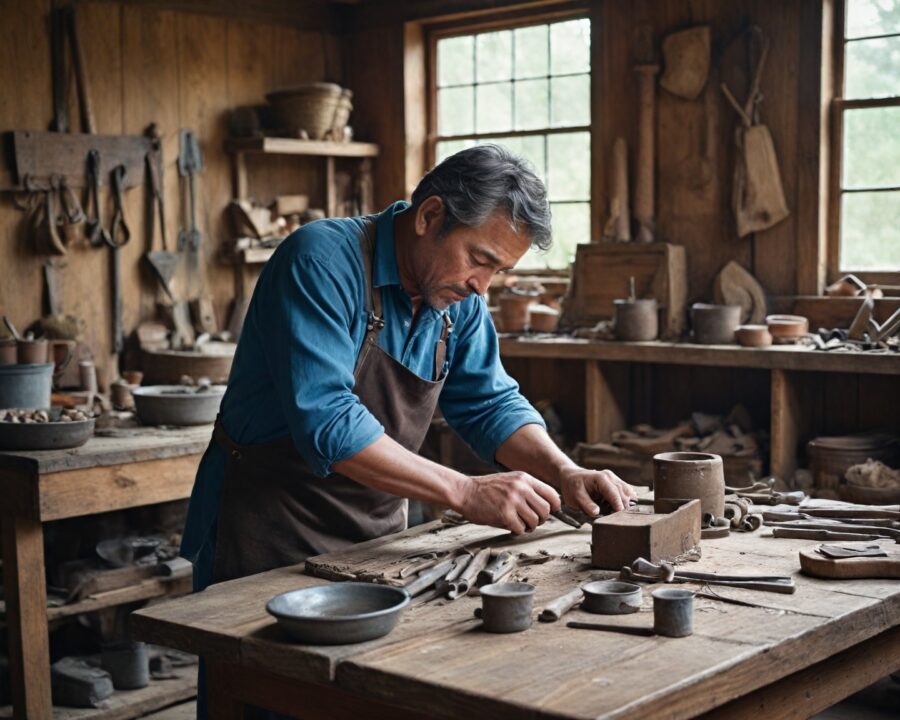
Introduction to Ancient Craftsmanship and Its Significance
Ancient craftsmanship represents the creative and skilled manipulation of materials by artisans thousands of years ago. These artisans were not only creators of beautiful objects but also pioneers of the fields we now know as engineering, architecture, and design. Their work included everything from pottery and weaving to metalwork and building, setting the foundation for modern craftsmanship. The study of ancient techniques offers insight into how our ancestors solved complex problems using the limited resources available to them.
The significance of ancient craftsmanship cannot be overstated, as it tells a story of human ingenuity and the development of societies. These artisanal methods preserved in time continue to influence modern art and architecture, bridging the past and present. Through exploring ancient craftsmanship, we gain a deeper appreciation for the skill and creativity that characterized early human endeavors. From the grand structures like the Pyramids of Giza to the intricate designs of Celtic jewelry, ancient craftsmanship highlights the extraordinary achievements of early civilizations.
Key Materials Used in Ancient Craftsmanship
Materials played a vital role in ancient craftsmanship, with each civilization utilizing the natural resources available to them. Stone, clay, wood, and metals such as gold, silver, bronze, and iron were some of the most commonly used materials. Stone was a fundamental building block, used in constructing magnificent structures like Stonehenge and the ziggurats of Mesopotamia. The durability of stone made it ideal for both artistic and functional purposes, from sculpture to architecture.
Clay was another essential material, particularly in pottery and ceramics. Ancient methods of molding and firing clay vessels illustrate the high level of sophistication artisans achieved with their limited tools. Whether making everyday objects or ceremonial items, clay was versatile and abundant, allowing for widespread use across various cultures. Its adaptability is evident in the elaborate pottery designs of the Greeks and the durable terracotta of China.
Metalworking marked a significant advancement in ancient craftsmanship, unlocking new possibilities for both utility and art. The distinction between the Bronze Age and Iron Age underscores the importance of metal as a transformative material. Metals allowed artisans to create tools, weapons, jewelry, and household items with increased precision. Ancient Egyptian goldsmiths, Celtic bronzesmiths, and Iron Age blacksmiths each contributed significantly to their respective cultures through metalwork, which often held symbolic and ceremonial value.
Techniques and Tools of Ancient Artisans
The ingenuity of ancient craftsmen is most evident in the techniques and tools they developed to shape their material world. Many of these tools were simple, yet they exhibited an understanding of geometry and physics that enabled the creation of complex works. For example, the Egyptians used plumb bobs, squares, and the so-called Egyptian triangle to achieve perfect alignments in their monumental structures.
Other exemplary techniques can be found in ancient pottery-making methods. The potter’s wheel, which has been traced back to Mesopotamia around 4000 BCE, revolutionized the production of pottery by allowing for greater symmetry and speed. Artisans applied intricate designs and glazes to their creations, showcasing not only aesthetic prowess but also technical expertise in chemistry and material science.
In metalworking, the development of smelting and forging techniques allowed craftsmen to mold metals into desired shapes. Lost-wax casting, a technique used for thousands of years and still in use today, enabled the creation of detailed metal sculptures and jewelry. Blacksmiths honed the art of forging and tempering, developing carbonized steel in leading weaponry and utensils—an advancement that had considerable social and cultural implications.
Famous Examples of Ancient Craftsmanship Across Cultures
Throughout history, various cultures have produced iconic examples of craftsmanship that continue to captivate and inspire. In ancient Egypt, the tomb of Tutankhamun revealed extraordinary artifacts such as his gold death mask, which exemplifies the pinnacle of Egyptian goldsmithing. Likewise, the pyramids themselves remain a testament to the architectural mastery achieved using ancient techniques.
In ancient Greece, the sculptural work on the Parthenon highlights the Greeks’ attention to proportion and beauty. The Elgin Marbles, originally part of the Parthenon, display a skill in marble carving that has rarely been surpassed. Furthermore, Greek pottery, with its distinctive red and black-figure techniques, illustrates a sophisticated approach to both form and ornamentation.
Chinese craftsmanship has equally left an indelible mark, seen in the Terracotta Army of Emperor Qin Shi Huang and the exquisite porcelain that would later become highly prized in Europe. Early dynastic bronzework with richly detailed designs also speaks of the advanced metalworking skills that characterized ancient China.
The Role of Craftsmanship in Ancient Societies
Craftsmanship in ancient societies played a vital role both economically and culturally. Artisans were highly respected members of the community, whose skills contributed directly to the prosperity and cultural richness of their civilizations. Artisans often worked within guilds or collaborative workshops, allowing for a sharing of techniques and fostering innovation.
Economically, skilled craftspeople provided essential goods, from utilitarian tools to luxury items, which were key to trade. Objects such as finely woven textiles, precious metal jewelry, and ceramics not only fulfilled domestic needs but also served as currency in exchange for other goods. Trade routes facilitated the cross-cultural exchange of styles and techniques, leading to an enriched material culture on a global scale.
Culturally, craftsmanship conveyed ideas, stories, and ideologies. As seen in religious and ceremonial artifacts, artisans provided tangible expressions of the intangible, transforming beliefs, and traditions into lasting legacy. Artisan-made objects were often imbued with symbolic meanings, reflecting societal values and contributing to the cultural heritage passed down through generations.
How Ancient Craftsmanship Influenced Modern Techniques
The influence of ancient craftsmanship on modern techniques is palpable in contemporary art, architecture, and manufacturing. Many techniques developed by ancient artisans remain in use, albeit with more advanced technology. For example, the concept of modular construction seen in Roman aqueducts and amphitheaters inspires modern prefabricated building methods.
In fine arts, the principles of classical sculpture and pottery from Greece, Rome, and China inform current artistic education and practice. Techniques such as molding, casting, and glazing are applied in classrooms and professional studios worldwide, ensuring the legacy of ancient craftsmanship endures. Modern ceramic artists, for example, cannot escape the influence of ancient Greek black and red figure pottery, which set high standards for form, proportion, and narrative detail.
Additionally, ancient metalworking continues to impact industries like jewelry design and construction. Methods used by ancient goldsmiths and blacksmiths serve as the foundation for contemporary goldsmithing techniques, which blend traditional skills with modern technology like laser welding. Architects and designers also draw inspiration from ancient structures, borrowing from the aesthetics and engineering marvels of past civilizations to innovate in sustainable and efficient design.
Common Questions About Ancient Craftsmanship Answered
What were the most common materials used by ancient craftsmen?
Ancient craftsmen predominantly used materials like stone, clay, wood, and metal. Each material had varied uses, ranging from construction to art.
What is a famous example of ancient metalwork?
One of the most renowned examples is the Mask of Agamemnon from Mycenaean Greece. Its intricate detailing demonstrates exceptional skill in goldsmithing.
How did ancient craftsmen learn their skills?
Skills were often passed down through generations via apprenticeships. Young artisans learned from master craftspeople within workshops or familial lines.
Did ancient people use any form of measuring system?
Yes, ancient artisans used various measuring systems. The Egyptians had cubits for linear measurements, while the Greeks developed mathematical principles for proportion.
Are there still artisans practicing ancient techniques today?
Indeed, many contemporary artisans practice and preserve ancient techniques, often integrating them with modern methods to create new works.
Why is ancient craftsmanship important to study?
Studying ancient craftsmanship provides insight into the technological, cultural, and societal advancements of historic civilizations and inspires modern innovation.
How has ancient pottery influenced today’s ceramics?
Ancient pottery techniques like wheel throwing and glazing remain foundational to modern ceramics, influencing both artistic and commercial pottery.
Can ancient craftsmanship be considered sustainable?
Yes, many ancient techniques relied on natural materials and processes that can be considered sustainable. The localized sourcing of materials and labor-intensive methods promoted environmental balance.
Preservation of Ancient Craftsmanship in the Modern Era
Preserving ancient craftsmanship today involves documenting these techniques, educating new artisans, and ensuring continued practice. Museums and historical societies play crucial roles by curating ancient artifacts and offering workshops or lectures on traditional skills. These efforts raise awareness and appreciation for ancient techniques, promoting cultural preservation.
Practically, some preservation efforts involve direct application, such as restoration projects on historic monuments and buildings. Architects and craftsmen trained in ancient techniques carefully restore these works to their former glory, maintaining the original methods wherever possible. This combination of restoration and preservation bridges the gap between historical aesthetics and modern functionality.
Equally important is the role of modern technology in preservation. Digital documentation, such as 3D scanning and printing, allows us to create detailed records of ancient craftsmanship. This information aids in educational and restoration efforts, ensuring that the skills and knowledge of our ancestors continue to inform and inspire future generations.
Practical Ways to Learn and Apply Ancient Craftsmanship Today
Learning ancient craftsmanship today begins with a foundational understanding of historic techniques and materials. Many colleges and private institutions offer courses in traditional arts and crafts, providing students with both theoretical knowledge and hands-on experience. These programs often cover an array of disciplines, from pottery and weaving to metalworking and carpentry.
For those interested in self-study, numerous books, online tutorials, and workshops are available. Engaging with communities dedicated to traditional crafts can also provide invaluable opportunities for learning and networking. Participating in craft fairs or artisan markets can expose one to a variety of techniques and potentially connect emerging artisans with mentors.
Applying these skills can take various forms, whether it’s creating personal art or participating in larger projects. Many artisans find inspiration in ancient craftsmanship, incorporating these techniques into modern design and production. Whether through replicating classic styles or reimagining them for contemporary audiences, the application of ancient skills enriches modern craftsmanship and keeps these timeless techniques alive.
The Enduring Legacy of Ancient Craftsmanship in Art and Design
Ancient craftsmanship has carved a lasting legacy in the world of art and design, with its influence visible in various aspects of modern aesthetics and production. The principles established by ancient artisans continue to resonate, serving as a testament to the enduring power of human creativity.
This impact is evident in modern architecture, where the use of classical elements like columns and domes draws direct inspiration from ancient structures. Art deco, neoclassicism, and other revival styles highlight how ancient aesthetics blend seamlessly into modern designs. By embracing classical principles, contemporary architects and designers create spaces that feel both innovative and timeless.
In the realm of visual art, the techniques pioneered by ancient artisans have undergone a renaissance in recent years, as artists seek to reconnect with traditional skills in the age of mass production. The resurgence of interest in handicrafts and artisanal goods reflects a broader cultural appreciation for the craftsmanship and uniqueness embodied by ancient techniques. This legacy not only honors the past but also inspires the future, fostering a spirit of creativity and innovation.
Recap
- Ancient craftsmanship showcases incredible human ingenuity and skills in working with available materials like stone, clay, and metals.
- Techniques and tools developed by ancient artisans have influenced modern practices in art, architecture, and metalworking.
- Famous examples from around the world, such as the Egyptian pyramids and Chinese porcelain, demonstrate the global reach and cultural importance of ancient craftsmanship.
- The preservation and application of these traditional skills continue to enrich contemporary creative practices.
- Studying ancient techniques provides insight into early societies’ technological advancements and cultural values.
Conclusion
Ancient craftsmanship forms a crucial link between past and present, revealing the depth of innovation and artistry achieved by early civilizations. By studying these techniques, modern practitioners honor the timeless skills and creativity that laid the foundation for today’s cultural and technical accomplishments. This enduring legacy demonstrates how ancient ingenuity continues to inform and inspire contemporary craftsmanship, bridging millennia of human development.
As we look to the future, integrating ancient techniques with modern technology and methods will further evolve artistic expression and craftsmanship. By preserving these skills and passing them on to future generations, we not only honor our ancestors but also enrich our own creative possibilities, ensuring the timeless techniques of ancient craftsmanship will never be forgotten.
References
-
Smith, J. (2019). Understanding Ancient Techniques: The Artisans and Their Legacy. New York: Craft House Publishing.
-
Roberts, A. & Taylor, L. (2021). Heritage and Craftsmanship: Exploring the Traditions of Ancient Artisans. London: Artisan Press.
-
Zhang, Y. (2022). Timeless Art: The Enduring Influence of Ancient Craftsmanship in Modern Design. Beijing: Silk Road Publications.