
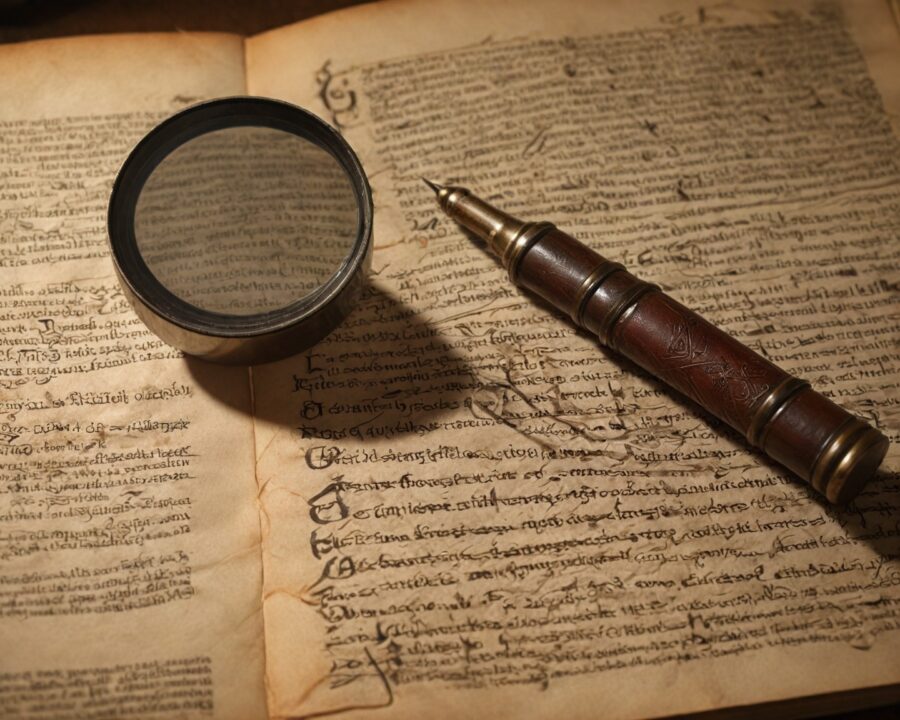
Introduction to Ancient Codes and Their Origins
In the annals of history, humanity’s innate desire to communicate secretly led to the invention of cryptography. Ancient codes, some of the earliest paradigms of this art, were cryptic scripts and symbols devised to cloak messages and safeguard information. From the intricate knot systems of the Inca, known as quipus, to the elaborate hieroglyphs of ancient Egypt, civilizations across the world crafted unique ways to encode their secrets long before the birth of the written word as we know it today. Each code reflects its culture’s complexity and priorities, intertwining communication with art, religion, and power dynamics.
The origins of ancient cryptography lie in the necessity of secrecy in various aspects of life, from military strategy to religious rituals. By altering their written language into codes understood only by initiates, societies could protect critical information from adversaries or pass clandestine messages without fear of interception. The evolution of these codes showcases humanity’s enduring quest for both connection and protection, grounding them as a cornerstone of ancient human ingenuity. These early cryptographic efforts laid the foundation for modern security systems and continue to captivate scholars and enthusiasts alike.
The Role of Ancient Codes in Communication and Secrecy
Ancient codes served as pivotal tools for encrypted communication, facilitating not only clandestine correspondence but also administrative and ceremonial functions. In times of war, especially, the ability to send and receive hidden messages could mean the difference between victory and defeat. Ancient Rome, for instance, utilized the Caesar Cipher, a straightforward yet effective form of encryption, where letters in a message were shifted by a fixed number. Julius Caesar depended on this cipher to ensure military dispatches remained confidential. Such codes were ingenious in their simplicity and effectiveness, creating barriers for those not privy to the encryption key.
In addition to warfare, ancient codes played significant roles in religious and cultural spheres. Priestly classes often used cryptographic rites to maintain control over esoteric knowledge, thus consolidating their power within their communities. The understanding and dissemination of religious texts seldom occurred without some degree of cryptic encoding, ensuring that interpretations and teachings remained within a select group, thereby preserving the sanctity and exclusivity of their spiritual content.
Moreover, trade and commerce benefited greatly from early encryption techniques. Merchants could communicate sensitive information such as trade routes, prices, and contracts securely, maintaining a competitive edge in nascent market ecosystems. The interplay between secrecy in mercantile interactions illustrates the broader cultural values and technological capabilities of ancient societies.
Famous Ancient Codes and Their Historical Significance
Throughout history, numerous ancient codes stand out for their ingenuity and impact on civilization. The hieroglyphs of ancient Egypt are one of the earliest examples of complex symbolism serving both a communicative and coded role. For centuries, hieroglyphs engaged not only in recording monumental achievements but also veiled religious and political secrets from foreign eyes, cementing the Pharaoh’s divine mandate across the expanses of the Nile.
Likewise, the Hebrew Bible holds hidden codes that continue to intrigue scholars and theologians. Some have proposed theories about equidistant letter sequences that suggest additional layers of meaning woven into the sacred text. Whether these sequences were deliberately encoded remains the subject of scholarly debate, highlighting the profound implications of cryptographic interpretations within ancient religious manuscripts.
Another famous coding example is the quipu, a system of colored, knotted cords used by the Inca civilization. Serving both as a record-keeping tool and a coded message device, quipus provide insight into the administrative sophistication of the Inca. Their ability to encode numbers and convey information without a written language underscores the innovative spirit of ancient peoples in crafting enduring symbols of their knowledge and governance.
Decoding Methods Used in Ancient Times
Decoding ancient codes required not only a deep understanding of language and symbolism but also keen analytical abilities. Often, the skills necessary to decipher such messages were concentrated among the intellectual elites. In ancient Greece, for example, the scytale was a device used by Spartan military commanders, which involved a cylindrical tool to encrypt messages on parchment. Decoding required an identical cylinder to properly align the text. This technique demonstrated a blend of geometry and linguistics.
In another instance, Jewish cryptographers from antiquity employed the Atbash cipher. This simple substitution method involved replacing each letter with its counterpart in an alphabet reversed from the original. The Atbash cipher illustrates how the fundamental principles of modern cryptography, such as substitution and transposition, trace back to ideas germinated in ancient minds.
The Rosetta Stone is another case, where decoding involved an entire script rather than a specific message. The Stone contained the same decree inscribed in three scripts: Greek, Demotic, and hieroglyphs. Scholars in the 19th century, led by Jean-François Champollion, used their knowledge of Greek, a known language, to unlock the floodgates of Egyptian hieroglyphics, illustrating decoding as a collaborative and often serendipitous task.
The Impact of Ancient Codes on Modern Cryptography
Ancient cryptography laid essential groundwork for the development of modern encryption methods. The simplicity and elegance of ancient techniques often belie their complexity and adaptability, providing insights into the security principles we use today. For instance, substitution and transposition remain core concepts in modern cryptographic systems, demonstrating a direct lineage from early cipher systems like the Caesar Cipher.
The understanding of pattern recognition and cryptanalysis developed from ancient endeavors influences current practices in code-breaking enterprises. The meticulous process of decoding ancient texts taught later generations valuable lessons in how to approach code-breaking systematically, which has been crucial for developing algorithms that secure digital communication today.
Moreover, ancient cryptography helps frame the ethical discussion surrounding information security in our digital age. The balance between transparency and privacy, so deftly manipulated by ancient users of codes, echoes in current debates on data encryption and surveillance. Thus, the imprint of ancient cryptography remains robust, both in technical methodologies and philosophical ramifications.
Common Questions About Ancient Codes and Their Uses
What is the earliest known use of ancient codes?
The earliest known use of ancient codes likely dates back to Mesopotamia, where cuneiform writing included various cryptic symbols and numeric codes for administrative and religious use.
How did ancient codes differ from modern ones?
Ancient codes primarily focused on simple substitution and transposition, often relying on linguistic tricks, whereas modern codes use complex mathematical algorithms for encryption.
Were ancient codes used universally across societies?
Not every society developed formal cryptographic systems, but many employed at least basic methods of message concealment, tailored to their unique cultural environment.
Can we still decode all ancient codes today?
Not all ancient codes have been fully decoded. Some, like the Voynich Manuscript, remain a mystery and continue to be subjects of scholarly fascination.
Why were religious texts often encoded in ancient times?
Encoding religious texts helped maintain their sanctity and ensure that interpretations remained within a privileged or religiously authoritative group.
How did trade benefit from ancient cryptography?
By allowing merchants to securely communicate sensitive commercial information, cryptography helped protect trade secrets and avoid exploitation by competitors.
Did ancient mathematicians contribute to cryptography?
Yes, ancient mathematicians contributed significantly, with figures like Al-Kindi devising early methods of cryptanalysis in the Islamic Golden Age.
What role did art play in ancient cryptographic systems?
Art played a substantial role, as many codes were visually encoded in artworks, architecture, and ritual objects, intertwining aesthetics with messages.
The Cultural and Symbolic Meanings Behind Ancient Codes
Ancient codes were often steeped in cultural and symbolic meanings, mirroring the societies from which they originated. They were not just functional tools but integral components of ritual and identity. For example, Egyptian hieroglyphs served both as a means of writing and as an artistic expression reflecting their cosmological beliefs. Each symbol carried multiple layers of meaning, from mundane to divine.
In Asian cultures, such as in China, encoded messages often included calligraphic nuances, where the style and brush strokes carried as much importance as the words themselves. This symbolic use of codes underscored the interconnectedness of aesthetics, discipline, and scholarship, reflecting broader philosophies of harmony and balance fundamental to these societies.
Similarly, Native American tribes used symbolic painting on rocks and pottery, embedding messages into their artistic traditions. This practice not only safeguarded ideas and stories from unwelcome ears but also maintained a sense of spiritual and communal continuity. Ancient codes thus transcend mere secrecy, embodying cultural narratives and serving as vessels of communal identity and heritage.
Practical Applications of Ancient Codes in Modern Times
In modern times, the study of ancient codes is more than an academic exercise; it offers practical insights into various fields. For one, understanding ancient cryptographic methods helps improve contemporary techniques for securing communications and devising new encryption algorithms. The enduring principles of substitution and transposition from ancient times underlie many current cryptographic frameworks.
Additionally, ancient codes find themselves at the intersection of technology and art. With the rise of digital art and virtual reality, artists and designers draw inspiration from ancient symbols and scripts, reinventing them in the digital medium. The aesthetic appeal and mysterious aura associated with cryptic visuals grant them a timeless allure, which artists leverage to create thought-provoking and culturally resonant works.
Furthermore, professionals in fields as diverse as archaeology and computer science collaborate to develop machine learning algorithms for deciphering undecoded ancient scripts. These interdisciplinary efforts illustrate the potential of ancient codes to push technological boundaries, offering fresh insights into both past civilizations and future innovation.
How to Study and Interpret Ancient Codes Today
Studying ancient codes today requires a multidisciplinary approach that combines historical research with modern technological tools. Scholars often start by familiarizing themselves with the historical and cultural context of the codes they aim to decipher. This involves understanding the language, social structure, and symbolism of the society in question to make educated guesses about the meaning behind the codes.
Moreover, technological advancements offer new avenues for code analysis. Using software designed for pattern recognition or employing algorithms capable of testing thousands of permutations quickly has significantly reduced the time required for cryptanalysis. This computational power becomes invaluable in addressing the complexities of undecoded texts such as Linear B or the Indus script.
Collaboration is another cornerstone of modern cryptographic endeavors. Researchers from various fields—linguists, mathematicians, historians—are pooling their expertise more than ever to unravel these age-old mysteries. This collaborative spirit echoes the origins of cryptography as a communal tool, bringing together modern minds with those of the ancients in the unending quest for knowledge.
Conclusion: The Enduring Legacy of Ancient Codes in History
Ancient codes hold enduring significance as both historical artifacts and timeless tools of communication. Their utility in past societies for safeguarding secrets, enhancing trade, and enriching religious practices underscores the multifaceted role of cryptography in human development. The codes were more than mere mechanical systems; they were repositories of cultural values and intellectual endeavors, reflecting the societies that created them in intricate detail.
Today, the legacy of ancient codes continues to resonate in a world increasingly dependent on secure communications. Modern cryptography owes a debt to these early encoding methods, as the fundamental theories of protecting information seed directly from them. As such, they provide more than just historical curiosity; they are integral to our technological and cultural landscapes.
Recap
- Ancient cryptography was born out of the necessity for communication and secrecy across various civilizations.
- Codes played pivotal roles in military, religious, and commercial domains.
- Famous codes, like Egyptian hieroglyphs and Inca quipus, illustrate the diverse applications and cultural significance.
- Decoding methods have evolved, but were originally based on substitution and transposition techniques.
- Modern cryptography builds upon the principles established by ancient cryptographic systems.
- Ancient codes carry profound cultural, symbolic, and practical meanings.
- Technology and interdisciplinary collaboration enhance the study of ancient codes today.
- Ancient cryptography remains relevant, influencing contemporary encryption practices and technological advancements.
References
-
Singh, Simon. “The Code Book: The Science of Secrecy from Ancient Egypt to Quantum Cryptography.” Anchor Books, 1999.
-
Kahn, David. “The Codebreakers: The Comprehensive History of Secret Communication from Ancient Times to the Internet.” Scribner, 1996.
-
Bauer, Craig P. “Secret History: The Story of Cryptology.” CRC Press, 2013.