
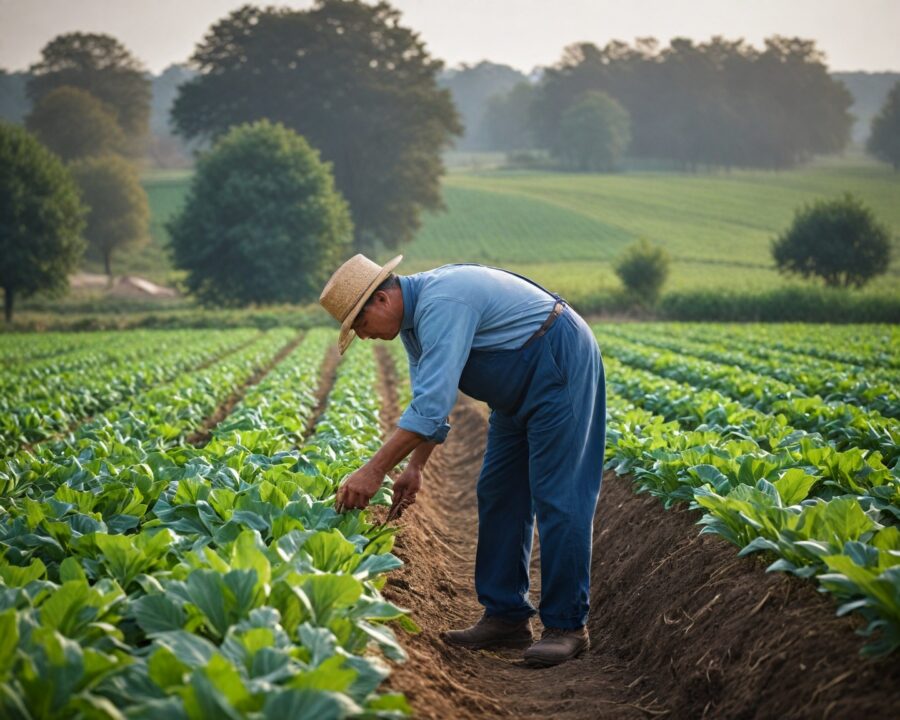
Introduction to Ancient Agriculture and Its Significance
The dawn of agriculture marks a pivotal era in human history. Before its advent, human societies were primarily hunter-gatherers, and their survival depended largely on the precarious balance of nature’s ebb and flow. With the emergence of agriculture, humans began to exert a measure of control over their environment, setting the stage for the development of complex societies. Ancient agriculture was not merely about food production; it reshaped human societies, influencing social structures, cultural practices, and economic systems.
Agriculture allowed early communities to establish permanent settlements, leading to the rise of civilizations. This transformative shift enabled population growth and facilitated cultural and technological advancements. The inception of agriculture was a fundamental turning point that had far-reaching implications on humanity’s trajectory. Understanding the origins, techniques, and impacts of ancient agriculture offers valuable insights into how these early practices shaped and continue to influence agricultural practices today.
The Origins of Agriculture: When and Where It Began
The story of agriculture’s beginnings is intricate, woven into the diverse tapestry of human history. Evidence suggests that agriculture arose independently in several regions around the world between 10,000 and 5,000 BCE. Fertile crescents like the Middle East’s Levant, parts of China, Mesoamerica, and the Andes are among the notable cradles of early agriculture. Archaeological findings indicate that it developed simultaneously in these regions, driven by a combination of environmental conditions and human ingenuity.
The shift from foraging to farming was, however, not abrupt. It was a gradual process often referred to as the Neolithic Revolution. In these early societies, people began cultivating wild plants, eventually domesticating them for better yields and more reliable harvests. The first crops were simple yet essential: wheat and barley in the Middle East, rice in Asia, maize in the Americas, and millet in Africa. Each region adapted to its environment, resulting in diverse agricultural practices.
This regional diversity was crucial as it allowed human populations to thrive in various ecological zones. The development of agriculture meant more than food security; it fostered stable communities, reduced mobility, and enabled the specializations that became the building blocks of civilizations. As human societies moved from nomadic lifestyles to settled agriculture, new social dynamics emerged, laying the foundation for modern societies.
Key Crops and Livestock in Ancient Farming
The ancient agricultural landscape was marked by a variety of crops and livestock that were integral to the survival and development of early societies. Cultivating these species enabled humans to establish reliable food sources, which in turn supported growing populations and the advancement of complex societies.
Key Crops:
- Wheat and Barley: These cereal grains were among the first to be domesticated in the Fertile Crescent, providing the staples for the first farming societies.
- Rice: In Asia, rice paved the way for settled communities, particularly around the Yangtze and Yellow River basins.
- Maize: Essential to Mesoamerican societies, maize became a cornerstone of cultures like the Maya and Aztecs.
- Millet and Sorghum: Used in African agriculture, these hardy crops were well-suited to the continent’s varied climates.
Livestock:
- Cattle and Sheep: Domesticated in the Middle East, these animals provided meat, milk, wool, and labor.
- Pigs: Domesticated around 9,000 years ago in Asia and Europe, pigs were valued for their meat and ability to forage.
- Chickens: Originating in Southeast Asia, these birds spread across the globe, serving as both food and sacrificial animals.
The symbiotic relationship between crops and livestock created a robust agricultural system capable of supporting large and diverse populations. These foundational crops and animals established the economic and dietary structures of ancient societies and left a lasting legacy that continues in modern agriculture.
Innovative Techniques Used in Early Agriculture
Technological and agricultural innovations were integral to the success and sustainability of ancient farming methods. These innovations reflect the ingenuity and adaptability of early farmers who continuously refined their techniques to enhance productivity.
Seed Selection and Crop Rotation:
One of the earliest innovations was seed selection, which involved choosing the best seeds for next season’s planting, significantly improving yields. Additionally, crop rotation helped maintain soil fertility and prevent the buildup of soil-borne diseases.
Tools and Implements:
The development of agricultural tools such as sickles, plows, and hoes allowed for more efficient farming. The introduction of the plow, for example, revolutionized soil preparation, enabling farmers to cultivate larger areas.
Storage Techniques:
Early societies developed storage techniques to preserve surplus harvests, such as granaries and pits lined with straw or clay to keep pests away. This innovation was pivotal in managing food supplies during harsh seasons or poor harvests.
These advancements illustrate how early farmers maximized their resources, laying the groundwork for agricultural practices that would evolve and improve over the millennia.
The Role of Irrigation in Ancient Farming Systems
Irrigation was a game-changer in ancient agriculture, allowing farmers to reliably use water resources, extend growing seasons, and cultivate areas not naturally conducive to farming. This practice was particularly transformative in arid regions, where water availability was a limiting factor.
Early Irrigation Techniques:
- Floodplain Irrigation: Utilized along rivers like the Nile, Euphrates, and Tigris, floodplain irrigation capitalized on seasonal floodwaters to hydrate crops.
- Canals and Ditches: Complex networks of ditches directed water to fields, as seen in ancient Mesopotamia and Egypt, enabling large-scale agriculture.
- Terracing: In steep or uneven terrain, such as the Andean foothills, terraces allowed for efficient water management and reduced soil erosion.
Impact on Societies:
Irrigation was a catalyst for economic and social complexity. It supported agricultural surpluses which spurred trade, led to the division of labor, and fostered the development of urban centers. The centralization required to manage irrigation systems also fostered early forms of governance and bureaucracy.
By overcoming natural constraints, irrigation paved the way for civilizations to thrive in otherwise inhospitable environments, demonstrating the profound impact of water management on agriculture and society.
Impact of Agriculture on Ancient Societies and Economies
The emergence of agriculture was a fundamental driver in the transformation of ancient societies and economies. This innovation had a profound social, economic, and cultural impact, reshaping the landscape of human history.
Social Implications:
Agriculture led to the establishment of permanent settlements, which allowed for population growth and the rise of cities. With stable food supplies, communities could support diverse professions, leading to social stratification and the development of complex social hierarchies.
Economic Impacts:
An agricultural surplus became a cornerstone for trade, fostering economic relations across regions. This exchange of goods not only included foodstuffs but also technologies and ideas, contributing to the rich tapestry of cultural exchange and innovation.
Cultural Growth:
Agriculture influenced cultural development, as societies organized their calendars around planting and harvest cycles. It also gave rise to agricultural deities and rituals, embedding farming deeply into the spiritual and cultural life of ancient peoples.
Overall, agriculture’s impact was transformative, enabling the emergence of the complex societies that form the basis of modern civilization.
Challenges Faced by Ancient Farmers and Their Solutions
While agriculture was a milestone in human development, it came with its own set of challenges. Ancient farmers had to contend with unpredictable weather, pest infestations, and soil depletion, among other issues.
Weather Variability:
Unpredictable weather patterns could lead to catastrophic crop failures. Ancient peoples mitigated this with diverse planting strategies and preservation techniques, storing grain to manage food shortages during lean times.
Pest and Disease:
Pests and diseases were persistent threats to crop yields. Farmers used natural predators and crop rotation to minimize damage and maintain healthy harvests.
Soil Fertility:
Maintaining soil fertility was critical. Solutions included crop rotation, use of manure, and, where available, the annual deposition of nutrient-rich silt by river flooding. Farmers also adapted by cultivating legumes, which naturally replenish nitrogen in the soil.
These solutions reflect the resilience and adaptability of early agriculturalists, whose efforts laid the groundwork for future agricultural advancements.
Comparison of Ancient and Modern Agricultural Practices
The evolution of agricultural practices from ancient to modern times reflects advancements in technology, understanding, and scale. While many ancient techniques provide the foundation for contemporary agriculture, significant differences exist in the methods and technologies employed.
Ancient Practices:
- Manual Labor: Relied heavily on human and animal labor for planting and harvesting.
- Local Focus: Systems were often localized, with practices tailored to specific climates and soils.
- Sustainability Awareness: Techniques like crop rotation and intercropping were inherently sustainable as they maintained biodiversity and soil health.
Modern Techniques:
- Mechanization: Utilizes machinery for efficiency and scale, reducing the reliance on manual labor.
- Global Integration: Modern agriculture is interconnected globally, with technological advancements facilitating the rapid exchange of crops and livestock breeds.
- Chemical Use: Modern agriculture often relies on synthetic fertilizers and pesticides to increase yield but raises concerns about environmental and human health.
Although modern agriculture tends to prioritize efficiency and yield, the wisdom of ancient practices still holds valuable lessons for achieving a balance between productivity and sustainability.
Lessons from Ancient Agriculture for Sustainable Farming Today
Ancient agriculture offers valuable insights into sustainable farming practices, highlighting methods that maximize productivity while minimizing environmental impact. By analyzing these age-old strategies, modern agriculture can achieve a more sustainable future.
Biodiversity:
Ancient farmers often practiced polyculture—growing multiple crop species together. This increase in biodiversity can enhance ecosystem resilience, reduce pests, and improve soil health. Modern farmers can benefit from incorporating diverse planting schemes and maintaining genetic diversity in crops and livestock.
Soil Management:
Ancient practices of soil fertility management, such as crop rotation and use of natural fertilizers, underscore the importance of maintaining soil health. Modern agriculture can incorporate organic farming techniques that focus on soil productivity without the dependency on chemical fertilizers.
Water Use:
Efficient water management through irrigation allowed ancient societies to thrive in challenging environments. Today, precision agriculture and technology can help optimize water use, reducing waste and preserving this vital resource.
By drawing from the past, modern agriculture can develop strategies that ensure food security and environmental sustainability in the face of burgeoning global challenges.
Conclusion: The Legacy of Ancient Agriculture in Modern Times
Ancient agriculture lays the foundation upon which the edifice of modern civilization is built. As we journey through time from these early endeavors, the ingenuity and resilience of ancient agriculturalists remain evident. Their groundbreaking techniques not only transformed the way communities lived but also set in motion the cultural, social, and technological advancements that came to define human progress.
Today, as we face the complexities of climate change, resource depletion, and global food security, the echo of ancient agricultural wisdom continues to resonate. The lessons gleaned from these early farmers—prioritizing sustainable practices, fostering biodiversity, and managing resources wisely—are more relevant than ever in the endeavor to create a sustainable future.
The legacy of ancient agriculture extends beyond historical interest; it offers a blueprint for addressing present and future agricultural challenges. By synthesizing the best of ancient practices with modern innovations, we can cultivate a harmonized approach to agriculture that respects our history while nurturing our future.
FAQ
What are ancient farming methods?
Ancient farming methods include a variety of techniques developed by early agriculturalists to cultivate crops and manage livestock. These methods often relied on natural processes and materials such as crop rotation, intercropping, natural fertilizers, and irrigation systems.
Why did ancient civilizations develop agriculture?
Ancient civilizations developed agriculture to ensure a stable and reliable food supply, allowing communities to transition from nomadic lifestyles to settled societies. This stability supported population growth and the development of complex social structures.
How did ancient farmers irrigate their fields?
Ancient farmers employed several irrigation methods such as floodplain irrigation, canals, and ditches. They also developed terracing techniques in hilly areas to channel water efficiently and prevent soil erosion.
What was the most significant crop in ancient agriculture?
While significant crops varied by region, wheat and barley were pivotal in the Middle East, rice in Asia, maize in Mesoamerica, and millet in Africa. Each crop played a crucial role in the development of the societies that cultivated them.
How did ancient agriculture influence modern farming?
Ancient agriculture influenced modern farming by laying the foundation for crops and livestock breeds, as well as pioneering techniques like crop rotation and irrigation. Many modern practices are adaptations and extensions of ancient methods enhanced by technology.
What are some differences between ancient and modern agriculture?
The main differences include the scale and technology used in farming. Ancient agriculture relied on manual labor and simple tools, while modern agriculture uses advanced machinery, synthetic inputs, and genetically modified crops for higher efficiency and yields.
Can ancient agriculture teach us about sustainability?
Yes, ancient agriculture practices such as crop rotation, intercropping, and natural fertility management offer valuable lessons in sustainability. These methods emphasize resource efficiency and environmental health, which are critical for sustainable agriculture today.
How did livestock play a role in ancient farming?
Livestock were integral to ancient farming, providing meat, milk, labor, and other resources such as hides and wool. Animals like cattle, sheep, pigs, and chickens were domesticated early on, enhancing agricultural productivity and supporting the societal shift towards permanent settlements.
Recap
- Agriculture originated independently in several regions, transforming human societies.
- Key crops like wheat, rice, and maize were foundational to ancient economies.
- Innovative techniques, including irrigation and storage, boosted agricultural success.
- Agriculture’s impact on societies led to permanent settlements and economic growth.
- Ancient farmers faced challenges, but solutions like crop rotation ensured sustainability.
- Comparing ancient and modern practices highlights the evolution of agricultural techniques.
- Sustainable lessons from ancient times remain critical for today’s environmental challenges.
Conclusion
The legacy of ancient agriculture is profound and enduring, reflecting the ingenuity and adaptability of early humans. As cultivators of the earth, ancient farmers laid the bedrock for the societies that came after them, their innovations sparking the growth of civilizations across the globe. These early agricultural practices, while primitive by modern standards, demonstrate a remarkable understanding of the natural world and resource management that is still relevant today.
The sustainability embedded in ancient agricultural methods offers invaluable insights for contemporary farming, especially as humanity grapples with climate change and the need for sustainable food production. By revisiting these age-old strategies, we can not only learn to mitigate the environmental impact of farming but also enhance resilience against modern agricultural challenges.
As we continue to refine and advance our agricultural endeavors, the wisdom of ancient farming remains a vital resource. It reminds us of the importance of harmony with nature and prompts us to innovate sustainably, ensuring a prosperous future for generations to come.
References
-
Diamond, Jared. “Guns, Germs, and Steel: The Fates of Human Societies.” W.W. Norton & Company, 1997.
-
Smith, Bruce D. “The Emergence of Agriculture.” Scientific American Library, 1998.
-
Bellwood, Peter. “First Farmers: The Origins of Agricultural Societies.” Blackwell Publishing, 2005.