

Many people in Brazil overlook the complex engineering in daily life. From the kitchen to the laundry room, there are hidden wonders behind ordinary household objects that deserve a closer look. These items are more than tools; they result from precise material science and safety testing.
Consider a humble kitchen sponge and the advanced vibration-control systems in modern washing machines. Each item features thoughtful design choices that make life easier and safer. Manufacturers spend years refining these features, so they work well under pressure.
This article explores practical details that often go unnoticed during busy routines. When you understand how these essentials work, you gain appreciation for technology inside your home. Prepare to see your living space in a completely new light as we uncover secrets of your most trusted tools.
Key Takeaways
- Everyday items often contain sophisticated engineering and material science.
- Kitchen sponges and washing machines feature advanced design elements for efficiency.
- Safety and durability are prioritized in the manufacturing of common home goods.
- Understanding these details helps homeowners appreciate the value of their possessions.
- Small, overlooked features play a major role in the functionality of your home.
Hidden wonders behind ordinary household objects: Why familiar items are making news
Recent design breakthroughs are making ordinary household objects subjects of scientific interest. People now see that the engineering inside everyday products is more complex than it first appears. This new view is changing how consumers understand the tools they use each day.
What recent design and manufacturing discoveries reveal
Modern manufacturing now uses precise methods that allow products to include remarkable hidden features. These discoveries show how small changes in materials can greatly extend a product's life.
How engineers, material scientists, and safety researchers examine everyday products
Experts use careful tests to ensure every item meets high performance standards. They examine several key areas when evaluating household goods:
- Structural integrity: Testing how materials hold up under constant pressure.
- Durability analysis: Measuring the wear and tear of components over thousands of cycles.
- Risk reduction: Identifying potential hazards before a product reaches the market.
Where these discoveries appear in ordinary Brazilian homes
In Brazil, the average home offers a useful setting for observing these advances. From busy kitchens to quiet laundry rooms, high-tech solutions support daily life.
Why kitchens, laundry areas, bathrooms, and storage spaces offer useful examples
These rooms contain frequently used items, making them ideal for studying engineering inside everyday products. For instance, modern washing machines are more than metal boxes; they contain sophisticated sensors, counterweights, and vibration-control systems. These parts work together to provide efficiency and safety during every wash cycle.
How public reactions are changing perceptions of household essentials
As consumers discover more about hidden design features, they appreciate quality products more. Social media and consumer reports have helped share these insights with the public. People now value durable construction over cheap, disposable alternatives, showing why the engineering inside everyday products matters.
The engineering inside everyday products people use without noticing
Simple household goods hide sophisticated mechanical designs. Many perform complex tasks through hidden structures that users notice only when something breaks. Understanding these systems can deepen appreciation for tools in every Brazilian home.
The concealed structure of a kitchen sponge
Porous materials, water retention, airflow, and the reasons sponges wear out
A kitchen sponge shows how material science supports controlled fluid movement. Its porous structure traps water and soap while keeping enough airflow for drying. This balance limits rapid bacterial growth and keeps the sponge flexible enough to scrub uneven surfaces.
Over time, scrubbing stress causes the sponge's cellular walls to collapse. When the pores lose structural strength, the sponge cannot hold water or release dirt efficiently. This wear results from reaching its fatigue limit after repeated compression.
The balancing mechanisms inside washing machines
Counterweights, suspension systems, sensors, and vibration control during high-speed cycles
Modern washing machines use heavy counterweights to stabilize the drum during high-speed spin cycles. These weights offset uneven wet laundry, preventing the machine from moving across the floor. Suspension systems and internal sensors detect imbalances and adjust motor speed together.
The small design decisions that make chairs, drawers, and door hinges work
Load distribution, friction reduction, and manufacturing tolerances
Furniture lasts longer when its design manages load distribution well. Chairs direct weight through specific structural points, while drawers use precision-engineered glides to reduce friction. Even a small door hinge needs tight manufacturing tolerances for smooth operation through thousands of cycles.
How everyday objects are manufactured at different price points
Injection molding, stamped metal, layered construction, and quality-control checks
The process of how everyday objects are manufactured changes with a product's price and expected durability. High-volume items often use injection molding for plastic parts, enabling fast production and consistent quality. Premium goods may use stamped metal or layered construction for extra strength.
Regardless of the method, strict quality-control checks ensure products meet safety and performance standards. Studying these techniques helps consumers understand why some items offer greater value. Learning how everyday objects are manufactured helps buyers choose household essentials wisely.
Material science hiding in kitchen tools and food storage
Kitchen performance depends on the material properties of items in your cupboards. The material science of kitchen tools transforms raw elements into durable tools for daily cooking and storage. Understanding these hidden traits helps you protect your kitchen investments.

Why stainless-steel cookware resists corrosion
Stainless steel is common in homes because it strongly resists rust. This strength comes from a thin, invisible chromium oxide layer that forms on the metal's surface.
Chromium-rich surfaces, heat transfer, and the effect of salt and acidic foods
When chromium reacts with oxygen, it forms a self-healing barrier that protects the iron underneath. However, this protection has limits. Prolonged exposure to high salt concentrations or highly acidic foods like tomatoes can pit the surface left too long.
"The beauty of stainless steel lies in its chemical passivity, yet even the most resilient alloys have their limits when faced with harsh culinary environments."
How nonstick pans create low-friction cooking surfaces
Nonstick pans use advanced polymers so food releases easily without excess fats. The material science of kitchen tools in this category creates surfaces with extremely low surface energy.
Coating layers, heat limits, scratches, and safe cleaning practices
These pans usually have multiple layers of PTFE or ceramic coatings. Respect heat limits, because overheating can degrade the coating or release fumes. Use silicone or wooden utensils to prevent scratches, and avoid abrasive scrubbers when cleaning.
The surprising construction of glass jars and tempered drinking glasses
Glass may seem simple, but its production requires precise thermal control. Manufacturers engineer tempered glass to exceed standard glass strength through rapid cooling.
Thermal treatment, stress distribution, and why sudden temperature changes cause breakage
This treatment creates internal tension, making the glass highly resistant to impact. If the surface is damaged or faces extreme thermal shock, its internal stress releases instantly. The glass then shatters into small, safer pieces.
What reusable food containers reveal about plastics and silicone
Modern storage solutions use polymers that provide flexibility and durability. Silicone is valued because it withstands extreme temperatures without leaching chemicals.
Material flexibility, odor absorption, temperature resistance, and recycling labels
Silicone resists odors, but some plastics are porous and may retain scents over time. Always check recycling labels to learn each container's heat tolerance and disposal requirements.
| Material | Key Benefit | Best Practice |
|---|---|---|
| Stainless Steel | Corrosion Resistance | Avoid soaking in salt water |
| Nonstick Coating | Low Friction | Use soft utensils |
| Tempered Glass | High Strength | Avoid thermal shock |
Microfiber cloths, cleaning tools, and the science of everyday hygiene
A spotless home often starts with well-designed daily cleaning tools. People often think cleaning only requires elbow grease, but advanced tools also rely on material science. These tools trap dirt efficiently, helping homeowners get better results with less effort.
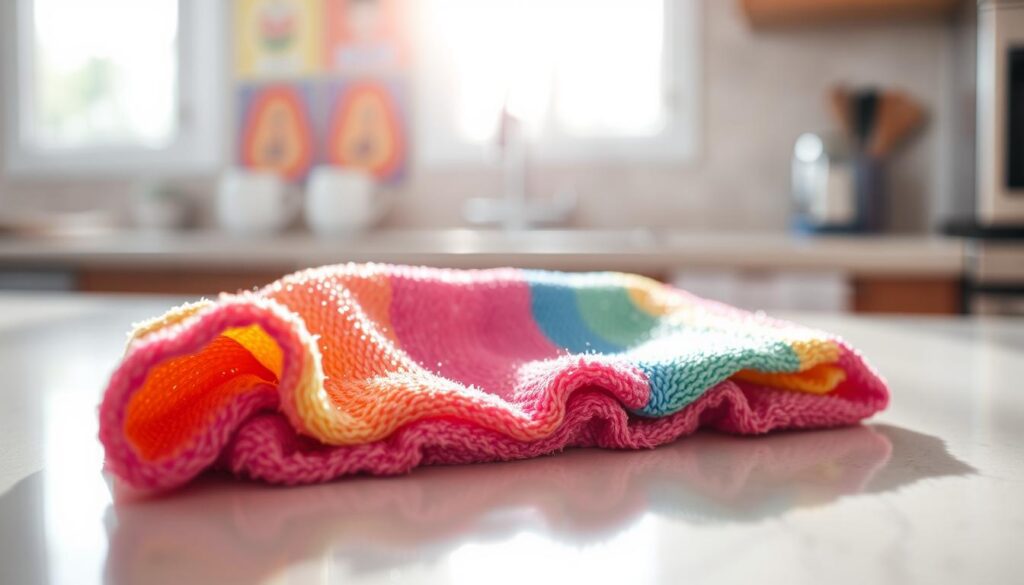
How microfiber cloth cleaning technology captures dust and oils
Modern microfiber cloth cleaning technology has changed cleaning through synthetic fibers. These fibers work at a microscopic level, lifting dust and oils instead of pushing them around.
Split fibers, surface area, static attraction, and why less cleaning liquid may be needed
The effectiveness of microfiber cloth cleaning technology comes from its unique structure. During manufacturing, fibers split into tiny strands, greatly increasing the fabric's surface area. This structure lets the cloth create a static attraction that pulls dust particles deep into the weave. Since these fibers grab grime well, users often need much less chemical cleaning liquid.
Why mop heads, brushes, and vacuum filters use different fiber shapes
Cleaning tasks differ, so manufacturers choose specific fiber shapes for each tool. A vacuum filter must allow airflow while trapping fine particles, but a mop head must retain liquid.
Absorption, abrasion, particle capture, and protection for delicate surfaces
Engineers design mop heads with high-absorption fibers to hold water and cleaning agents. Brushes use stiffer synthetic bristles to provide the abrasion needed for stubborn stains. These designs clean surfaces well without scratching delicate finishes.
| Tool Type | Primary Fiber Function | Key Benefit |
|---|---|---|
| Microfiber Cloth | Static Attraction | Traps oils and dust |
| Mop Head | High Absorption | Liquid management |
| Scrub Brush | Mechanical Abrasion | Removes dried grime |
| Vacuum Filter | Particle Capture | Improves air quality |
What happens when cleaning tools are washed and reused incorrectly
Even advanced tools fail without proper care. Improper washing can damage their fiber structure and make them ineffective over time.
Fabric softener residue, trapped bacteria, heat damage, and cross-contamination between rooms
Fabric softener coats fibers with a waxy film, stopping them from picking up dirt. Failing to sanitize tools can spread trapped bacteria, while high dryer heat can melt delicate synthetic fibers. Using the same cloth in a bathroom and kitchen risks cross-contamination.
How household cleaning claims are tested and communicated
Consumers often ask whether product-label promises have scientific support. Manufacturers use strict tests to confirm that products meet performance standards before reaching store shelves.
Performance measurements, labeling expectations, and consumer reactions to new products
Companies measure how much weight a cloth absorbs or how many particles a filter traps. These performance measurements become clear labels that help shoppers make informed decisions. When a product uses advanced microfiber cloth cleaning technology, consumer feedback often highlights faster cleaning and clearer surfaces.
Hidden functions of packaging and common household design features
You might be surprised by the hidden functions of packaging and the thoughtful design behind your home essentials. These common household design features are so subtle that people often miss them during daily routines. Still, each element serves a clear purpose, improving convenience and safety.
The folds, tabs, and perforations built into food packaging
Pouring guides, resealable closures, tear lines, and freshness protections
Manufacturers use precise perforations so boxes open exactly where intended. These tear lines prevent messy spills and help protect the container's structure. Resealable closures keep food fresh long after the first opening.
Pouring guides often hide in the corners of cereal boxes or milk cartons. These small folds direct the contents, making serving easier and cleaner. Such hidden functions of packaging show how simple geometry improves the user experience.
Why beverage cans, cartons, and plastic bottles have unusual shapes
Pressure management, stacking strength, grip, material savings, and transport efficiency
The unique curves and ridges on plastic bottles serve more than an aesthetic purpose. These shapes provide stacking strength, keeping pallets stable during transport. They also help manage internal pressure, especially in carbonated beverages.
Ergonomic grips are molded into bottles, making them easier to hold. By optimizing these shapes, companies also achieve significant material savings. This efficiency reduces environmental impact while keeping the product durable for consumers.
The overlooked features on furniture, appliances, and electrical accessories
Child-safety locks, ventilation gaps, cable channels, leveling feet, and hidden storage
Appliances often have ventilation gaps that help release heat. Without them, internal components could overheat and fail early. Leveling feet on washing machines and refrigerators keep them stable on uneven floors, preventing vibration and noise.
Many modern furniture pieces include clever cable channels that keep cords organized and out of sight. Child-safety locks are also built into cabinets and drawers to protect curious toddlers. These common household design features support safety and organization in the modern home.
How household product safety standards influence visible and concealed features
Flammability limits, electrical insulation, food-contact rules, warning labels, and testing procedures
Safety standards shape many design choices in your home. Materials in kitchen tools must meet strict food-contact rules to prevent chemical leaching. Likewise, electrical devices use specific insulation to prevent short circuits.
Warning labels are placed carefully to tell users about potential risks. These labels result from rigorous testing procedures that simulate years of wear and tear. Every design choice uses data to help keep your household secure.
How people discover these functions through repairs, social media, and consumer reporting
Useful demonstrations, misleading viral claims, and the role of manufacturers' instructions
Social media helps people discover the hidden utility of everyday items. Users often share videos showing how to use a product's features properly. However, it is important to distinguish between useful demonstrations and misleading viral claims.
Always follow the manufacturer's instructions instead of unverified online hacks. Some tips help, but others can damage appliances or compromise safety. Official documentation helps you use products fully and keep them in good working order.
Conclusion
Items in a modern home combine material science with clever manufacturing. Cookware's chromium-rich surfaces and washing machines' precise counterweights show hidden design choices that solve daily problems. Even simple packaging tear lines and split fibers in cleaning cloths rely on specific engineering goals.
Rigorous household product safety standards guide these developments. They protect users while manufacturers create useful tools, shaping chairs' structural integrity and food storage containers' chemical composition.
Readers should view their surroundings with curiosity and verify viral claims about household items before accepting them as fact. A closer look shows that ordinary objects often contain fascinating technology. Understanding these features helps people appreciate the thought behind the tools they use every single day.