
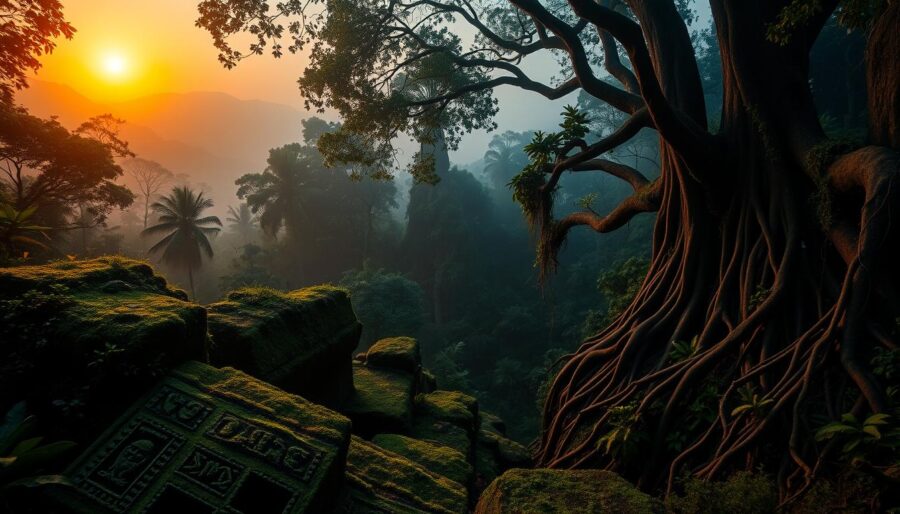
Brazil is more than lush rainforests and vibrant beaches. It has vast, unexplored territories with secrets kept for centuries. Modern researchers are uncovering societies that existed before Europeans arrived.
These experts use advanced tech to map and find signs of ancient life. Their work changes what we thought we knew about the Americas. It's an exciting time to explore what's beneath our feet.
By studying these lost civilizations, we learn about early people's ingenuity. Brazil is a treasure trove of hidden secrets waiting to be uncovered. This journey shows how much of our past is hidden in South America's wild heart.
Key Takeaways
- Brazil contains vast, unexplored regions that hold significant historical value.
- New technology allows scientists to find evidence of ancient societies.
- These findings challenge previous assumptions about pre-colonial human history.
- The landscape acts as a living archive of ancient human ingenuity.
- Ongoing research continues to reveal how complex these early cultures were.
The Current State of Archaeological Research in Brazil
Brazil is entering a new era of discovery. The country is focusing more on protecting its ancient sites. This ensures that future generations can study and enjoy these sites.
New government initiatives for heritage protection
The government has made big changes in managing historical sites. They've given more money to protect these sites from harm. This is crucial to keep fragile relics safe from development.
Now, the government is taking a more active role in site management. They've set up strict rules to document sites before any changes are made. This helps researchers work safely without worrying about losing sites.
Collaborations between international universities and local researchers
Exploration is speeding up thanks to partnerships between top universities and Brazilian teams. These teams combine their skills to solve historical mysteries. They work together to study ancient civilizations with the best science.
These partnerships bring many benefits to archaeology in Brazil:
- Standardization of excavation techniques to ensure consistent data collection.
- Enhanced training for local students and researchers in modern field methods.
- Deep respect for the cultural heritage and traditions of indigenous populations.
- Improved accuracy in the recording and preservation of archaeological discoveries.
These international ties also share knowledge worldwide. They help connect local knowledge with global standards. This cooperation is key to uncovering Brazil's hidden secrets.
Lost civilizations and hidden secrets of the Amazon Basin
For years, many thought the Amazon was untouched. But, recent studies show it was shaped by sophisticated ancient civilizations. These groups made the Amazon a home for thousands.
Evidence of large-scale pre-Columbian urbanism
Archaeologists found signs of big cities hidden under the forest. These sites have causeways and plazas that linked neighborhoods. It shows these lost civilizations and hidden secrets were more advanced than we thought.
These cities supported big populations that lived with the rainforest. By studying these ruins, experts are changing our view of the region. The size of these settlements shows the Amazon was once full of life.
The role of terra preta in supporting ancient populations
A key to their success was terra preta, or black earth. This soil, made by humans, made farming possible in tough areas. Without it, the rainforest couldn't feed such large groups.
The discovery of this soil shows the cleverness of ancient people. It helped them grow food for their communities. These lost civilizations and hidden secrets still amaze researchers as they learn how they lived.
Recent discoveries of geoglyphs and earthworks
Under the dense canopy of Acre, a hidden world of geometric patterns has been found. These mysterious relics are now the focus of researchers. They aim to uncover the history of the Amazon basin.
By studying these earthworks, experts are finding undiscovered treasures. These treasures show the advanced engineering skills of ancient populations.
Mapping the geometric patterns in Acre
Identifying these structures requires advanced aerial surveys. These surveys cut through the thick vegetation. Researchers have found hundreds of sites with circles, squares, and octagons.
These shapes are not random. They show a deliberate effort to reshape the landscape. This was done for specific purposes.
- Precision engineering: The geometric accuracy shows a deep understanding of mathematics.
- Strategic placement: Many sites are on high ground. This suggests a defensive or observational intent.
- Scale of construction: The size of these earthworks shows large groups worked together.
The significance of these structures in ancient social organization
These earthworks show the complex social hierarchies before European contact. The labor needed to move earth implies a highly organized society. This society had clear leadership roles.
It's likely these sites were ceremonial centers. Here, communities gathered for rituals or trade.
By studying these mysterious relics, archaeologists are learning about early cultures. The presence of these structures shows the region was more populated than thought. These undiscovered treasures challenge our understanding of ancient life.
The mystery of the Serra da Capivara rock art
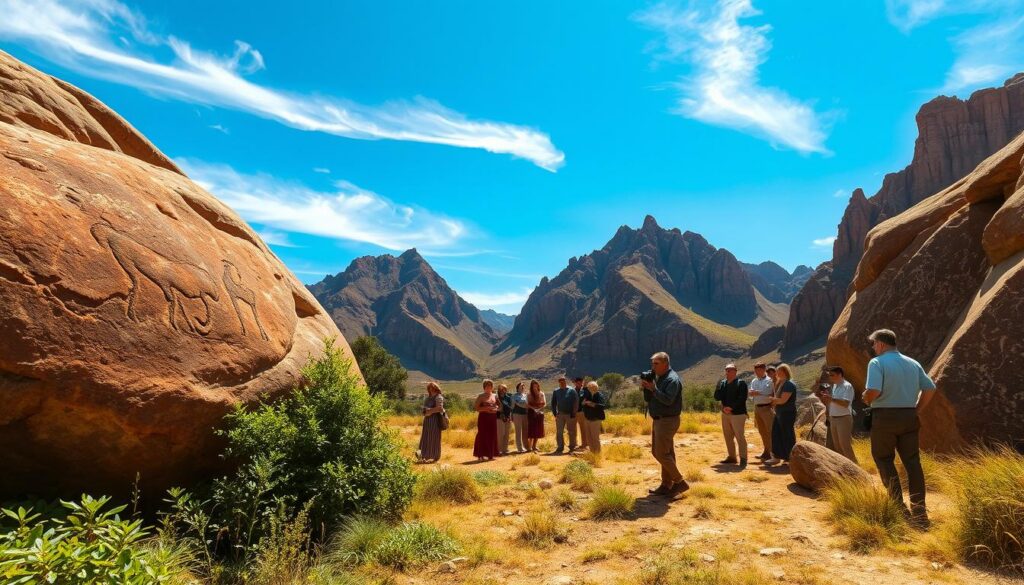
The rugged landscape of Serra da Capivara holds ancient mysteries that puzzle today's researchers. This national park in Brazil is home to a vast collection of prehistoric rock art. These sites offer a rare glimpse into the lives and beliefs of early humans.
Challenging the timeline of human arrival in the Americas
For years, the "Clovis-first" theory was the main story about the Americas' first people. But, new evidence from these rocky shelters shows humans were here much earlier. This discovery is changing how we think about global migration.
Many experts now believe Brazil's archaeological record tells a more complex story of human settlement. By studying sediment layers and artifacts, researchers have found evidence that pushes back the timeline by thousands of years. These ancient mysteries are at the heart of a fierce debate among scholars.
Analyzing the symbolic language of ancient paintings
The rock art here is more than just pictures; it's a complex form of communication. The paintings show a variety of subjects that reveal the early groups' cognitive abilities. Scholars group these findings into several themes:
- Hunting scenes: Detailed animal depictions and group coordination.
- Abstract geometric shapes: Complex patterns that may have ritualistic or symbolic meanings.
- Social interactions: Figures showing communal activities, hinting at organized tribes.
By studying these images, we learn more about how ancient people saw their world. The symbolic language in these paintings connects us to a long-lost time. As we delve deeper into these ancient mysteries, we uncover more about the human spirit and our shared history.
Uncovering enigmatic ruins in the Brazilian Highlands
The Brazilian Highlands hide secrets in their rugged terrain. These enigmatic ruins show how humans once changed the landscape. They are a testament to human ingenuity.
Researchers are amazed by the ancient stone works' precision. The builders knew a lot about engineering. They built lasting monuments in tough places.
Stone structures and their potential astronomical alignments
Many sites have stone arrangements that follow the sun and stars. This shows the ancient people used celestial knowledge in their lives. It helped them plan farming and religious events.
"The alignment of ancient stone monuments often reveals a profound connection between the earth and the heavens, bridging the gap between human survival and cosmic order."
By watching the horizon, these cultures could predict seasons. This shows they planned ahead and cared for the environment.
The search for evidence of secretive societies
Explorers look for signs of secretive societies behind these ruins. There are no written records, but the buildings show a well-organized group. They had special knowledge.
The quest to find these groups drives modern archaeology in the area. Experts aim to understand the cultural significance of these sites. They hope to learn who built these lasting marks on the Brazilian Highlands.
Technological breakthroughs in mapping ancient sites
New digital tools are uncovering Brazil's hidden past. These tools let experts explore areas once thought unreachable. They are making big archaeological discoveries that change how we see history.
Utilizing LiDAR technology to penetrate dense canopy
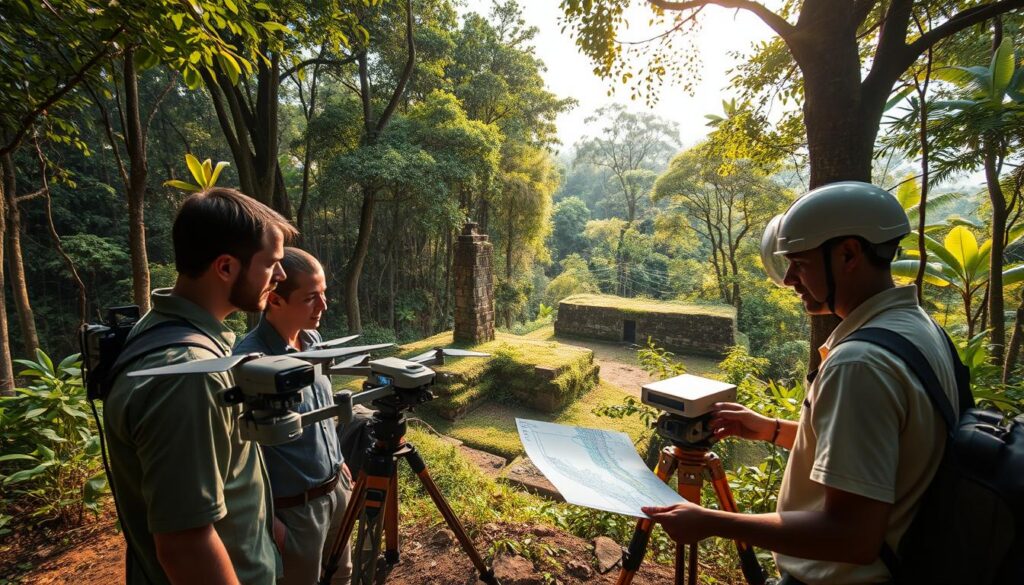
LiDAR technology is a big help for Amazon researchers. It uses laser pulses to map the ground by digitally stripping away the dense forest. This reveals hidden topography and structures that are invisible from the ground.
This method helps scientists find earthworks and ancient roads with great accuracy. It's key in the search for undiscovered treasures hidden under the jungle.
Satellite imagery revealing previously unknown settlements
High-resolution satellite images give a wider view of ancient land use in Brazil. Experts can spot large settlement patterns from these images. These patterns show where ancient people lived and how they organized their communities.
Combining satellite data with ground surveys gives a clearer view of the past. These technological breakthroughs are crucial for protecting sites and finding undiscovered treasures. Each new image brings us closer to documenting these important archaeological discoveries.
Challenges in preserving Brazil's historical enigmas
Brazil is home to many historical enigmas that face threats from modern development. Researchers are working hard to uncover the past. But, the environment keeps changing, making it hard to protect these sites.
It's crucial to keep these sites safe. This way, future generations can learn from the mysterious relics hidden beneath the earth.
The impact of deforestation on archaeological sites
Deforestation is a big threat to ancient sites. When forests are cut down, the ground gets exposed. This makes it harder for these sites to withstand harsh weather.
Without the forest, these sites lose their protection. This makes it easier for people to damage or steal mysterious relics.
Illegal digging often destroys important evidence. This evidence helps us understand the history and purpose of these sites. Conservationists are pushing for better land-use policies to protect these historical enigmas.
Balancing tourism with the protection of fragile relics
Tourism has both good and bad effects on preserving sites in Brazil. It brings in money for research and upkeep. But, too many visitors can damage the sites.
To solve this, we need smart management. This includes controlled access and educational programs. These steps help visitors appreciate these sites without harming them.
The table below shows the main threats and how to deal with them.
| Threat Type | Primary Impact | Mitigation Strategy |
|---|---|---|
| Deforestation | Soil erosion and looting | Strict land zoning |
| Mass Tourism | Physical site wear | Controlled visitor paths |
| Urban Expansion | Permanent site loss | Heritage site designation |
Conclusion
Brazil's vast landscape holds secrets of the past, hidden beneath the forest floor. Researchers are uncovering how early groups shaped their environment. These discoveries challenge our views on human evolution in the tropics.
Modern tools like LiDAR give us a glimpse into the lives of ancient societies. They show how these secretive groups managed resources with skill. Their success in diverse climates teaches us about sustainability today.
Protecting these historical sites is a global effort. Every site we save helps us understand human ingenuity. We encourage you to support archaeological projects that preserve these treasures.
The journey to uncover South America's human history is just starting. Future discoveries will change our understanding of the continent. By staying updated, we keep the stories of the past alive in our national identity.