
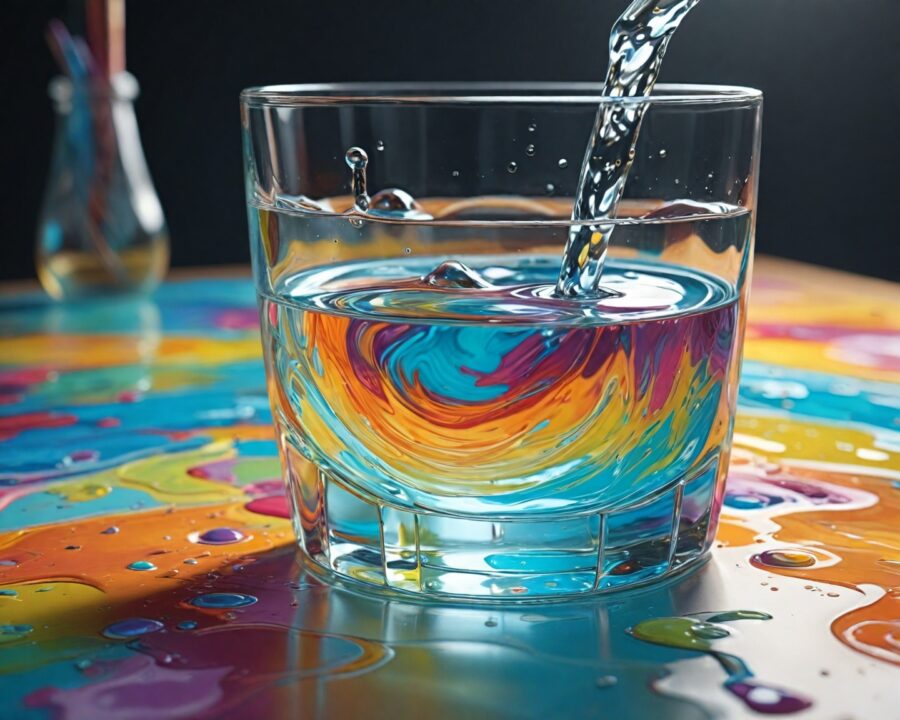
In our everyday lives, we encounter many phenomena that go unnoticed, yet they play a crucial role in shaping the world around us. One of these intriguing phenomena is surface tension. By understanding and observing surface tension, we can uncover the science behind everyday occurrences that we often take for granted. From the formation of water droplets to the walking of insects on water surfaces, surface tension is a fascinating subject with numerous real-world applications.
This article aims to demystify the concept of surface tension by explaining its scientific principles and offering varied examples from daily life. Through analysis and practical demonstrations, you’ll get a clearer picture of why and how surface tension affects both the natural and technological realms.
What is surface tension? A simple explanation
Surface tension is a physical property that allows the surface of a liquid to behave like an elastic sheet. This effect arises due to the cohesive forces between liquid molecules, which are stronger at the surface because the molecules there are not surrounded by similar molecules on all sides. Thus, the molecules at the surface are pulled inward, resulting in a tightened surface.
Imagine placing a small paper clip on the water surface; it floats despite being denser than water. This floating is possible because the water surface acts like a stretched elastic layer, supporting the paper clip’s weight due to surface tension. The phenomenon is imperative for many processes we encounter daily and can be observed both in nature and technology.
A vital aspect of surface tension is its dependency on factors like temperature and the liquid’s composition. For instance, increasing the temperature will typically decrease surface tension, which is important in various industrial and natural processes.
The science behind surface tension: How it works
Molecular cohesion is the fundamental principle explaining surface tension. In a liquid, molecules attract each other equally in all directions, but at the surface, things change. The molecules there experience imbalance since they lack neighboring molecules above. This leads to a net inward force, creating the ‘tension’ on the surface.
The strength of surface tension is quantitatively expressed in units of force per unit length, typically dynes per centimeter. Water, for example, has a high surface tension due to its hydrogen bonds. This high level of cohesion between water molecules results in the prominent surface tension effect.
Surface tension can be influenced by impurities or surfactants. These substances can weaken the cohesive forces at the liquid’s surface, thus decreasing the surface tension. This principle is widely used in detergents that help clean surfaces more effectively.
Common examples of surface tension in daily life
Many everyday occurrences are tied to surface tension, although they might not always be obvious. Here are a few prominent examples that highlight how prevalent surface tension is in our daily experiences:
-
Floating objects: As mentioned earlier, lightweight objects like insects or paper clips can rest on the water surface despite being denser, due to surface tension.
-
Formation of droplets: Whether it’s rain or a leaking faucet, drops form because of surface tension minimizing the surface area of a liquid.
-
Plants absorbing water: Plant leaves often hold small water droplets, which are spherical due to surface tension and help in the absorption process.
-
Tears of wine: After swirling wine in a glass, droplets forming on the inner surface is another example of surface tension at work.
These examples only scratch the surface of how widespread and essential surface tension is in daily interaction with liquids.
Why water forms droplets: A surface tension phenomenon
The formation of droplets is an iconic manifestation of surface tension. When a small volume of water is released, surface tension pulls it into a shape that has the smallest possible surface area for a given volume, which is a sphere.
Rain droplets or drips from a faucet owe their spherical shape to surface tension. The cohesive forces in the water try to pull the molecules together, minimizing the exposed surface area to the air. This phenomenon is evident in the spherical nature of most water drops found in nature.
When a water drop lands on a non-absorbent surface, it maintains its droplet shape because the adhesive forces between water and the other surface are weaker than the cohesive forces within the water itself.
How insects walk on water: Surface tension in nature
The ability of certain insects, like water striders, to walk on water is a fantastic demonstration of surface tension. These insects leverage the tension of the water surface to stay afloat without sinking. Their legs distribute their weight over a wide area, increasing buoyancy.
Water striders have tiny hair-like structures on their legs that repel water, and their lightweight nature ensures that they don’t break the water’s surface tension. Thus, they can effectively ‘walk’ as their legs slightly dimple the surface, creating dimples but not enough to submerge them.
This natural adaptation highlights how surface tension can drive evolutionary advantages, illustrating its importance in ecological interactions.
The role of surface tension in cleaning and detergents
Surface tension is crucial in the effectiveness of cleaning products. Detergents contain surfactants that reduce water’s surface tension, allowing it to spread and wet surfaces more effectively. This property helps water penetrate into dirty or greasy areas more easily and lift away dirt.
Here are some key ways detergents use surface tension:
- Reducing tension: They break down the high surface tension of water, allowing it to seep into fabrics.
- Emulsifying dirt: Surfactants capture fat and grease, suspending them in water.
- Lifting stains: Weakened surface tension aids in the removal of particles from surfaces.
By understanding surface tension, we grasp why certain substances clean better and the importance of choosing the right cleaning agents for different tasks.
Surface tension in cooking: From frying to baking
Surface tension impacts various cooking purposes, such as the behavior of liquids cooking in pans and the formation of bubbles, which are essential in batters and foams. Knowing how surface tension works can improve your culinary results.
-
Frying: When frying, the formation of oil droplets depends on surface tension. A lower tension ensures oil evenly coats ingredients.
-
Baking: In baking, the batter’s ability to trap air and rise is partly due to surface tension.
-
Sauce-making: When making emulsions like mayonnaise, surface tension is paramount as it holds the mixture together.
Understanding these subtle yet significant roles of surface tension allows for better control and creativity in the kitchen.
How surface tension affects soap bubbles and films
The enchanting beauty of soap bubbles arises from surface tension dynamics. When a soap solution is stretched to form a bubble, the thin film tries to contract, creating a sphere, the shape with the least surface area.
A soap film’s formation depends on reduced surface tension, achieved through soaps and detergents. This decreased tension allows the formation of large, flexible films that can encompass a substantial volume of air.
By understanding these principles, we can appreciate the science behind soap bubbles, which are not only fun but illustrate key properties of liquids.
Practical experiments to observe surface tension at home
You can observe and learn about surface tension through simple home experiments. Here are a few you might try:
-
Floating needle: Carefully place a needle on the surface of water; observe it floating due to surface tension.
-
Penny drop: Count how many water drops can fit on a penny before it spills. You’ll see how water droplets hold together before spilling due to gravity overcoming surface tension.
-
Pepper scatter: Sprinkle pepper over water and then touch it with a soapy finger. Observe how the pepper flees to the sides, demonstrating the decrease in surface tension caused by soap.
These experiments not only provide insight into surface tension but also make for engaging activities to share with others.
The importance of surface tension in technology and innovation
In technology, surface tension is pivotal in areas such as inkjet printing, microfluidics, and even developing new materials. By leveraging surface tension, innovations can be achieved in:
- Medical diagnostics: Microfluidic devices manipulate small liquid volumes using surface tension.
- Printing technology: Inkjet printers use surface tension to create fine droplets for detailed images.
- Material science: New coatings or materials often depend on manipulating surface tension at interfaces.
The manipulation and understanding of surface tension open a myriad of possibilities in scientific and technological fields, facilitating innovations that impact everyday life.
FAQ
What is surface tension and why is it important?
Surface tension is a physical property that describes the elastic tendency of a fluid surface that makes it acquire the least surface area possible. It is important because it affects a wide range of natural and technological processes, from droplet formation and insects walking on water to cleaning and industrial applications.
How does temperature affect surface tension?
Rising temperatures generally decrease surface tension because molecules move more vigorously, weakening the cohesive forces at the surface. This principle is utilized in various industrial processes and influences how substances interact with liquids at different temperatures.
Can surface tension be controlled?
Yes, surface tension can be manipulated by adding surfactants, changing temperature, or altering the liquid’s composition. These methods are common in industries, cooking, and cleaning to achieve desired effects.
What role does surface tension play in plant life?
Surface tension assists in the absorption and retention of moisture on plant surfaces, facilitating processes like water transport and nutrient intake. This property is vital for maintaining plant health and aiding in photosynthesis.
Why do soap bubbles form spheres?
Soap bubbles form spheres because a sphere shape minimizes the surface area for a given volume, which is the most favorable configuration due to surface tension. The soap film’s elasticity supports the air within, creating a sphere.
How does surface tension aid in painting or coating surfaces?
In painting, surface tension is crucial for the even distribution of paint without dripping. Reducing surface tension allows paint to spread uniformly over a surface, ensuring smooth application and better adhesion.
What is the significance of surface tension in medicine?
In pharmaceuticals, surface tension plays a role in forming stable suspensions and emulsions, ensuring consistent drug delivery. It is crucial for the development of medical devices that handle biological fluids.
How does surface tension affect water striders?
Water striders can walk on water due to the surface tension of water, which prevents them from sinking. Their specialized legs enhance this ability by spreading their weight and repelling water.
Recap
Understanding surface tension sheds light on many natural and technological phenomena. This article explored what surface tension is, how it works, and its various applications. We examined common examples from daily life, such as the formation of droplets, the behavior of insects on water, and its utility in cleaning and cooking. We also looked into simple experiments to observe surface tension at home and discussed its significance in technological advancements. Surface tension, albeit often overlooked, plays a fundamental role in numerous industries and everyday activities. By recognizing this, we can appreciate the complexity and beauty of the natural world and the innovations it inspires.