
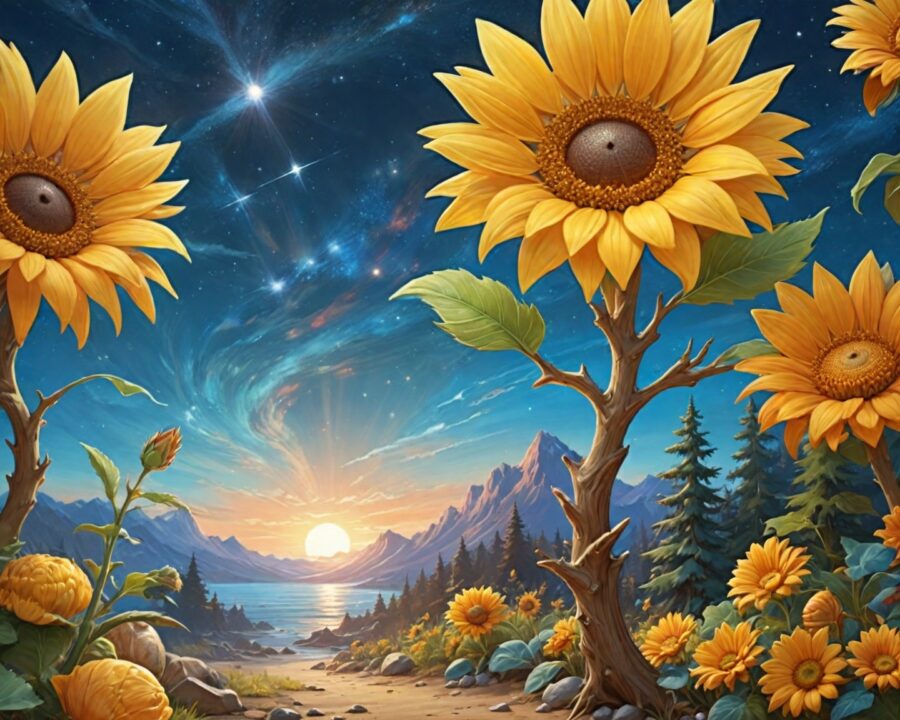
Introduction to the Concept of Hidden Math in Nature
The universe is an intricate tapestry woven with mathematical patterns that dictate the structure and behavior of everything from the simplest atoms to the most complex living beings. Though this “hidden math” often goes unnoticed by the untrained eye, it plays a crucial role in shaping the natural world. By recognizing the presence of these mathematical principles, we unlock deeper insights into how our universe operates and gain a greater appreciation for its beauty and complexity.
From the delicate spirals of a sunflower’s seeds to the symmetrical beauty of snowflakes, mathematics in nature is both ubiquitous and sublime. This invisible hand of mathematics is evident in the steadfast rows of a pinecone’s scales, the precise angles of a honeycomb, and the dynamic patterns observed in animal behavior. In this article, we will explore several captivating instances where math reveals the secrets of the universe and learn practical ways to appreciate this phenomenon in our everyday lives.
Exploring the Fibonacci Sequence in Natural Patterns
The Fibonacci sequence is one of the most renowned examples of mathematics occurring in nature. This sequence results when each number is the sum of the two preceding ones, often starting from 0 and 1. The growth patterns of many plants exemplify the Fibonacci sequence, as seen in the arrangement of leaves, flowers, and seeds.
Consider the arrangement of leaves around a stem, a configuration called phyllotaxis. In many plants, the spiral patterns optimize light exposure and rainfall while following the Fibonacci sequence. The pattern allows for the most efficient packing of leaves without overlap, demonstrating nature’s inclination toward perfection.
Another example is the tightly packed florets of a sunflower, which also follow Fibonacci numbers. This arrangement enables the flower to seed optimally, maximizing its potential reproduction. Such phenomena underscore the significance of the Fibonacci sequence as a natural blueprint for efficiency and beauty.
The Role of the Golden Ratio in Plants and Animals
Closely tied to the Fibonacci sequence is the golden ratio, a mathematical constant approximately equal to 1.6180339887. Known for its aesthetically pleasing properties, the golden ratio is found in the physical proportions of many living organisms, offering another glimpse at mathematics in nature.
In plants, the golden ratio often determines the dimensions of leaves and flower petals, contributing to their overall harmony and balance. Similarly, the spiral shells of certain mollusks, such as the nautilus, expand in proportion to the golden ratio, resulting in a smooth and consistent growth pattern.
Animals, too, embody the golden ratio, most famously seen in the human body. The proportion of the forearm to the hand, as well as other facial and body ratios, adheres to this principle, reflecting an intrinsic preference for symmetry and proportion in evolution.
Fractals and Their Occurrence in Natural Formations
Fractals, geometric shapes that can be split into parts, each of which is a reduced-scale copy of the whole, illuminate the repetitive self-similar patterns present in nature. These intricate designs are not merely artistic but serve vital functions.
One can observe fractals in the branching of trees, where each limb mirrors the shape of the whole. This structure facilitates efficient nutrient transport and light acquisition. Likewise, fractals appear in river networks and lightning bolts, where similar patterns enhance flow distribution and energy pathway efficiency.
The repetitive patterns in fractals underscore a compelling characteristic of nature: despite complexity, there is an innate pattern that governs form and function. This repetition creates a sense of unity across different scales of existence.
Symmetry in Nature: From Snowflakes to Galaxies
Symmetry is a fundamental aspect of mathematics in nature, creating order and aesthetic appeal in the natural world. From the microscopic level to the cosmic scale, symmetry manifests in countless ways, demonstrating the universe’s penchant for balance and harmony.
Snowflakes are quintessential symbols of natural symmetry, each crystallizing into a unique pattern while maintaining hexagonal symmetry. This is due to the uniform conditions under which snowflakes form, resulting in consistent patterns.
In the far-reaching expanse of the cosmos, entire galaxies exhibit symmetrical forms. Spiral galaxies, with their radiating arms swirled evenly around a central bulge, illustrate the vast scales at which symmetry operates, suggesting an underlying mathematical order to the universe’s structure.
Mathematical Patterns in Animal Behavior and Movement
Animals, through their behavior and movement, frequently exhibit mathematical patterns that point to an innate mathematical language. This can be seen in their migratory patterns, hunting strategies, and social behaviors.
Fish schools and bird flocks, observed exhibiting emergent behaviors, often display mathematical coherence in their movement. These animals move with synchronized precision, often optimizing their position within the group to minimize energy use and enhance protection.
The foraging patterns of certain animals also reveal mathematical optimization. For instance, bees utilize the shortest path to pollinate a group of flowers, an example of the Traveling Salesman Problem in action, optimizing their energy expenditure for maximum efficiency.
How Math Explains Natural Phenomena Like Weather Patterns
Math serves as a crucial tool in understanding natural phenomena, including complex systems like weather patterns. The interplay of variables like temperature, pressure, and wind speed can be elucidated through mathematical models.
Meteorologists rely on mathematical equations and algorithms to forecast weather changes. Chaos theory, a branch of mathematics, helps explain why small changes in atmospheric conditions can lead to vastly different weather outcomes, underpinning the often unpredictable nature of weather.
These mathematical principles not only allow us to predict weather patterns but also serve as a reminder of the intricacy and complexity underlying seemingly chaotic natural phenomena.
The Connection Between Math and the Structure of the Universe
The universe itself is a testament to mathematics, with its expansive structure revealing mathematical elegance. Cosmologists utilize mathematical models to understand the cosmos, from the Big Bang to the behavior of black holes.
The cosmic microwave background radiation, the universe’s oldest light, provides a glimpse into the early stages of the universe, showcasing the underlying mathematical framework at its inception. The distribution of galaxies and cosmic filaments underscores a mathematical choreography shaping the universe’s vast structure.
These insights suggest that math is not merely a tool but an intrinsic element of the cosmos, shaping both its form and evolution.
Common Questions About Math in Nature Answered
What is mathematics in nature?
Mathematics in nature refers to the presence and application of mathematical patterns, structures, and principles observed in the natural world, from the symmetry of leaves to the spirals of galaxies.
Why does nature exhibit mathematical patterns?
Nature uses mathematical patterns for efficiency, optimization, and survival, providing the best solutions to various functional and structural challenges.
How does the Fibonacci sequence appear in nature?
The Fibonacci sequence appears in various natural phenomena, such as the arrangement of leaves around a stem, the spiral of shells, and the patterns of flower petals and seeds.
What is the connection between the golden ratio and nature?
The golden ratio, approximately 1.618, manifests in the proportions of natural objects, contributing to their visually appealing structure and efficient function.
Can mathematics predict natural phenomena?
Yes, mathematical models are used to predict natural phenomena like weather patterns by analyzing complex systems through equations and algorithms.
What are some examples of fractals in nature?
Examples of fractals in nature include tree branches, river networks, lightning bolts, and the structure of lungs, all of which exhibit self-similar patterns.
How does symmetry manifest in the universe?
Symmetry manifests in the universe at various scales, from the intricate patterns of snowflakes to the massive structures of entire galaxies.
How can I observe math in nature?
You can observe math in nature by paying attention to patterns like spirals, symmetry, and fractals in plants, animals, weather, and even the stars.
Practical Ways to Observe and Appreciate Math in Nature
To observe and appreciate mathematics in nature actively, one can begin by taking a closer look at the world around us. Consider the flowers and plants in your garden or local park; note the leaf arrangements and petal patterns that reflect mathematical principles.
Use photography to capture the symmetry and fractals in your environment, from the intricate details of frost to the expansive vistas of landscapes. These visual representations help highlight the beauty and prevalence of mathematical patterns in nature.
Another approach is to engage with educational resources, such as books and documentaries, that delve into the intersection of math and nature. Such materials can provide a deeper understanding and enhance your appreciation for the mathematical undercurrents shaping our world.
Recap
Mathematics in nature is a fascinating phenomenon that reveals the universe’s secrets through patterns and structures found in the natural world. Key instances include the Fibonacci sequence and golden ratio, which appear in plant and animal configurations, and fractals observed in natural formations like trees and rivers. Symmetry is another manifestation, visible in snowflakes and galaxies, and mathematical models aid our understanding of complex systems like weather. Recognizing and appreciating math in nature enhances our understanding of the world and underscores the profound connection between mathematics and the universe’s design.