
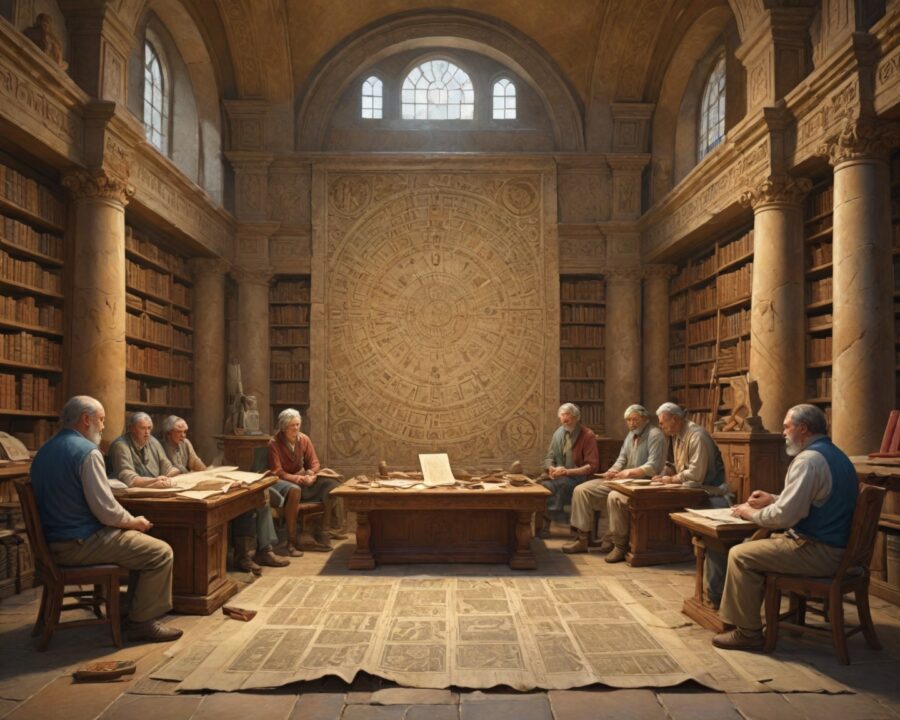
Introduction to Unknown Ancient Cultures
In the vast tapestry of human history, there are numerous threads representing ancient civilizations that remain largely unknown to us today. Many of these ancient cultures have left behind few remnants, or their contributions have been overshadowed by more dominant societies with better-preserved records. Despite their obscurity, these forgotten cultures dramatically influenced the world and played critical roles in shaping global history.
Unearthing the stories of these unknown ancient cultures provides fascinating insights into human development, technological innovation, and social structures. From hidden cities to mysterious artifacts, the exploration of these cultures is not just about filling gaps in historical knowledge, but about understanding the varied paths humanity has taken over millennia. In this article, we delve into some of these lesser-known societies, exploring their contributions, mysteries, and the lasting impact they have had on the world.
Why Some Ancient Cultures Remain Undiscovered
The reasons why ancient cultures remain undiscovered or poorly understood are varied and complex. Firstly, geographical factors play a significant role. Some civilizations developed in inaccessible regions where natural elements have erased much of their legacy. Dense jungles, shifting deserts, and rising sea levels have all contributed to burying or destroying evidence of these societies.
Secondly, the lack of written records contributes to their obscurity. Many ancient cultures either developed before writing systems were invented or did not adopt writing extensively, relying instead on oral traditions and ephemeral records that have long since vanished. This lack of documentation makes it difficult for historians and archaeologists to piece together a full picture of their way of life.
Lastly, socio-political factors can impede the discovery of ancient civilizations. Wars, invasions, and colonization often lead to the deliberate destruction or neglect of cultural heritage. In some cases, the victorious cultures saw no value in preserving the memory of those they conquered, leading to an erasure of history that modern scholars struggle to reconstruct.
The Role of Archaeology in Uncovering Lost Civilizations
Archaeology plays a pivotal role in the discovery and understanding of unknown ancient cultures. Through systematic investigation, archaeologists can uncover artifacts, architectural remains, and other evidence that provide critical insights into how these societies lived, worked, and interacted with their environment.
Innovative techniques such as satellite imagery, remote sensing, and ground-penetrating radar enable archaeologists to identify sites of interest even in challenging terrains. These technologies have led to the discovery of previously unknown sites and have allowed for non-invasive initial explorations that protect archaeological integrity.
Furthermore, interdisciplinary approaches that combine archaeological data with genetic studies, climatology, and cultural anthropology offer a more comprehensive view of these lost civilizations. This synergy allows for a better understanding of how these cultures developed and interacted with neighboring societies, thereby filling in historical gaps with newfound evidence.
Examples of Unknown Ancient Cultures and Their Contributions
Throughout history, there are innumerable examples of lesser-known civilizations that have had lasting impacts on human progress. For example, the Nabataeans of the Arabian Peninsula, known for their stunning rock-cut city of Petra, were remarkable architects and traders, connecting various cultures across their trade networks.
Another example is the Mississippian culture, which thrived in North America before European contact, leaving behind monumental earthworks and a legacy of complex chiefdoms that influenced later indigenous societies. Similarly, the Kingdom of Aksum in present-day Ethiopia was a pivotal trading empire, considered one of the great civilizations of its time.
Here’s a table showcasing a few unknown ancient cultures and their notable contributions:
| Civilization | Region | Time Period | Notable Contribution |
|---|---|---|---|
| Göbekli Tepe | Modern Turkey | c. 9600–9500 BCE | Oldest known temple complex |
| Caral-Supe | Peru | c. 2600–2000 BCE | Early urban center in the Americas |
| Silla Kingdom | Korea | c. 57 BCE–935 CE | Unified early Korean peninsula |
| Jomon Culture | Japan | c. 14,000–300 BCE | Earliest pottery in the world |
The Mystery of the Indus Valley Civilization
The Indus Valley Civilization, one of the world’s oldest, flourished in what is now Pakistan and northwest India. Despite its size and sophistication, much about the Indus people remains a mystery. Their cities, such as Harappa and Mohenjo-Daro, showcased advanced urban planning and engineering, with grid layouts and sophisticated drainage systems.
One of the greatest enigmas of the Indus Civilization is their undeciphered script. Despite numerous attempts, the writing system remains elusive, hindering a full understanding of their socio-political structure, economy, and daily life. This script could potentially hold answers to how they governed themselves, their trade practices, and their beliefs.
Another mystery stems from their sudden decline, which likely occurred around 1900 BCE. While several theories, such as climatic change, river shifts, and invasions, have been proposed, no single explanation fully accounts for their disappearance, adding another layer of intrigue to this ancient civilization.
The Enigmatic Culture of the Nok People
The Nok culture, one of Africa’s oldest known civilizations, thrived in present-day Nigeria between 1000 BCE and 300 CE. They are most renowned for their terracotta sculptures, which exhibit extraordinary craftsmanship and detail. These sculptures are some of the earliest instances of sophisticated art in sub-Saharan Africa.
Archaeological findings suggest that the Nok people were also pioneering ironworkers, possibly among the first in West Africa. This technological advancement had profound implications for agriculture, tools, and weapons, marking a significant step in technological development.
Despite their contributions, there is little concrete evidence about the daily life of the Nok people or the reasons behind their cultural decline. Ongoing research strives to uncover more about their social structures, economic practices, and the extent of their interaction with neighboring cultures, providing clues to their enigmatic past.
The Lost Civilization of the Minoans
The Minoans, a Bronze Age civilization that flourished on the island of Crete, are credited with laying the foundations for the development of European culture. Noted for their vibrant art and advanced architecture, the Minoans created bustling trade hubs that connected cultures across the Mediterranean.
One of their most famous contributions is the legend of the Minotaur and the labyrinth, a myth rooted in their complex palace structures, such as those found at Knossos. These palaces were centers of economic and religious life and showcased advanced features like plumbing, ventilation, and elaborate frescoes.
However, much of the Minoan civilization’s influence was obscured by their sudden decline around 1450 BCE, possibly due to natural disasters such as earthquakes and volcanic eruptions, or invasions by Mycenaean Greeks. The enigma of their language, Linear A, which remains undeciphered to this day, further shrouds their history in mystery.
How Ancient Cultures Influence Modern Societies
The legacies of these ancient civilizations continue to influence modern societies, evident in various aspects of contemporary life. From architectural concepts and urban planning to political ideologies and cultural expressions, the imprints of ancient cultures are ubiquitous.
Modern legal systems often originate from ancient principles, while philosophical concepts from antiquity continue to shape our understanding of ethics, governance, and human nature. For instance, democratic ideas championed by ancient Greece remain foundational to many governments worldwide today.
Moreover, the fascination with ancient wisdom persists in various forms, from literature and art inspired by ancient masterpieces to technologies like aqueducts and metallurgy that laid the groundwork for modern advancements. By studying these ancient influences, we gain valuable perspectives on innovation and societal development.
Common Questions About Lost Civilizations
What are some common challenges in studying ancient civilizations?
Studying ancient civilizations often involves overcoming challenges such as limited archaeological evidence, loss of written records, and interpretive biases. These challenges make it difficult to reconstruct a complete and accurate picture of past societies.
Why is the Indus script undeciphered?
The Indus script remains undeciphered due to the lack of a bilingual text or Rosetta Stone-like artifact that would provide a basis for translation, along with the brevity and unique nature of the inscriptions.
How do archaeologists decide where to dig?
Archaeologists use various methods to decide where to dig, including historical records, satellite imagery, environmental analysis, and local interviews to identify potential sites of interest before beginning excavation.
What is the significance of the Minoans?
The Minoans are significant for their contributions to the cultural and technological foundations of Europe, including influencing Greek culture and architecture, and establishing trade links across the Mediterranean.
How can ancient technologies be relevant today?
Ancient technologies provide insight into sustainable practices, resource management, and innovation under constraints. Learning from these technologies can inspire modern solutions like efficient urban planning and agricultural techniques.
How do lost civilizations become “lost”?
Civilizations become “lost” due to various factors including environmental changes, societal collapse, invasion, or cultural assimilation, resulting in the erasure of physical and intangible cultural heritage over time.
Practical Steps to Learn More About Ancient Cultures
For those interested in exploring ancient civilizations further, there are several practical steps to consider:
-
Read specialized books and articles: Start with academic publications and books by renowned historians and archaeologists to gain credible insights.
-
Visit museums and sites: Many museums offer exhibitions dedicated to ancient cultures, providing firsthand experience with artifacts and expert interpretations.
-
Enroll in online courses: Platforms like Coursera and edX offer courses on archaeology and ancient history that can deepen your understanding from the comfort of your home.
-
Join local archaeological societies: These organizations often offer lectures, field trips, and volunteer opportunities for those interested in getting involved in archaeological research.
-
Explore documentaries and podcasts: Visual and auditory resources are a great way to learn about ancient cultures through engaging narratives and expert commentary.
Recap
In conclusion, while many ancient civilizations remain enigmatic, their contributions to humanity’s heritage are undeniable. From the Indus Valley to the Nok people and the Minoans, each culture offers unique insights and lessons. Archaeology continues to play a crucial role in uncovering these societies, and their influences persist in modern life, shaping our reality in profound ways. By delving into the mysteries of these ancient cultures, we not only enrich our understanding of history but also draw inspiration for the future.