
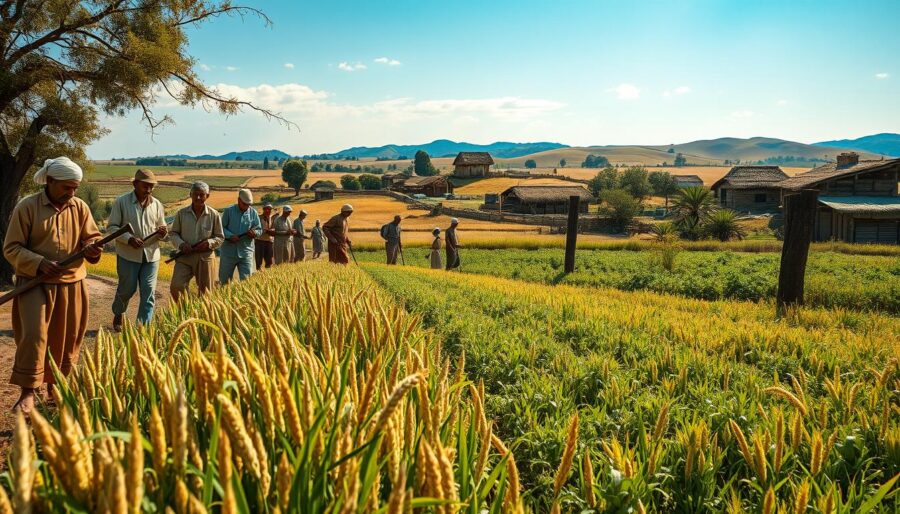
History can hide useful answers to modern food problems in ancient soil. Across the world, especially in Brazil, researchers study how ancient farmers thrived.
These forgotten agricultural practices that sustained early societies reveal how resilient communities built food systems that lasted for centuries. They worked with nature, not against it, to produce reliable food.
We cannot copy every ancient method, but we can learn from their ingenuity. These techniques conserved resources and protected soil, offering modern growers a plan for today's environmental pressures.
Key Takeaways
- Ancient farming methods emphasize working in harmony with local ecosystems.
- Soil health was a primary focus for long-term food security.
- Brazil serves as a vital hub for studying these historical techniques.
- Modern agriculture can adapt these lessons to improve current sustainability.
- Resilience is built through diverse crops and natural water management.
Why Forgotten Agricultural Practices That Sustained Early Societies Matter Again
The wisdom in forgotten agricultural practices that sustained early societies matters again as the climate changes. Modern food systems face unprecedented pressure, and these methods offer a plan for lasting sustainability. Studying our ancestors' land use can reveal strong ways to protect future food security.
What New Archaeological and Environmental Research Is Revealing
Recent scientific breakthroughs are changing our view of the past. Archaeologists now use satellite images and soil analysis to map ancient fields hidden from view. These studies show early farmers were actively engineering their environments to increase productivity.
Researchers found that methods like crop rotation maintained healthy soil before modern fertilizers existed. This evidence shows that early societies had a sophisticated understanding of ecology. Modern science now confirms the value of traditional land management.
Where Ancient Farming Systems Survived Across Brazil and the Wider World
Evidence of these resilient systems reaches worldwide, from the high Andes to Brazil's lush landscapes. In the Amazon, indigenous populations created fertile "black earth" soils that remain productive centuries later. These systems were widespread efforts to manage natural resources, not isolated events.
Farmers in many regions used dryland farming to thrive with little rainfall. Likewise, terrace irrigation helped communities grow crops on otherwise unusable, steep hillsides. These examples show that human ingenuity has long overcome geographic limits.
Who Used These Methods and What Pressures They Faced
These systems came from communities living closely with local ecosystems. They were not only farmers but also land stewards who understood nature's delicate balance. Their survival depended on adapting to constant environmental changes.
Responses to Drought, Flooding, Population Growth, and Soil Depletion
Early societies faced strong pressures, including unpredictable weather and growing population demands. To fight drought, they developed water-harvesting methods that captured every drop of moisture. During floods, they built raised beds to protect crops from excess water.
Soil depletion was managed through careful seed saving and organic fertilization. These methods kept the land fertile for future generations. By facing these challenges, early communities built stability that lasted for centuries.
How Modern Researchers and Farmers Are Reassessing Ancient Knowledge
Today, the goal is not to romanticize the past but to learn from it. Modern farmers carefully adapt ancient methods to current technology and environmental conditions. This work requires respectful study of what worked and why.
By joining traditional wisdom with modern data, we can build a more resilient agricultural future. This means balancing historical innovation with today's needs. This shared approach honors the past while addressing present problems.
Crop Rotation, Dryland Farming, and Ancient Plows Protected Food Supplies
Long before modern industrial agriculture, early civilizations studied land and used sustainable farming methods. They learned that soil needed balance to stay productive year after year. By following natural cycles, they kept food supplies stable when conditions changed.
Crop Rotation and Mixed Planting Maintained Soil Fertility
Farmers found that repeating one crop drained vital soil nutrients. They used crop rotation, a practice that alternated plant species and restored soil naturally. This strategy prevented soil exhaustion and protected land for future generations.
Combining Cereals, Legumes, and Cover Crops
Their success often came from combining different plant types. Pairing cereals with nitrogen-fixing legumes improved soil health without synthetic additives. Cover crops protected topsoil from erosion and held moisture during fallow periods.
Dryland Farming Made Limited Rainfall More Productive
In regions with little water, dryland farming became a lifeline. It aimed to use every drop of moisture that reached the ground. By managing the landscape, farmers grew crops in arid environments.
Timing Sowing, Capturing Runoff, and Conserving Soil Moisture
Success in dry areas required precise timing and clever engineering. Farmers sowed seeds just before expected rains to support immediate germination. They built small earthworks to capture runoff and direct water toward their fields.
Ancient Plows Improved Cultivation Without Destroying the Soil
The development of ancient plows made land preparation more efficient. Farmers designed these tools to fit local conditions. Unlike heavy modern machinery, they were light, maneuverable, and less likely to compact soil.
Regional Differences Between Light Soils, Heavy Soils, and Arid Land
Farmers adapted their tools to the texture of their land. Simple wooden plows worked well in light, sandy soils. Heavier clay soils needed stronger designs for proper aeration.
These regional differences show the close link between farmers and their local landscapes.
Why These Techniques Increased Resilience During Unstable Seasons
These methods created a buffer against nature's unpredictability. Along with these basic practices, agroforestry and chinampa gardens added more diversity.
By diversifying production, early societies reduced the risk of total collapse after one bad season. This resilience remains a powerful lesson for modern agriculture facing climate change.
Terrace Irrigation and Chinampa Gardens Turned Difficult Landscapes Into Farmland
Turning rugged mountains and marshy wetlands into productive farmland demanded great skill and teamwork. Early societies saw hard terrain as a challenge, not a barrier, and built systems to use natural resources. These methods supported sustainable food production in demanding environments.
Terrace Irrigation Controlled Water and Prevented Erosion
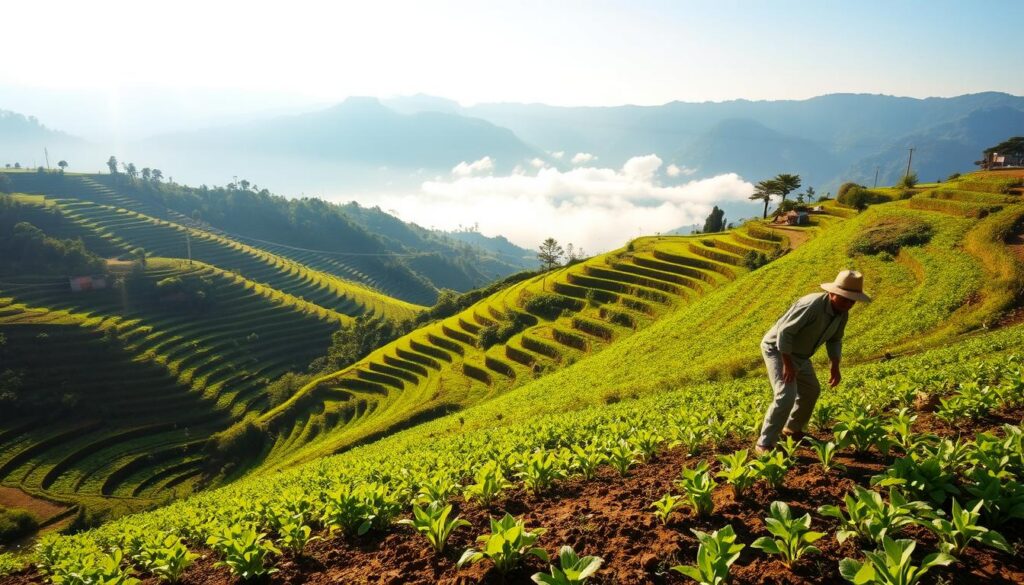
Farmers carved steps into steep hillsides to create flat planting surfaces called terrace irrigation. These surfaces slowed rainwater, helping it soak into the soil instead of carrying away topsoil. This water control reduced erosion and landslide risks.
Mountain Terraces in the Andes and Their Relevance to Brazilian Landscapes
The Andes mountains show how high-altitude farms can support large populations. Brazil has different geography, but slope stabilization still matters in the Atlantic Forest and southern highlands. Similar terrace irrigation strategies could help modern farmers protect land from heavy tropical rain.
Canals, Reservoirs, and Small-Scale Water Management Supported Communities
Ancient societies built canal and reservoir networks to store water for dry seasons. These systems served local needs instead of covering huge, centralized regions. This approach kept water available to every household in the community.
How Farmers Shared Water and Maintained Irrigation Infrastructure
Cooperation supported these water systems. Farmers cleared canal debris and repaired reservoir walls, keeping the infrastructure working all year. This shared duty built strong social cohesion and collective land ownership.
Chinampa Gardens Produced Food in Wetland Environments
In swampy or lake-based regions, ancient farmers created chinampa gardens to turn wetlands into productive fields. These floating or raised beds gave crops steady moisture while keeping them above water. The method shows effective soil fertility management that works with aquatic ecosystems.
Raised Beds, Aquatic Biomass, and Continuous Nutrient Cycling
These gardens succeeded by constantly recycling organic matter. Farmers gathered aquatic biomass, including algae and water plants, and used it as fertilizer. This cycle kept soil fertile without outside inputs, much like ancient plows in drier climates.
The Social Consequences of Managing Water Collectively
Managing water required clear rules and mutual trust. When supplies are limited, communities need fair systems to prevent conflict. Cooperation often created more stable, organized societies because group survival depended on a successful harvest.
| System Type | Primary Benefit | Key Resource | Maintenance Level |
|---|---|---|---|
| Terrace Irrigation | Erosion Control | Rainwater | High |
| Chinampa Gardens | Nutrient Cycling | Aquatic Biomass | Medium |
| Canal Networks | Water Distribution | Reservoir Storage | High |
Seed Saving, Agroforestry, and Soil Fertility Management Preserved Long-Term Security
Early civilizations relied on three core pillars: seed saving, agroforestry, and soil fertility management. These practices helped communities thrive in many climates by working with nature. They kept food systems productive for centuries.
Seed Saving Protected Local Crop Diversity
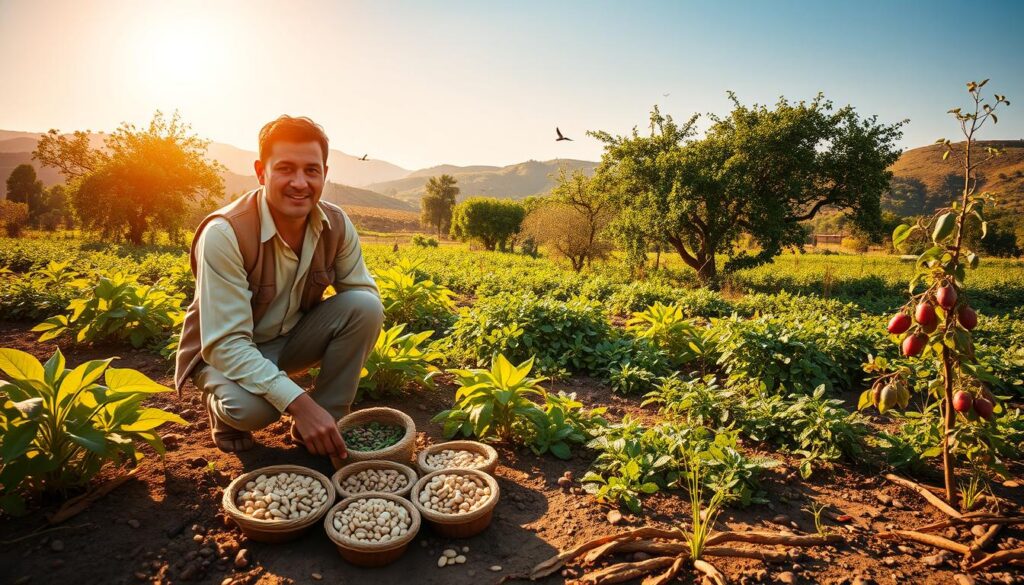
Farmers once served as the main guardians of genetic variety. Each season, they chose the strongest plants for local conditions.
Selecting Seeds for Drought Tolerance, Flavor, Storage, and Reliable Harvests
The process of seed saving relied on careful observation. Communities chose seeds that survived changing rainfall and local pests. They also valued good flavor and long storage, so families had food during the leanest months.
Agroforestry Combined Trees, Crops, and Useful Animals
Adding trees to farmland created several layers of land use. This method, called agroforestry, copied natural forests and made farms more stable.
Shade, Leaf Litter, Food Crops, Timber, and Habitat Benefits
Trees shaded delicate crops, while fallen leaves formed rich mulch. Farms produced fruits, nuts, and timber while supporting local wildlife. This productive ecosystem offered more than one yearly harvest.
Compost, Manure, Mulch, and Ash Rebuilt Soil Fertility
Effective soil fertility management supported every successful ancient farm. Farmers returned organic matter to the earth instead of relying on outside supplies.
Low-Waste Nutrient Cycles Before Synthetic Fertilizers
Communities used compost, animal manure, and wood ash to renew the soil. These low-waste cycles kept land fertile for generations. They also reduced the damage linked to modern, high-intensity farming.
| Practice | Primary Benefit | Sustainability Impact |
|---|---|---|
| Seed Saving | Genetic Adaptation | High Resilience |
| Agroforestry | Ecosystem Diversity | Soil Protection |
| Organic Fertilizing | Nutrient Cycling | Long-term Fertility |
What Indigenous and Traditional Communities Contribute to Current Conservation Efforts
Indigenous knowledge remains valuable to modern environmental science. These communities maintain advanced farming systems that protect biodiversity in the Amazon and other regions.
Protecting Knowledge From Commercial Exploitation and Cultural Erasure
We must respect and protect this traditional wisdom from commercial exploitation. Indigenous groups should control their agricultural heritage and prevent cultural erasure. Valuing their voices can support fair, sustainable global food security.
Conclusion
Modern food security depends on understanding how early civilizations thrived in diverse environments. The 4. Forgotten agricultural practices that sustained early societies show that people observed nature instead of fighting it. These systems joined water management, seed selection, and crop diversity in one survival strategy.
Soil fertility management formed the foundation for these lasting gains. It was not one technique, but a broad approach linking healthy soil with steady harvests. By treating these methods as one cycle, farmers protected resources from unpredictable weather patterns.
Brazil offers a unique landscape for applying these lessons today. Smallholders and large producers can adapt these 4. forgotten agricultural practices that sustained early societies to meet environmental challenges. Combining traditional knowledge with modern science can build a more sustainable food system.
Communities can now reshape their agricultural future. By valuing shared problem-solving and stewardship, they can keep land productive for generations. Using these time-tested principles helps secure a stable and prosperous harvest for everyone.