
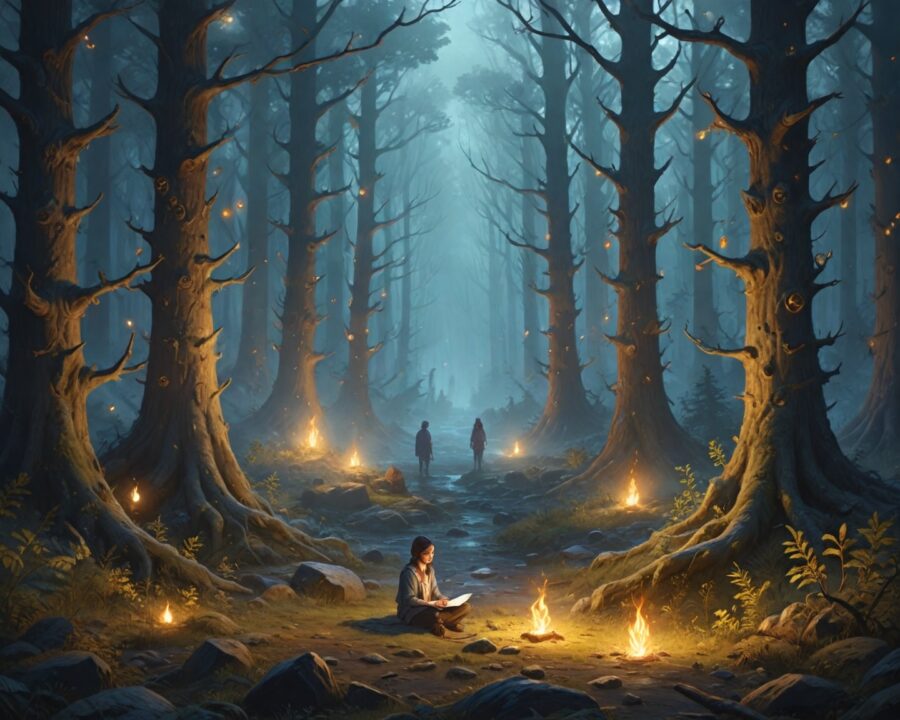
The Allure of Unexplained Events
Throughout history, humanity has been entranced by the mysteries of the world that challenge our understanding of reality. These unexplained events not only fascinate us but also propel scientific and philosophical inquiry. The allure of the unknown often stems from a blend of curiosity and fear, and while some individuals seek logical explanations, others find comfort in the mysteries themselves.
Unexplained events serve as reminders of how much we have yet to discover about our universe and ourselves. From ancient folklore to modern-day sightings, these occurrences provide fertile ground for speculation and exploration. Their persistent presence in human culture underscores the limits of our knowledge and the necessity of science to illuminate the shadows of our ignorance.
Historical Examples of Mysterious Occurrences
The annals of history are peppered with events that defy logic and challenge our understanding. Consider the case of the Mary Celeste, an American merchant ship discovered in 1872, sailing aimlessly in the Atlantic Ocean without a crew. The mystery of its deserted state and the fate of its crew remain unsolved to this day.
Another historical mystery is that of the Tunguska event of 1908, where a large explosion rocked Siberia, flattening 2,000 square kilometers of forest. Despite extensive research, the exact cause of the explosion—often attributed to either a comet or a meteoroid—remains a topic of debate among scientists.
The Voynich Manuscript, an illustrated codex penned in an undeciphered script, is yet another perplexing artifact. This enigmatic book has puzzled scholars for decades, with its origins, purpose, and language remaining obstinately elusive in the face of rigorous academic scrutiny.
The Role of Science in Investigating Unexplained Events
Science serves as a vital tool in unraveling the mysteries of the world, applying systematic inquiry to understand phenomena beyond the immediate capabilities of human perception. Through research and experimentation, scientists attempt to deconstruct these events, providing plausible explanations based on empirical evidence.
Methods such as carbon dating, forensic analysis, and astronomical simulations help to explore and sometimes mitigate the enigma surrounding these events. While not all mysteries yield to scientific inquiry, each investigation contributes to our broader understanding of the world, offering insights into not just the events themselves but the framework within which they occur.
Many scientists are driven by a desire to solve these puzzles, but their work often raises more questions than it answers. This cycle of inquiry, evidence, and further mystery continues to drive scientific progress, expanding our appreciation of the universe’s complexity.
Famous Paranormal Phenomena and Their Cultural Impact
Paranormal phenomena, such as ghosts and UFOs, have captivated public imagination and culture. Stories of haunted locations or inexplicable lights in the sky are not just campfire tales but cultural staples that influence literature, film, and even fashion.
For instance, the Roswell Incident of 1947 stoked UFO hysteria and greatly impacted American culture. This event inspired numerous books, movies, and television series, fueling both skepticism and belief in extraterrestrial life.
Cultural expressions serve to perpetuate these mysteries, often becoming legends within their own right. This perpetuation cements the importance of such phenomena, allowing them to shape cultural narratives and influence social behaviors across generations.
Unsolved Mysteries That Defy Logical Explanations
Some mysteries persist without resolution, defying logical explanation even after exhaustive scientific investigation. The Bermuda Triangle, for instance, is infamous for the numerous ships and aircraft allegedly disappearing without a trace. Despite speculative theories, conclusive evidence explaining these occurrences is absent.
Similarly, the disappearance of the Eilean Mor lighthouse keepers in 1900 presents a baffling case. The absence of evidence regarding the fate of the three men assigned to the lighthouse continues to puzzle investigators and conspiracy theorists alike.
These unsolved mysteries maintain their grip on our imagination because they reflect the enduring limits of human understanding and the resilience of the unknown.
Theories and Speculations Surrounding These Events
In the absence of concrete explanations, theories and speculations thrive. These range from scientific hypotheses to more fantastical ideas that capture the public’s imagination. For instance, the Loch Ness Monster is believed by some to be a surviving prehistoric creature, while others suggest it’s a series of misidentified floating logs and optical illusions.
Similarly, the Bermuda Triangle is often attributed to anything from alien abductions to underwater methane gas eruptions. While skepticism prevails in scientific communities, such theories reflect humanity’s attempt to make sense of the inexplicable.
| Myth | Event | Speculated Explanation |
|---|---|---|
| Loch Ness Monster | Sightings in Scotland | Prehistoric creature or optical illusion |
| Bermuda Triangle | Disappearances | Alien activity or natural phenomena |
| Roswell Incident | UFO crash | Government testing or alien spacecraft |
How Media and Pop Culture Shape Our Perception of Mysteries
The media plays a significant role in shaping public perception of unexplained events. Through sensational reporting and dramatization, these stories transcend their origins, becoming part of collective memory.
Television shows and movies often amplify elements of mystery, embedding these events deeper within cultural consciousness. For example, decades of UFO-themed media have influenced public belief in extraterrestrials, often blurring the line between fact and fiction.
This cultural interplay ensures these mysteries remain alive in public discussion but also means they are continually reinterpreted, allowing them to evolve with societal norms and technological advancements.
Common Questions About Unexplained Events and Their Validity
Are all unexplained events paranormal in nature?
No, not all unexplained events are necessarily paranormal. Many have natural or scientific explanations that are not immediately apparent or require more research to uncover.
How credible are the eyewitness accounts of mysterious occurrences?
Eyewitness accounts can be credible but are often subjective and influenced by personal perceptions and social context. Scientific verification typically strengthens credibility.
Why do some mysteries remain unsolved?
Some mysteries remain unsolved due to a lack of evidence, historical context, or advancements in technology. Ongoing research may eventually provide answers.
Can science explain every mysterious event?
While science can explain many events, some remain beyond current scientific understanding due to limitations in technology or available data.
Is it worthwhile to investigate unexplained phenomena?
Investigating these phenomena is valuable as it often leads to new discoveries and enhances our understanding of the world, even when the original question remains unanswered.
Practical Steps for Investigating Mysterious Occurrences
For those intrigued by mysteries, a methodical approach can aid in distinguishing fact from fiction:
- Gather Information: Collect data from credible sources, including scientific journals and expert interviews.
- Analyze Context: Understand the historical and geographical context of the event.
- Apply Critical Thinking: Examine biases and apply logic to draw conclusions.
- Use Technology: Leverage tools like drones, remote sensors, and forensic analysis.
- Engage Experts: Collaborate with scientists and researchers skilled in specific fields.
Conclusion: Why Unexplained Events Continue to Captivate Us
The mysteries of the world continue to captivate us because they tap into the core of human curiosity and the quest for knowledge. They invite exploration, provoke thought, and challenge our understanding, driving the relentless pursuit for truth. Whether or not these mysteries are eventually solved, their impact on culture, science, and individual belief systems is undeniable. They remind us of the vastness of the universe and the enduring intrigue of the unknown.
Recap
This article explored the enduring allure of unexplained events, from historical mysteries to modern-day enigmas. We examined the role of science in attempting to decipher these occurrences, the cultural impact of well-known phenomena, and collective perceptions shaped by media. Despite extensive investigations, many mysteries remain unsolved, inviting a spectrum of theories and speculations. Nevertheless, their enigmatic nature continues to inspire fascination and drives forward our endeavor to comprehend the mysteries enveloping our world.